


If everyone is thinking alike, then somebody isn't thinking.
—George S. Patton
🍸 Prediction: within 7 years, there’s going to be a James Bond film where the villain’s plan is to steal everybody’s bitcoin, or make them disappear, or something of the sort.
🔌🔋💡 There’s an energy concept I don’t hear much about, yet I think it deserves to be near the top of every discussion: Negawatts.
It’s basically just a clever word invented by Amory Lovins (I know, what a name) of the Rocky Mountain Institute in the mid-1980s to describe how efficiency and/or conservation gains should be considered amount the possible choices for meeting energy needs (it’s not simple because of the Jevons paradox, but nothing is ever simple, including when you build new capacity…).
The idea is: If you need 1 gigawatt of new electricity to meet rising demand, you can either build 1 gigawatt of new capacity (a gas plant, or solar farm, or mix of multiple things), or you can make investments in efficiency/conservation to find 1GW-equivalent in ‘negawatts’. You can also mix and match (f.ex. 400MW of solar and 600MW of efficiency/conservation).
This may take the form of granting tax credits and incentives to do things like upgrade commercial and industrial users to more efficient processes/machinery/whatever to reduce load on the grid by that amount, or efficiency targets that increase over time (Energy Star, CAFE fuel economy standards, building codes on insulation, lighting, HVACs and such).
The beauty of efficiency improvements is that they’re typically a one-time cost, and you then benefit for years or decades afterwards. And when you *do* build a new power plant, it can serve more customers with the same capacity, since each customer is, on average, using less energy per unit of whatever they do.
🌈 👀 🤯 Ok, just work-shopping a theory here..
There’s a rate at which we get used to things.
Anything that happens slower than that rate won’t *feel* particularly special, even if over time it adds up to something really special.
When there’s a big step change in things — ie. the original iPhone comes out and seems magical in comparison to everything else at the time — we get that big jolt.
But when something much better than that comes out (the iPhone 13), we don’t feel much because getting there happened through a process that was slower than the pace at which we got used to each subsequent iteration in that improvement cycle.
That’s why I often try to stop and summon a fresh set of eyes and appreciate things I’m taking for granted, because otherwise it’s too easy to miss what’s going on.
Another way to put it may be using the metaphor of the hedonic treadmill:
If it’s running very smoothly, always at a speed that is easy for you to keep up with, never faster than a comfortable stroll, it’s easy to forget about it…
But if it’s sometimes speeding up a lot, or changing speed abruptly, etc, then there’s a good chance you’ll fall on your ass and really notice what’s going on.
Here’s another metaphor to help with the fresh 👀:
If you’ve spent years working on your craft, building up skills, etc. If you’ve spent years diligently saving, investing, making prudent choices and taking calculated risks to build up your resources…
If you’ve been building a life with someone, forming a partnership with someone who knows you better than almost anyone else, sharing big life moments and supporting each other in hard times, learning from each other…
Imagine you could hop in a time machine and go show all this to a younger version of you who’s at the beginning of the journey.
To past-you (remember past-me 👨🌾, present-me 🤪, and future-me 👨🚀?), it would all show up faster than the speed-of-getting-used-to-it and would probably be quite a shock (hopefully positive!) to see all that you’ve accomplished.
🍃🥬 A few weeks ago I decided to try Athletics Greens.
It’s a powder that you mix with water and drink (pro tip: put really cold water and/or ice in it, much better that way — cold makes you taste things less, which is partly why you don’t put ice in good scotch, and why crappy beer is always served really cold).
It’s a bunch of vitamins, minerals, and other types of plant and mushroom extracts.
It’s a pretty broad group of nutrients that helps *put a floor on what’s available to your body*. They probably don’t all do something great, but they at least seem safe.
If you don’t eat super healthy all the time, at least you get some of these things — and even if you already checked those boxes, people forget that this isn’t binary. f.ex. There’s the minimum amount of vitamin C you need to avoid scurvy, but there’s also the *optimal* amount you need for peak performance, which may be quite a bit higher.

If you think about it, your body doesn’t care at all whether you label something “food” or “supplement”. It’s all just stuff we eat/drink and digest. What matters in the end is 1) how good is it for you and 2) how bio-available is it?
I wanted to try AG because I had hear from enough people I trust that it was a good mix and a trust-worthy company that actually sold you what’s on the ingredient list (which isn’t always a given in this space), and that it was pretty bioavailable.
The first couple glasses, I wasn’t sure about the taste, but I got use to it pretty quickly. Putting ice in it makes a huge difference, and I’d now rate it pretty close to a neutral 5/10 on the yuck-to-yummy scale — not actively good, but not bad either.
It doesn’t replace everything I take — I’ll still take vitamin D (5,000-10,000 UI/day) and Omega 3 (2,200mg EPA/day, 1,400mg DHA/day) and a few other things — but if I stick with AG, it’ll replace a few other things that I won’t buy separately and add a few things I wasn’t taking to the mix, so it’s probably an upgrade.
🗣🗣🤔 One of the things that I quite enjoy about this project is how it went from what was originally mostly a monologue, and progressively turned into a conversation as I started getting more feedback, emails, and comments.
Now a large fraction of most editions is based on this feedback and ideas, so merci beaucoup for that.
A good example of this is from reader and supporter (💚 🥃) Kevin Bracker, who went farther than most and wrote up a whole post on his Substack (go check it out and consider subscribing) that basically gives his highlights & thoughts on my highlights & thoughts. Turtles all the way down… 🐢🐢🐢🐢
💚 🥃 If you feel like you’re getting value from this newsletter, it would mean the world to me if you became a supporter to help me to keep writing it.
If you think that you’re not making a difference by subbing, that’s incorrect. Only 4% of readers are supporters (so far — you can help change that), so each one of you joining this elite group makes a big difference.
A Word from our Sponsor: 💰Watchlist Investing 💰
What’s an investor without a good watchlist?
Watchlist Investing is a monthly newsletter devoted to studying great businesses and helping readers be ready to pounce when Mr. Market gets irrational (🤪).
You’ll get access to independent, bottom-up primary research, including Deep Dives, Quick Looks, and analysis of long-term capital allocation decisions.
Join the growing list of value investors, C-Suite execs, managers, and students by subscribing. It’s worth full price, but as an enticement to you get 10% off your first year with the coupon code “Liberty”.
Sign up here for just $15/month on the annual plan (that’s with the coupon 🔥)
Here’s a free taste with two issues from the back-catalogue:
Investing & Business
Are you working for Amazon yet? 📦
In addition to previously announced plans to hire over 40,000 new corporate and tech jobs and 125,000 full and part-time fulfillment and transportation jobs, Amazon announces 150,000 seasonal jobs available across the U.S. [...]
All Amazon jobs in the U.S., including seasonal roles, have an average starting pay of $18 per hour, sign-on bonuses up to $3,000 and an additional $3 per hour depending on shifts in many locations.
Global Foundries S-1
Friend-of-the-show Mule published a piece on Global Foundries, who filed a S-1 recently.
Some highlights:
The company originally was the fab segment of AMD that was acquired in 2009 by Mubadala, the UAE’s sovereign wealth fund. [...]
Since the semiconductor fabrication business is a game of scale, Global Foundries gobbled up more fabs like Chartered Semiconductor, in 2010, and IBM’s fab, in 2015. [...]
Instead of focusing on the most advanced chips, the Malta, New York-based GF would become a specialty chip maker and focus on various semiconductor niches.
Not a bad strategy in theory, as there’s plenty of demand for chips that aren’t leading edge.
But…
Everything in the Global Foundries S-1 is great until you hit the first blue box of financials [...]
So that brings us to the horrid operating profit. (I’m not even going to bother below the line.) GF is extremely unprofitable and, barring some very significant changes, I don’t think they will ever be meaningfully profitable (15%+ EBIT margins).
I have a hard time believing this company could ever be meaningfully profitable on a GAAP basis given this is one of the strongest cycles for fab demand ever. [...]
The company narrative just doesn’t hold up. […]
what I see from Global Foundries’ financials is a subscale fab that is struggling to keep relevant and that’s been dragged along with ~$24 billion of capital infusion from Mubadala. All while barely squeezing out a gross profit and growing sluggishly in one of the hottest semiconductor markets of the last decade.
Time will tell if they can pull it off, but it would be sad to see them flounder and stall out, because the world could really use another thriving contract fab.
TSMC’s great, but the world’s eggs need more baskets. 🥚🥚🥚🥚🥚🥚🥚 🧺
‘UK to put nuclear power at heart of net zero emissions strategy’, Nuclear Power Edition
UK ministers will put nuclear power at the heart of Britain’s strategy to reach net zero carbon emissions by 2050 in government documents expected as early as next week [...]
French utility EDF plans to use an RAB model to finance a new 3.2 gigawatt plant at Sizewell in Suffolk, South East England.
In north Wales, US nuclear company Westinghouse is planning to revive plans for a nuclear power plant at Wylfa that was abandoned by Japan’s Hitachi in 2019.
Ministers are also backing smaller modular reactors (SMRs) which are being developed by a consortium led by Rolls-Royce. Supporters of SMRs say these could be built in factories and have lower costs and risks than large atomic plants.
Good. Also seeing some movement in Japan and parts of Europe.
We need an “all of the above” strategy to clean up the world’s power grids. Fossil fuels have been great for humanity, they got us to where we are, but we need something else to go where we’re going.
Solar, obviously, wind, let’s go, geothermal, we’ll get there.. hydro, battery storage, pumped hydro, gravity storage, giant flywheels, demand-response, time-of-use rates, advanced biofuels/synfuels for planes, efficiency/conversation, fission, someday fusion… Bring it all on.
There’s clearly an alternate timeline where civilian nuclear power had kept being developed after the 1970s and by now we’d have way more modern reactors everywhere, and the carbon-intensity of the worldwide economy would be much lower and we’d have decades more to deal with climate issues. This alternate reality probably also has less dysfunctional regulation that balloons costs out of control for very little benefit:
Excessive concern about low levels of radiation led to a regulatory standard known as ALARA: As Low As Reasonably Achievable. What defines “reasonable”? It is an ever-tightening standard. As long as the costs of nuclear plant construction and operation are in the ballpark of other modes of power, then they are reasonable.
This might seem like a sensible approach, until you realize that it eliminates, by definition, any chance for nuclear power to be cheaper than its competition. Nuclear can‘t even innovate its way out of this predicament: under ALARA, any technology, any operational improvement, anything that reduces costs, simply gives the regulator more room and more excuse to push for more stringent safety requirements, until the cost once again rises to make nuclear just a bit more expensive than everything else. Actually, it‘s worse than that: it essentially says that if nuclear becomes cheap, then the regulators have not done their job.
[f.ex. regulators banned multiplexing, which resulted in this:]
A plant that required 670,000 yards of cable in 1973 required almost double that, 1,267,000, by 1978, whereas “the cabling requirement should have been dropping precipitously” given progress at the time in digital technology.
[or this:]
A forklift at the Idaho National Engineering Laboratory moved a small spent fuel cask from the storage pool to the hot cell. The cask had not been properly drained and some pool water was dribbled onto the blacktop along the way. Despite the fact that some characters had taken a midnight swim in such a pool in the days when I used to visit there and were none the worse for it, storage pool water is defined as a hazardous contaminant. It was deemed necessary therefore to dig up the entire path of the forklift, creating a trench two feet wide by a half mile long that was dubbed Toomer’s Creek, after the unfortunate worker whose job it was to ensure that the cask was fully drained. [...]
[Incentives:]
The NRC does not have a mandate to increase nuclear power, nor any goals based on its growth. They get no credit for approving new plants. But they do own any problems. For the regulator, there‘s no upside, only downside. No wonder they delay.
Further, the NRC does not benefit when power plants come online. Their budget does not increase proportional to gigawatts generated. Instead, the nuclear companies themselves pay the NRC for the time they spend reviewing applications, at something close to $300 an hour. This creates a perverse incentive: the more overhead, the more delays, the more revenue for the agency. [...]
Nuclear incumbents aren‘t upset that billions of dollars are thrown away on waste disposal and unnecessary cleanup projects—they are getting those contracts. For instance, 8,000 people are employed in cleanup at Hanford, Washington, costing $2.5B a year, even though the level of radiation is only a few mSv/year, well within the range of normal background radiation.
(I suggest reading the whole thing I linked above)
The best alternate timeline is probably one where the cold war need for bombs wasn’t such a driver, and instead of putting so much effort into reactors that could produce enriched fissile materials for military uses, we had instead taken other roads, like thorium (the Liquid Fluoride Thorium Reactor design seems pretty great, with passive safety — you have to actively keep the reaction going, and anything that changes in any direction brings the reaction to a stop — no proliferation risk, burning more of the fuel so little waste, etc).
The time has passed for purists who wish we could do it all with just solar and wind and behavior changes. If the goal is to succeed at this energy transition, we need to throw the kitchen sink at the problem and not hold back good tools from the arsenal.

I’d rather *win* with compromises than *lose* in a “pure” way. This isn’t just a theoretical game, a lot of people’s lives, a lot of suffering, a lot of economic damage and jobs, a lot of species and ecosystems hang in the balance when it comes to this unprecedented chemical experiment we’re running on the thin layer of atmo that barely covers our planet...

Ford CEO on the Electric F-150 Lightning + EVs & Connected Vehicles
I had never even heard Ford CEO Jim Farley’s voice before this podcast (published in May 2021), but I’m impressed. He seems to get it. Looking forward to Ford’s EV strategy going forward. Hopefully they can execute and really move lots of iron.
51-minute interview with Microsoft CEO Satya Nadella at Code 2021 conference
There’s also one with Lisa Su of AMD and Elon Musk of well, you know what he does.
This podcast from June 2021 with Nadella is better than the Code interview, though.
Science & Technology
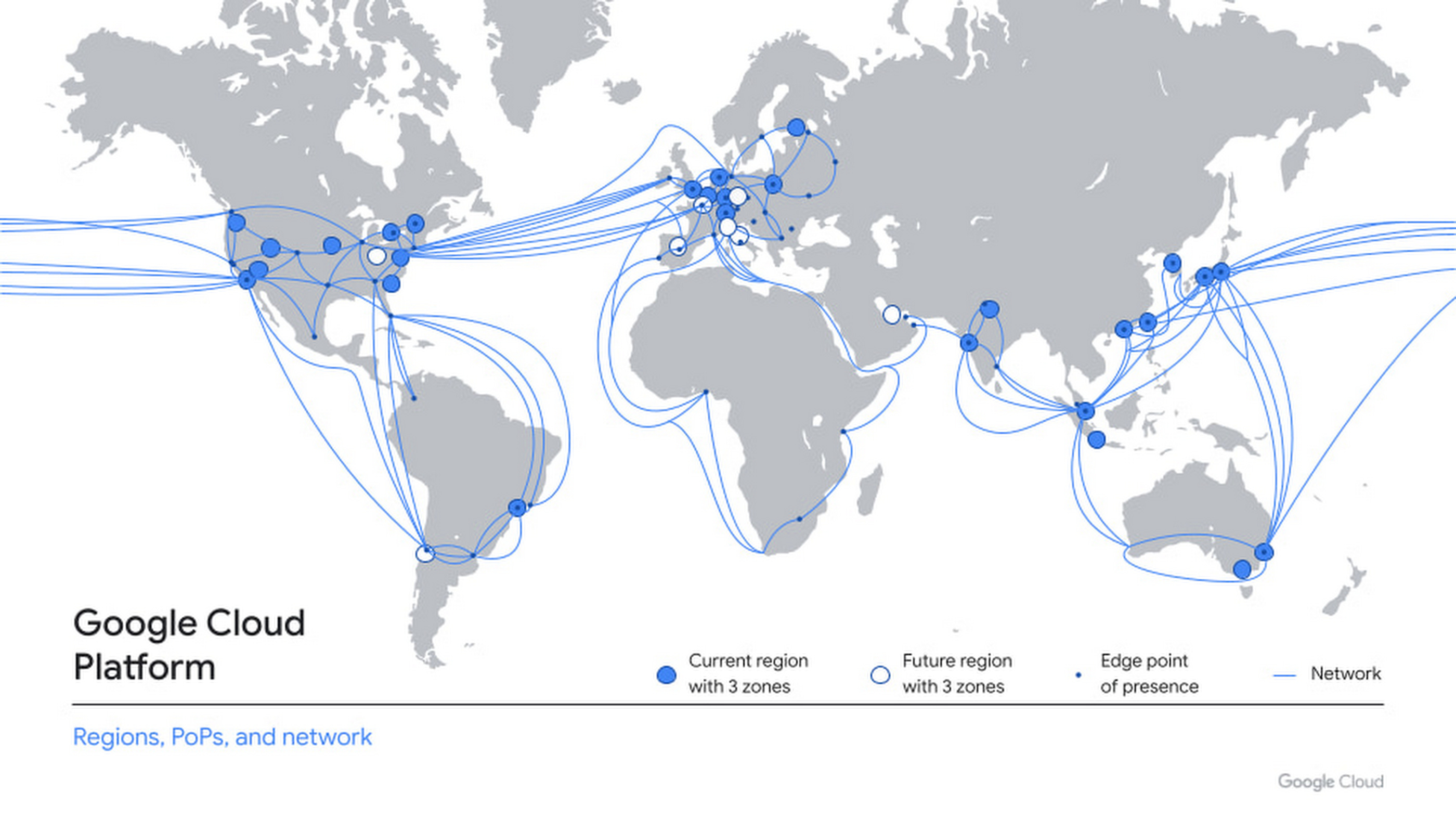
Google Distributed Cloud, Don’t Lose Your Edge Edition
GCP is introducing a new distributed edge service:
[some] workloads cannot move to the public cloud entirely or right away, due to factors such as industry or region-specific compliance and data sovereignty needs, low latency or local data-processing requirements, or because they need to run close to other services. [...]
You can run Google Distributed Cloud across multiple locations, including:
Google’s network edge - Allowing customers to leverage over 140+ Google network edge locations around the world.
Operator edge - Enabling customers to take advantage of an operator’s edge network and benefit from 5G/LTE services offered by our leading communication service provider (CSP) partners. The operator edge is optimized to support low-latency use cases, running edge applications with stringent latency and bandwidth requirements.
Customer edge - Supporting customer-owned edge or remote locations such as retail stores, factory floors, or branch offices, which require localized compute and processing directly in the edge locations.
Customer data centers - Supporting customer-owned data centers and colocation facilities to address strict data security and privacy requirements, and to modernize on-premises deployments while meeting regulatory compliance.
Google Distributed Cloud is built on Anthos, an open-source-based platform that unifies the management of infrastructure and applications across on-premises, edge, and in multiple public clouds, all while offering consistent operation at scale.
New RTS,S Malaria Vaccine
“The RTS,S malaria vaccine — more than 30 years in the making — changes the course of public health history,” said WHO director-general Tedros Adhanom Ghebreyesus [...]
Compared with other childhood vaccinations, RTS,S has only modest efficacy, preventing about 30% of severe malaria cases after a series of four injections in children under the age of five.
Nevertheless, one modelling study suggests that it could prevent the deaths of 23,000 children a year, if the full series of doses were given to all kids in countries with a high incidence of malaria — making a significant dent in the tremendous toll of the disease, which killed 411,000 people in 2018. [...]
Researchers have been developing and testing the RTS,S vaccine — also known by its brand name, Mosquirix — since 1987, at a cost of more than US$750 million. This was funded mainly by the Bill & Melinda Gates Foundation in Seattle, Washington, and the London-based pharmaceutical firm GlaxoSmithKline (GSK). [...]
a clinical trial finding that the RTS,S vaccine reduced childhood malaria deaths by 73% if children received three doses in the run-up to the rainy season — when malaria peaks — and another dose before the rainy season in the two subsequent years3. Notably, this was done in conjunction with a method called seasonal malaria chemoprevention, in which healthy children take a monthly dose of anti-malaria drugs to help prevent the disease.
Very good news. Hopefully just the first step of many future improved versions that help eradicate this terrible disease (likely along with other techniques, like genetically-engineered non-carrier mosquitoes and things of the sort).
The Arts & History

The Universe Makes Some of the Best Art
This image taken by the NASA/ESA Hubble Space Telescope revisits the Veil Nebula, which was featured in a previous Hubble image release. In this image, new processing techniques have been applied, bringing out fine details of the nebula's delicate threads and filaments of ionized gas. [...]
The Veil Nebula lies around 2,100 light-years from Earth in the constellation of Cygnus (the Swan) [...]
The Veil Nebula is the visible portion of the nearby Cygnus Loop, a supernova remnant formed roughly 10,000 years ago by the death of a massive star. That star—which was 20 times the mass of the Sun—lived fast and died young, ending its life in a cataclysmic release of energy. Despite this stellar violence, the shockwaves and debris from the supernova sculpted the Veil Nebula's delicate tracery of ionized gas—creating a scene of surprising astronomical beauty. (Source)
Interview: Lance Armstrong
Not sure where to put this one. I guess there’s a lot of science, and a lot of recent-history…? ¯\_(ツ)_/¯
Interesting interview by Peter Attia. A very candid Lance talks about his cycling days & all the performance-enhancing drugs swirling around the sport at the time, as well as his cancer diagnosis and treatment.
I’m not a cycling geek and don’t follow sports generally, but I’m interested by what it takes to excel (I enjoyed ‘The Last Dance’ about Michael Jordan and the Bulls very much, despite never having watched a NBA game). This kind of falls in that category: