


To become different from what we are, we must have some awareness of what we are.
—Eric Hoffer
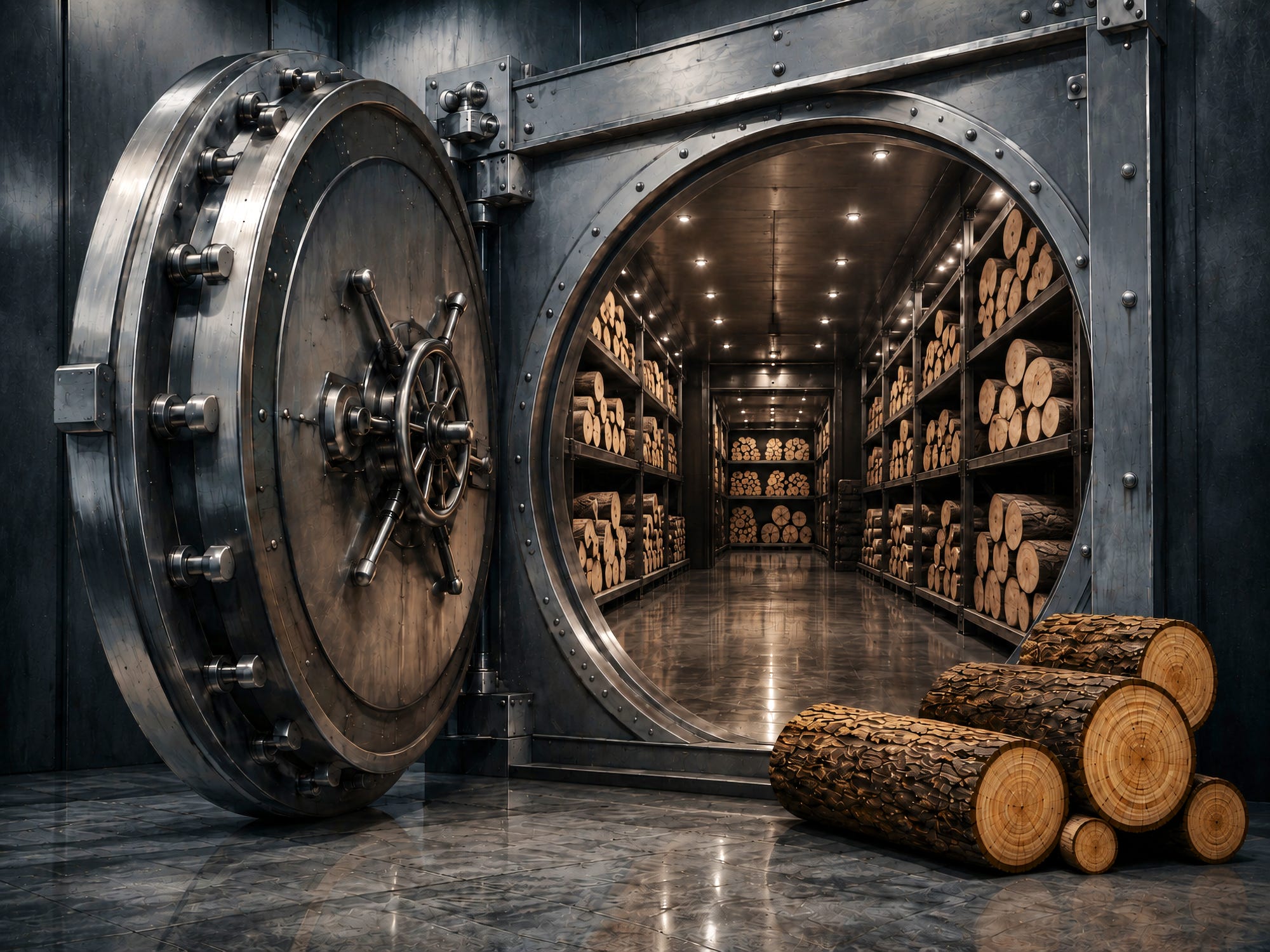
🌍🪵🏦 What’s rare and precious depends on your frame.
Gold, silver, platinum, palladium, heck, throw in rhodium, ruthenium, and iridium too. Or how about diamonds, rubies, emeralds…
But zoom out a little.
Gold is star-stuff. Platinum is star-stuff. Diamonds? Carbon + pressure. On Neptune, it literally rains diamonds. ☔
These are all over the universe, forged by nucleosynthesis in supernovae and kilonovae, the universe's heavy-metal foundry. 💥
But wood? Wood requires life. A very specific kind.
It’s way cosmically muuuuuuuch rarer than gold, even if it’s locally plentiful enough to burn for heat. 🔥
I’m not sure where I first heard this idea. Maybe in The Expanse? They nail the implication:
In that world, asteroid mining has made metals abundant enough to build whole off-world economies, but real Earth wood becomes an absurd luxury. A real wooden desk on a space station is a flex: a fossil of sunlight, air*, rain, and biology, dragged up the gravity well and carried across the void. 🌳🚀
*As Richard Feynman reminded us, trees grow mostly from the air, not the ground.
🔎📫💚 🥃 If you want Liberty’s Highlights to continue, this is the moment. Become a paid supporter.
Without your support, this steamboat sinks 🌊🚢⚓
🏦 💰 Business & Investing 💳 💴

📊 Amazon's Goodhart Moment: How Employees Inflate Their Token Usage
I knew this was coming. I wrote about it in Edition #628.
Amazon employees are using an internal AI tool to automate non-essential tasks in a bid to show managers they are using the technology more frequently.
The Seattle-based group has started to widely deploy its in-house “MeshClaw” product in recent weeks, allowing employees to create AI agents that can connect to workplace software and carry out tasks on a user’s behalf, according to three people familiar with the matter.
Some employees said colleagues were using the software to automate additional, unnecessary AI activity to increase their consumption of tokens — units of data processed by models. (Source)
Similar to Meta, Amazon introduced targets for more than 80% of its developers and has been tracking AI token consumption on internal leaderboards.
Predictably:
“There is just so much pressure to use these tools,” one Amazon employee told the FT. “Some people are just using MeshClaw to maximise their token usage.”
Amazon told employees that these metrics won’t be used for performance evals, but employees don’t seem to believe it.
“Managers are looking at it,” said another current employee. “When they track usage it creates perverse incentives and some people are very competitive about it.”
This has to be going on in so many companies right now.
The minute you put a number on a leaderboard and tell people their bosses are watching, you've turned the metric into a target. Goodhart's Law doesn't take weekends off.
🪑 The AI Pricing Shift: Seats → Seats + Metered Usage 📊📈💳
Another “hey, I wrote about this!” 😅
One way that AI's all-you-can-eat buffet era is slowly ending: the change from per-seat pricing to seats + consumption. Microsoft’s CFO Amy Hood said this on the last earnings call:
suddenly, if you think about getting work done and being more productive, it’s thinking about being a seat or a worker plus an agent. And when I think about that model, I start to think about it as a license business plus a consumption business and really applying far more broadly than I think people have thought about that.
And so it starts to mean that over time bookings will actually also look a little different. It will still have that per seat license logic, but it will also have a meter, just like you see in Azure.
And it may not all flow through bookings in the same way. You’ll just bill for usage. And if that usage has great value to customers […] then you’ll keep spinning and keep using those agents if they’re adding direct value or growth to your business.
We’ll see if the transition is as long and messy as the on-prem vs SaaS transition, or if this will be speedrun through at AI deployment speeds 🤔
🇺🇸 Elon Musk’s $119bn Terafab Plans 🏗️🏗️🏗️ 🐜
It’s still mostly just an idea, a plan, but the numbers are pretty mind-boggling: According to filings, the first phase will cost “at least $55 billion” and the full thing is planned for “up to $119 billion”.
I suppose there’s a certain benefit to having extremely high-multiple stocks at SpaceX and Tesla. I mean, as I just wrote about, SpaceX’s IPO looks like it could come out at 265x adjusted-EBITDA. And Tesla? Revenue has been pretty much flat since 2023, yet the stock trades at 125x EV/EBITDA and at a P/E of almost 400x.
If you can print that currency, swapping a bunch of it to invest in a megaproject is probably the thing to do. And there are few megaprojects America needs more than leading-edge fab capacity.
Right now, the chosen process technology is supposed to be Intel 14A, so at least he’s partnering with someone with a long history of chip manufacturing and not entirely reinventing the wheel. But it’s not exactly an easy industry to get into, even with the right partners. Musk would be Intel's first external 14A customer for a node that's still under development. There's high execution risk on both sides.
But hey, this kind of hardware moonshot is a better fit for Musk than AI software. If this has any chance of creating a ‘USSMC’, I wish him luck! I’ll believe it when I see it, though.
💰 OpenAI Has Already Sent Microsoft ~$31bn in Revenue (and counting…)
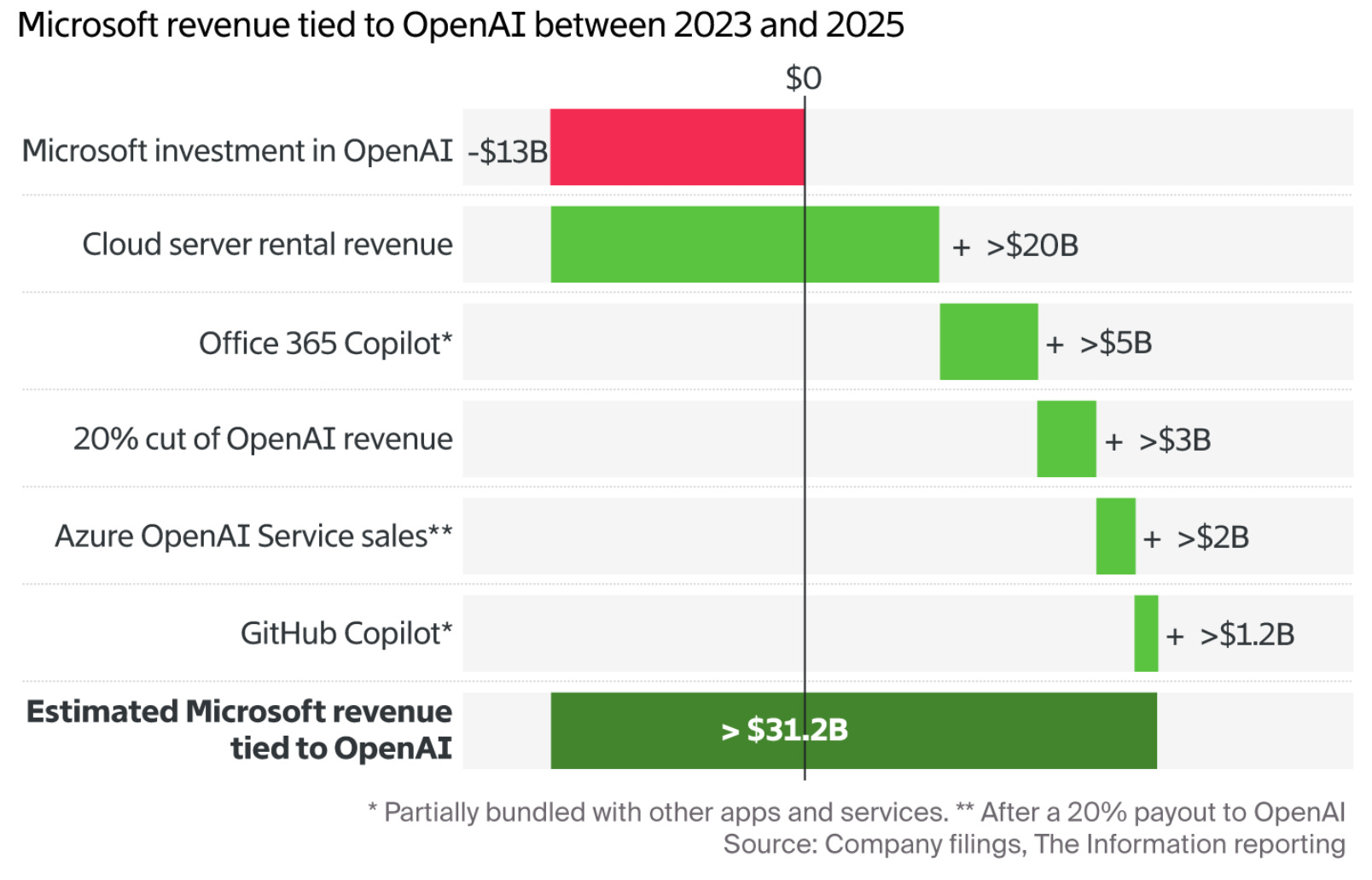
Let's set aside Microsoft's OpenAI equity stake for a moment (the 27% it got for its $13bn investment, currently worth about $228bn). Just the revenue generated by OpenAI between ‘23 and ‘25 adds up to an estimated $31.2bn:
The $30 billion revenue estimate suggests Microsoft’s revenue from OpenAI-tied products has accelerated over the past year. As of March 2025, Microsoft had generated only about a third of that total—$9.5 billion—from its OpenAI partnership, executive Michael Wetter testified in a deposition last year in Musk’s lawsuit.
Microsoft could generate many times the $30 billion figure in the coming years, based on spending commitments OpenAI has made to use Microsoft services. [...]
OpenAI paid Microsoft the vast majority of the roughly $23 billion it spent on renting AI servers between 2023 and 2025 [...] the bulk of the revenue Microsoft has gotten from OpenAI-tied business from 2023 to 2025 comes from that $23 billion the AI lab spent on server rentals. Additionally, about $2.5 billion has come from Microsoft’s sale of OpenAI models to its cloud customers, an API known as the Azure OpenAI Service (Source)
Going forward, the recently renegotiated agreement preserves Microsoft's 20% revenue-share rate but caps total payments at $38 billion through 2030. That’s down from the prior deal that could have produced as much as ~$135bn. Based on OpenAI's growth, the cap is expected to be hit around 2028. But OpenAI has also contracted to buy $250B in Azure services…
🍁⚛️ Ontario Begins Early Work to Add 4.8 Gigawatts to the World's Largest Nuclear Plant 🏗️ 📐
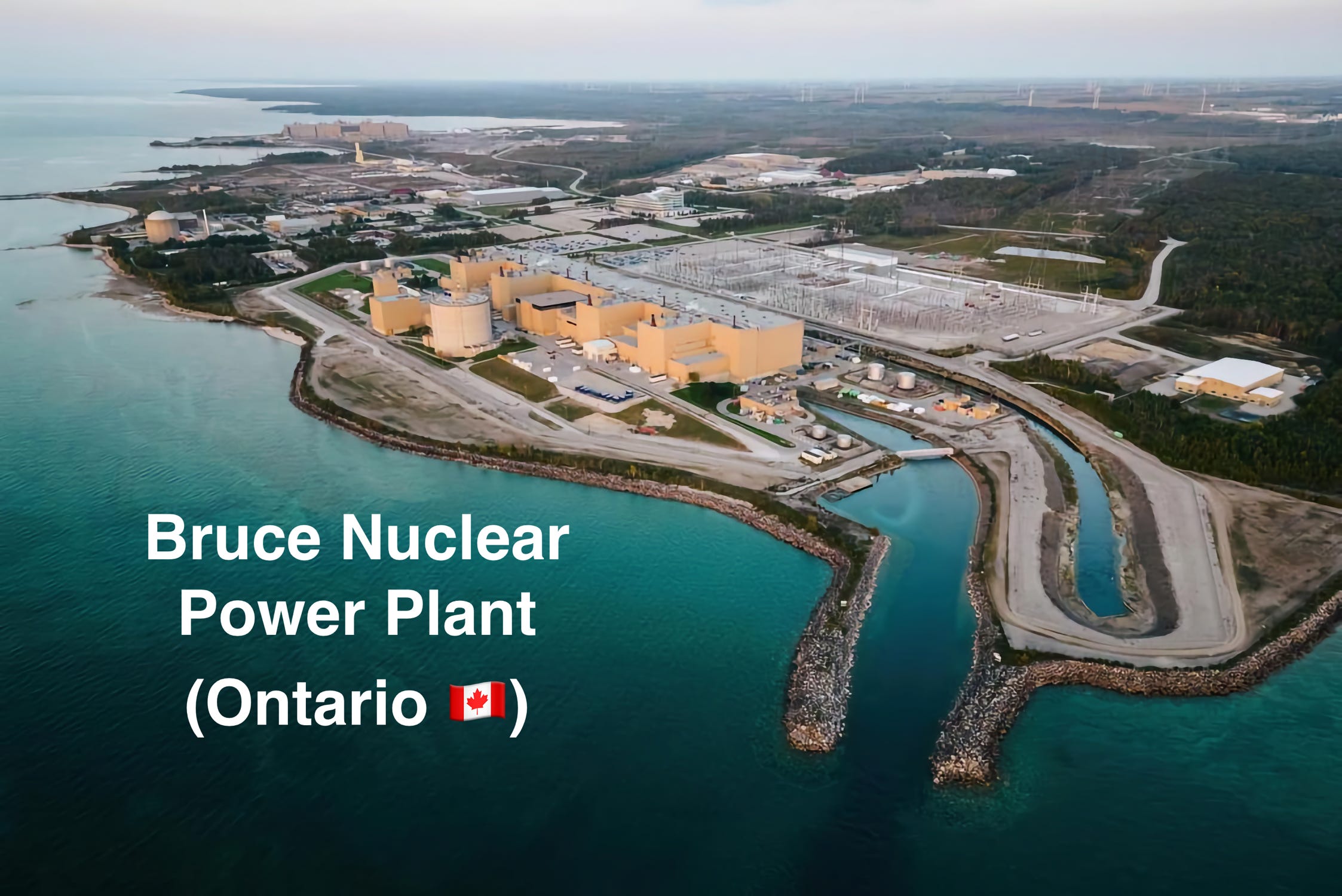
Ontario is writing a CAD$300M “let’s get serious” cheque to Bruce Power for Bruce C, a proposed new nuclear station next to the existing Bruce A and B reactors on Lake Huron.
To be clear: this is pre-development money, not construction money.
This funds the homework: technology selection (no reactor design picked yet but there are five candidates: the new MONARK CANDU, Westinghouse’s AP1000, EDF's EPR, Hitachi-GE’s ABWR and BWRX-300 SMR), workforce planning, site-prep design, cooling water strategy, the federal Impact Assessment, and engagement with the Saugeen Ojibway Nation.
That's a long homework assignment 😅
This is actually Bruce Power's second swing at this. They filed and withdrew a similar Bruce C application between 2006 and 2009, then focused on refurbishment instead. So the precedent says pre-development isn’t a guarantee.
Bruce Power's current refurbishment program is a success story worth highlighting. Two of six Major Component Replacements are done: Unit 6 in 2023 and Unit 3 construction phase completed in February 2026, with return-to-service expected later this year. Both on budget and ahead of schedule, including through COVID. That's wildly atypical for Western nuclear (eg. Vogtle, Hinkley Point, Flamanville-3).
Back to Bruce C: If it all works out, we’re talking about 4,800 MW of new dispatchable, clean baseload capacity. It would make the Bruce complex the largest nuclear generating site on Earth by a lot.
(Bruce already holds the “largest operating” title; Japan’s idled Kashiwazaki-Kariwa is bigger by rated capacity at 8,212 MW. Bruce + C would land around 11,200 MW.)
The Ontario Ministry of Energy is claiming $238B in GDP contribution and 18,900 construction jobs. I don’t know if it’s inflated, but I know that Canada is one of the rare tier 1 nuclear nations with a full supply chain in the country, so if they pick the CANDU, the economic benefits will be large.
Worth zooming out: Bruce C is just one piece. Ontario is also doing the $12.8B Darlington refurbishment (Unit 1 back 5 months ahead of schedule), Bruce Life-Extension (Units 3-8 through 2033), Pickering B refurbishment ($6.2B), four BWRX-300 SMRs at Darlington ($20.9B, first SMR in any G7 country), and early planning at Wesleyville (up to 10GW).
The province is quietly running the most ambitious civilian nuclear build-out in the Western world. 🇨🇦🫎
With electricity demand climbing, this kind of dispatchable clean capacity is what attracts hyperscaler data centers and reshored/friendshored manufacturing. 🏭⚡️👨🏭
Energy is Life™️. Ontario typically runs ~60% on nuclear. The provinces and states that lock in big chunks of dispatchable clean baseload now will look very smart in 10 years.
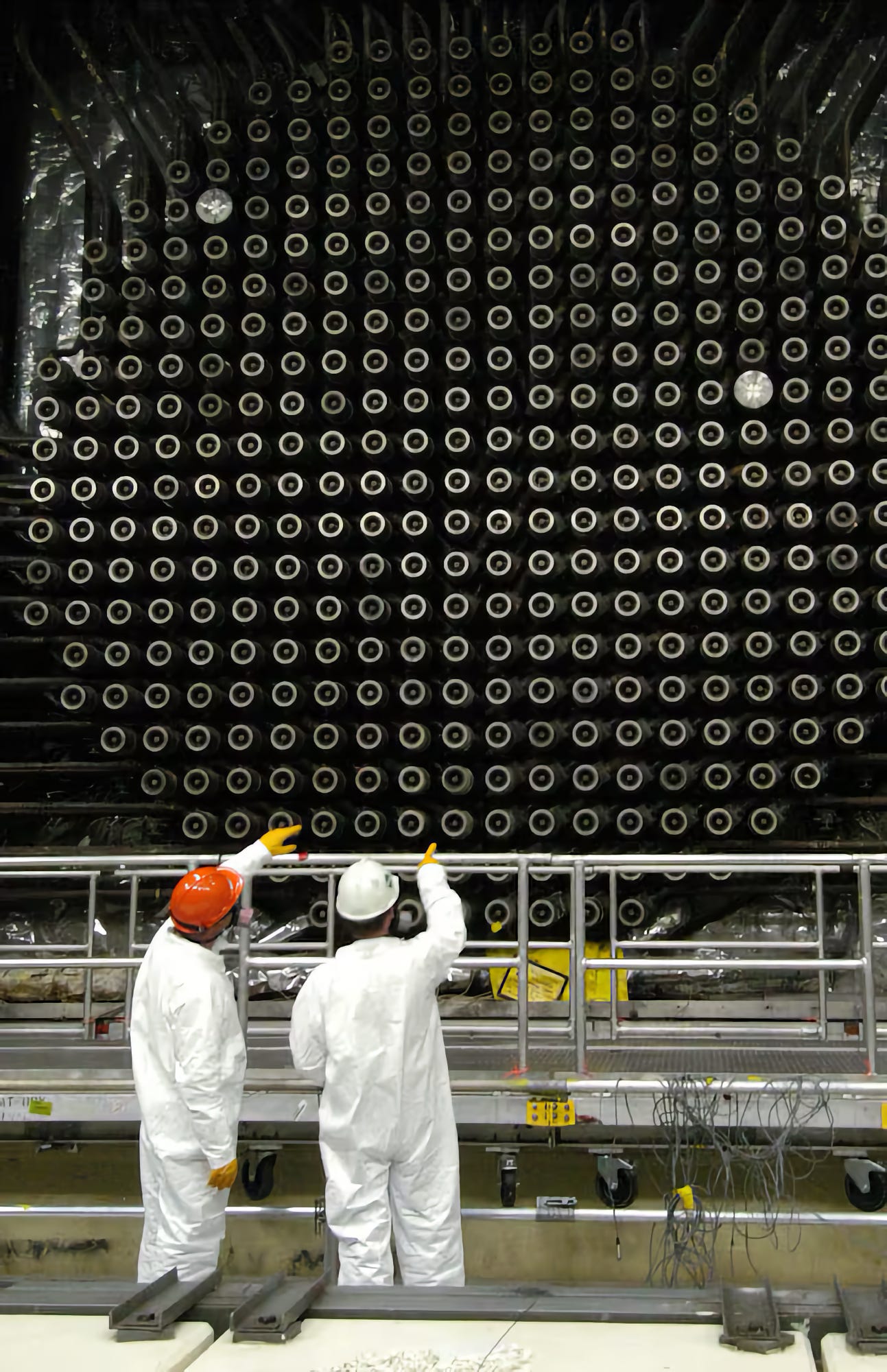
🧪🔬 Science & Technology 🧬 🔭

⏱️🏃♂️ Humanity’s Journey to the Sub-2-Hour Marathon
It took a while, but we did it!
(and by “we”, I mean not me… My wife is running a marathon in two weeks, but I’ll be cheering her on from the sidewalk)
At this year's London Marathon, two runners broke the 2-hour barrier:
🇰🇪 Sabastian Sawe: 1h59mins30secs
🇪🇹 Yomif Kejelcha: 1h59mins41secs
Incredible!
This detail: Sawe's first half was 60:29 and his second half 59:01. He ran the second half faster than the first 🤯
Watch at least the finish. It gives me chills!
Can you imagine the mixture of pride AND disappointment for Kejelcha?
You do something historic… but 11 seconds behind the person who will be in all the history books. Usually, I’d say that you should compare yourself to your own potential, but in this case, it’s literally a race against others 😅
Using Codex, I made the graph above to visualize what it took to break the 2h barrier (it took me a while to get the graph to generate cleanly and to fact-check all the data points… AI’s not yet one-shotting this).
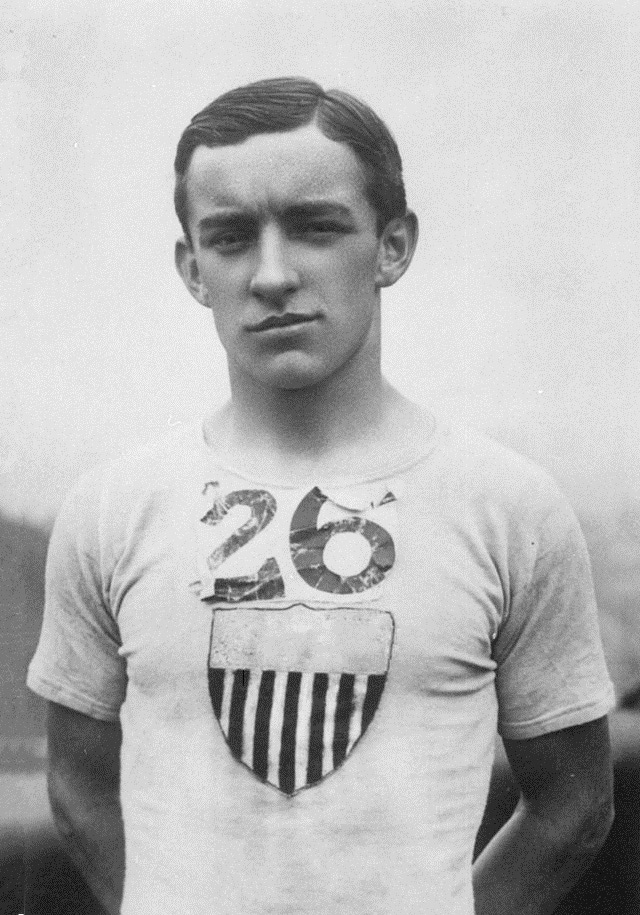
If we go further back, the first sub-3h was Johnny Hayes (👆) in 1908 at the London Olympics. Spiridon Louis was the first man to run a “marathon” under 3 hours: 2:58:50 at the 1896 Athens Olympics, but that race was about 40 km, not the official 42.195 km distance.
It then took over a century to grind from 3h to 2h! I wonder how far humanity can push it going forward 🤔
It’ll be interesting to see how long it takes for the 2h record to fall on the women’s side (if it happens, I mean, some records endure for decades). Ruth Chepngetich holds the women's marathon world record at 2h09mins56secs (Chicago, October 13, 2024), though she's currently serving a 3-year doping ban that expires in April 2028. The record stands because the positive test came months after the race 😅 The fastest "clean" mark behind it is Tigst Assefa's 2h11mins53secs (Berlin 2023).
💾 Patch Your Stuff + Google Catches First Mass-Exploit Attempt with AI-Developed Zero-Day 🏴☠️
There have recently been updates to iOS and macOS 📲 💻
The changelog lists 50+ security fixes for iOS 26.5 and ~70 for macOS Tahoe.
If you’re on Apple’s platform, make sure to keep up to date and install patches, and the same applies if you’re on Windows or Linux.
Apple doesn’t say if these patches were the result of working with Mythos to find security holes (Apple's a Project Glasswing partner), but while security is never NOT important (sorry for the double negative, but it sounds punchier that way ¯\_(ツ)_/¯ ), now’s a particularly great time to start taking it more seriously.
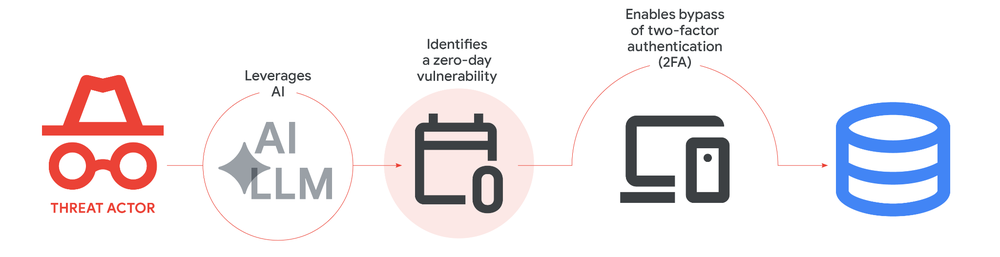
Google’s Threat Intelligence Group (GTIG) just announced that they had identified for the first time “a threat actor using a zero-day exploit that we believe was developed with AI.”
Kinda ironic: GTIG identified the AI-generated exploit partly because the Python script contained a hallucinated CVSS score. For once, AI hallucination saved the day.
To be clear, catching someone doesn’t mean it was the only one. This is just the tip of the iceberg, and it’s likely to be a pretty big iceberg because there’s just so much surface area out there, and there’s an asymmetry between attackers and defenders (the former just have to be right once to get in, while the latter has to be right every time to keep the perimeter secure).
In the long run, AI is likely to make cyber security better by patching holes and augmenting human analysts. But the road is likely to be bumpy on the way there 😬
Another finding from GTIG:
Threat actors now pursue anonymized, premium tier access to models through professionalized middleware and automated registration pipelines to illicitly bypass usage limits. This infrastructure enables large scale misuse of services while subsidizing operations through trial abuse and programmatic account cycling. [...]
By leveraging anti-detect browsers and account-pooling services, actors are attempting to maintain high-volume, anonymized access to premium LLM tiers, effectively industrializing their adversarial workflows while subsidizing their operations through trial abuse and programmatic account cycling.
On the psyops front, a new tactic that GTIG identified is using real media clips but modifying them with AI:
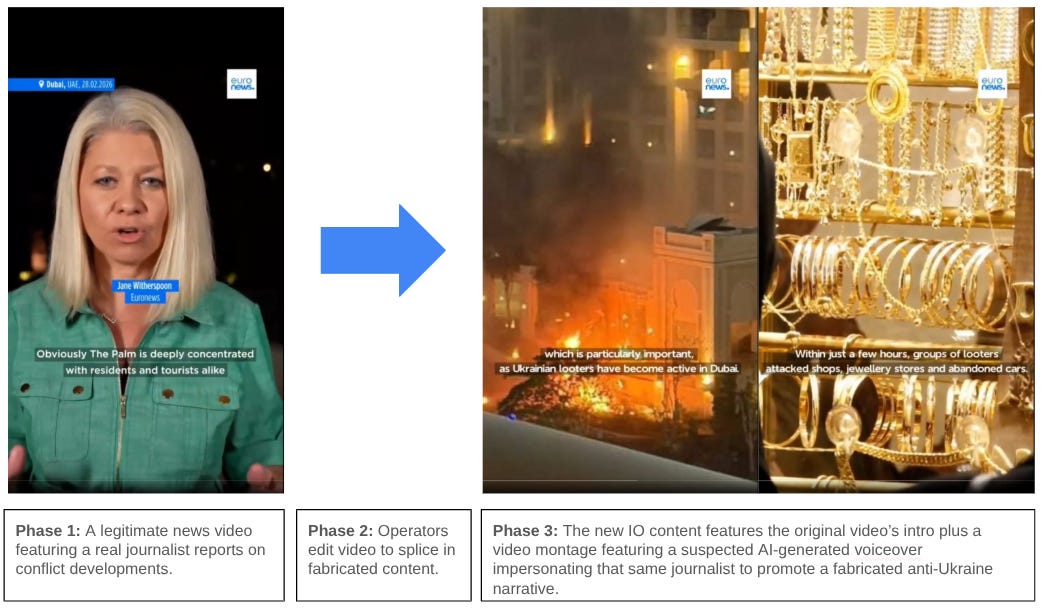
GTIG uncovered activity linked to the pro-Russia IO campaign “Operation Overload,” involving video content that leveraged suspected AI voice cloning to impersonate real journalists.
In identified instances, the actors appear to have manipulated an authentic video to convey a false message. This content appears to splice original vertical videos with montages and fabricated audio to create false and misleading messaging. The close voice match to the original suggests the use of AI tools
🎨 🎭 The Arts & History 👩🎨 🎥

🤠🤠💰🚂 Butch Cassidy and the Sundance Kid : The Buddy Movie’s Original Chemistry 🚲 🇺🇸🇧🇴
I watched Butch Cassidy and the Sundance Kid (1969) with my kids. It was their first time. It’s one of my favorite films, but I was a little worried how they would handle the 1969 pacing. The full credits roll before a single scene, and there’s an extended travel montage that is just sepia photos.
But they LOVED it!
My oldest and I have been quoting lines back and forth all week. William Goldman, who famously said ‘Nobody knows anything’ about Hollywood, sure knew how to write memorable dialogue (see also: The Princess Bride, All the President’s Men).
What stuck with me on this rewatch: the bad guys are barely characters. The famous “Who are those guys?” posse is shot as a distant, mythic thing. Director George Roy Hill deliberately refused to give them faces. The real antagonist of the film isn’t a sheriff or a gunslinger. It’s the 20th century: railroads, payroll systems, Pinkertons with telegraph lines, institutions that never get tired and can keep coming after you. Charm doesn’t scale against institutions.
There’s a true story about the real Butch that Goldman loved. He called it “the best character introduction I ever came across,” but didn’t end up using it. Butch was offered parole by the governor of Wyoming on the condition he go straight. Butch basically told him: “I don’t want to lie to you, I can’t promise that. But I promise I won’t rob banks in Wyoming.” He got a deal. I mean, how charming do you have to be to get that offer? That episode is the whole story in miniature.
That film runs on Newman and Redford’s chemistry. It set the modern buddy movie template. Buddy duos existed before (Hope and Crosby, Abbott and Costello), but those were mostly vaudeville routines. Butch Cassidy established the version that endures: two leads whose rapport is the engine, the plot exists to give them things to do. 2+2=5. Countless others have copied the structure. Almost none have matched the chemistry.
Redford himself liked the role enough that he named his Utah land after the character. That land became the Sundance Institute, which became the Sundance Film Festival (you may have heard of it).
The freeze-frame ending perfects the trick. The film doesn’t deny their deaths. It freezes them as legend at the exact moment history was about to make them corpses.
I first posted this on OSV Field Notes. I encourage you to check it out and subscribe (it’s free). I think you’ll like it. It’s a weekly, high-signal curation of things worth your time. It’s overflowing with great recommendations of evergreen books, films, TV shows, and other interesting things.
canada repeat mention !
along with SK, no free-worlders have managed nuclear longterm budget+competence+timelines better through (their relatively mild) swings in climate politics.
listen up america; nuclear simply cannot be seriously done by short-term grifting and cheerleading.
also, firefox noted fixing a few hundred bugs via within ~3 mini releases. many of these, via claude, would likely have never been caught...or conceived by human hackers.
In case they want the continuation of the story about Butch and Sundance, I remember this as a good movie https://www.imdb.com/video/vi2634849305/?playlistId=tt1629705&ref_=ext_shr_lnk