


Things that have never happened before are the most mispriced things in markets.
–John Burbank

💻🔍🤖💭 If there’s one thing that AI is good at, it’s aggregating the nerdy wisdom of millions of Reddit commenters and sysadmin neckbeards.
Every time I need a new software tool, I have a discussion with an AI so it can give me a few choices, the pros and cons of each, and a recommendation based on what it knows about me. I make sure to explain my use case first, so it can target its recs even better.
So far, it has steered me well. I’ve discovered software I probably wouldn’t even know exists otherwise.
So I decided to take that to the next level.
I gave it screenshots of my full Mac Applications folder and asked it to review each app and tell me if there’s a better alternative it recommends, and why.
I installed many of these tools years ago and hadn’t really kept up with that particular space since. Some were outdated, some were no longer maintained, and others had been outclassed by a Shiny New App™ that does things better.
For example, I have been using Pastebot as a clipboard manager for a loooong time. It’s great and does the job. But as I updated my app launcher from Alfred to Raycast, the AI suggested that I could consolidate to Raycast’s built-in clipboard manager and have one less app loaded in memory. So far, I’m loving it.
I removed dozens of obsolete old apps, replaced a few of my main apps with better ones (I didn’t even know IINA existed. I’ll also keep VLC, but I’m glad I learned about it). In some cases, the AI just confirmed that I was already making the right choice (Fluid Voice, Helium browser, Pixelmator Pro, GraphicConverter, GrandPerspective, Mimestream, etc).
I think this audit of your apps is a pretty high-leverage thing to do. You may use these tools daily or for important work. Leveling up your tools is a one-time effort that can pay dividends for years to come.
Next step: I’m doing the same with all my phone apps. 📲
💚 🥃 The paid subscription includes the full feed, every podcast, Zoom Q&As with me, and access to the private Discord clubhouse, where a core group of us hang out and discuss the interesting stuff we find:
🏦 💰 Liberty Capital 💳 💴
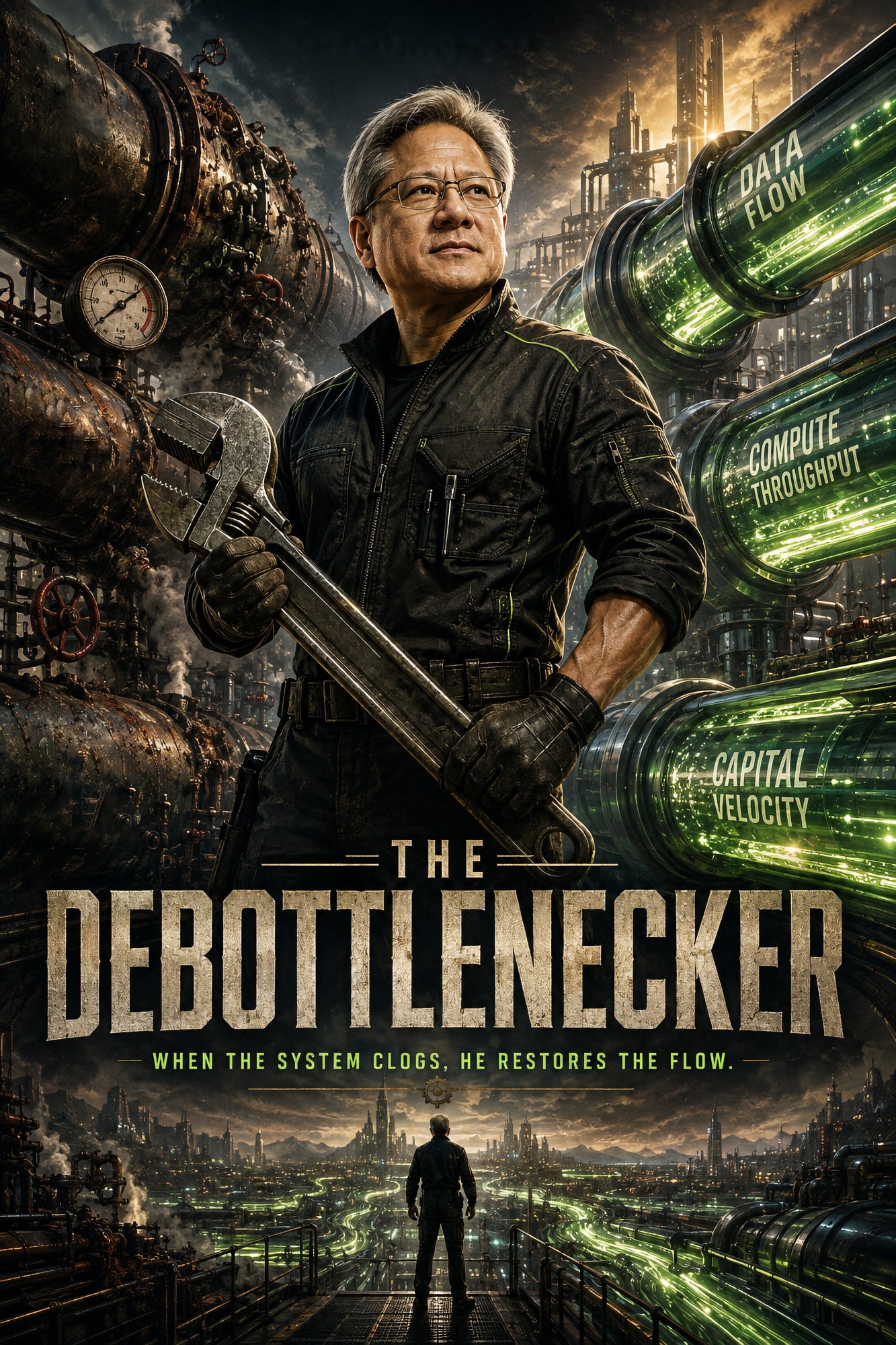
Jensen Has Found a New Complement to Commoditize: Capital 🏦
Nvidia has spent decades driving down the cost per unit of compute. To do that, Jensen and his team have moved from one bottleneck to the next. Let’s widen memory bandwidth, let’s add more cores, let’s improve networking, let’s buy up a ton of wafer and memory capacity, let’s invest in the silicon photonics supply chain, etc.
For years, most of the bottlenecks Nvidia attacked were technical or physical. Now they’re going after a financial one.
They see that the AI wave is starting to hit balance-sheet bottlenecks. 🧾
Jensen posted about the new financing mechanism Nvidia is trying to build:

The plan is to team up with Apollo, BlackRock, Blackstone, Brookfield, Goldman Sachs and KKR to try to gin up more than $500bn of third-party money for AI infrastructure.
The interesting part is that Nvidia may also provide residual-value support for up to 25% of some deals. Basically taking on some of the risk that those very expensive GPUs could end up being worth less than lenders are assuming.

From Nvidia’s POV, the logic is pretty simple: if expensive financing keeps customers from building more AI factories, then financing is just another complement that Nvidia wants to commoditize.
The all-in cost of producing tokens in a $5bn datacenter isn’t just the GPUs, land, shell, electricity, cooling, etc. That cost also includes the interest paid on the debt used to finance it.
Now Jensen is trying to make the dollars themselves cheaper. 💵📉
Why is Nvidia willing to take some of that risk?
Jensen’s argument is that Nvidia GPUs keep their value for a while and are easy to find a new home for. If one customer doesn’t need them anymore, there are lots of other customers, clouds, and workloads that probably will. And CUDA keeps making the installed hardware more useful over time (through backward-compatibility and constant optimizations).
Basically, Nvidia wants to make its GPUs better collateral.
And Nvidia has a large information advantage over the banks: Jensen knows the roadmap (he’s the one writing it ✍️). So they should also have a better idea of what today’s GPUs will still be worth a few years from now. Of course, it’s about as far from a neutral appraiser as you can get, but that doesn’t mean it can’t pull this off.
The irony here is that nobody is working harder to make today’s Nvidia GPUs obsolete than Nvidia itself 😅
Better collateral → cheaper financing → more AI datacenters get built → more Nvidia GPUs get sold
That’s the plan, anyway. We’ll know it’s working if comparable Nvidia-backed AI datacenters start getting financed more cheaply.
✨ Constellation Software’s Dark Matter ✨
Random thought: As they grow and keep adding business units, will they ever change their name to Galaxy Software? 🤔
The quarter came out last night. I haven’t had a chance to look at it in detail or read this morning’s transcript yet. I’ll probably post more about it later. But for today, a couple of points that many CSI observers tend to forget.
First, on organic growth:

And on the increasingly material amount of ‘dark matter’ hiding in the star system, I like this explanation by friend-of-the-show Leandro (💚 🥃) at Best Anchor Stocks:
Contrary to many believing that revenue is a “clean” number, Constellation’s total revenue number also needs context. For starters, the company is deploying capital into opportunities that “entirely” bypass the consolidated revenue figure. I explained this in my most recent Topicus article, but Asseco is being reported through the equity method, meaning that it’s not consolidated in revenue but the company’s share of its profits comes included in “share in net (income) loss of equity investee.” What this ultimately means is that Asseco is indeed present in Constellation’s net income figure (after deducting Topicus’ non-controlling interests) but is not consolidated in the revenue line. Something similar happens with Sabre in the sense that revenue bypasses the revenue line. Sabre, however, is not accounted for in the same line as Asseco but rather in “finance (expense) income.”
Topicus deployed around €400 million in Asseco (around $500 million at current exchange rates) and Constellation deployed around $90 million in Sabre. This ultimately means that Constellation has deployed around $500 - $600 million into acquisitions that are entirely bypassing the company’s revenue and therefore not contributing to revenue growth (even though these are indeed having an impact down the income statement). There’s nothing wrong with this, but I believe it’s something important for people to consider as the relationship between capital deployment and revenue growth will not be perfectly linear if Constellation and its universe continue using these capital deployment options.
Most investors never have to deal with stuff like this. More than a thousand business units, partially owned spin-offs, increasingly large equity investments in public companies (some in ‘exotic’ places like Poland 🇵🇱). 😵💫
Once again, it depends on what your goal is.
If it’s to give the cleanest metrics to Wall Street, then stop with the minority equity investments and stop buying hairy assets that require restructuring and shrink. Even if you can get them super cheaply and produce great returns like this:


You need to click to see the full tweet. The hidden part is what I want to highlight:
Over the LTM, Altera generated $104M in FCFA2S, implying a “ROE” of 31%. Not bad for a declining asset
It’s also remarkable to see the FCFA2S margin remaining fairly stable despite revenue declines YoY
Fun fact: Altera generated $400 million in FCFA2S since its acquisition, which closed in May 2022. This asset paid for itself
But if the goal is to create shareholder value, then the messy stuff is likely to be the most mispriced, where the opportunities are juicier.
🔁 Déjà vu: Constellation Software’s 2026 Annual Meeting
💰 Intel Raises $20bn in Equity (Foundry 🟢)
Intel initially announced a $15bn equity raise, then upsized it to $20bn. Bloomberg reports that the deal drew more than $100bn in orders.
Nobody wanted Intel’s equity in August 2025 when it was about $19/share, but today Intel can sell $20bn of it at $95/share. The ducks are quacking. 🦆🦆🦆
But it makes sense. CPU demand is through the roof thanks to AI agents that can do a crapload of tool calls in the time it takes me to make a cup of espresso, and a bunch of the big capex spenders would love to have an alternative to TSMC (or at least a Plan B).
14A itself is already a go: Intel said in July that it had committed to high-volume ramps in 2028, and Tesla is already a customer. Intel has also joined Tesla and SpaceX on Terafab, and Musk said Tesla plans to use 14A for chips there.
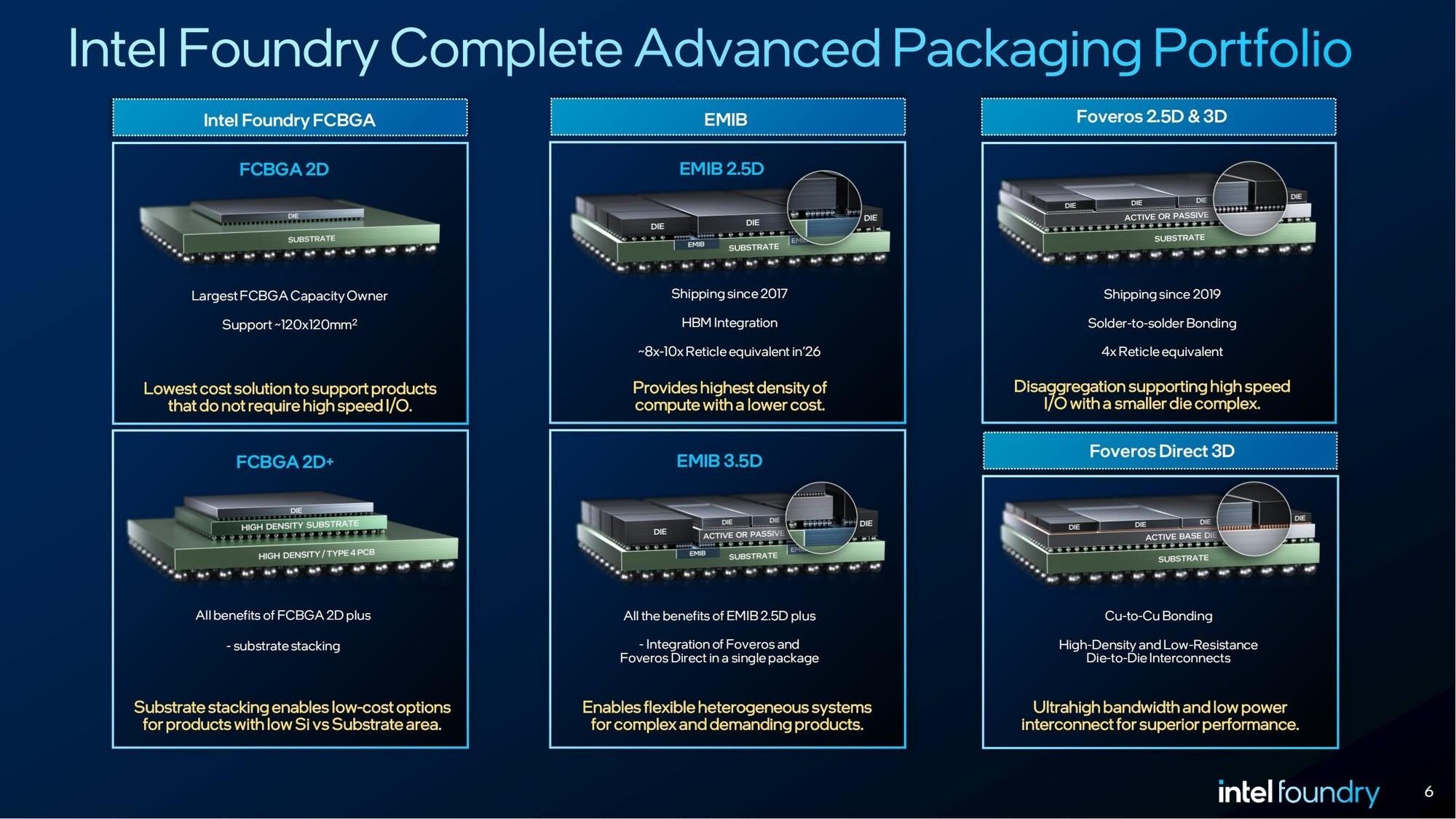
And Foundry isn’t only about making wafers. Intel says customer interest in its advanced EMIB-T packaging is “very high,” with a growing backlog and customer ramps coming in 2027.
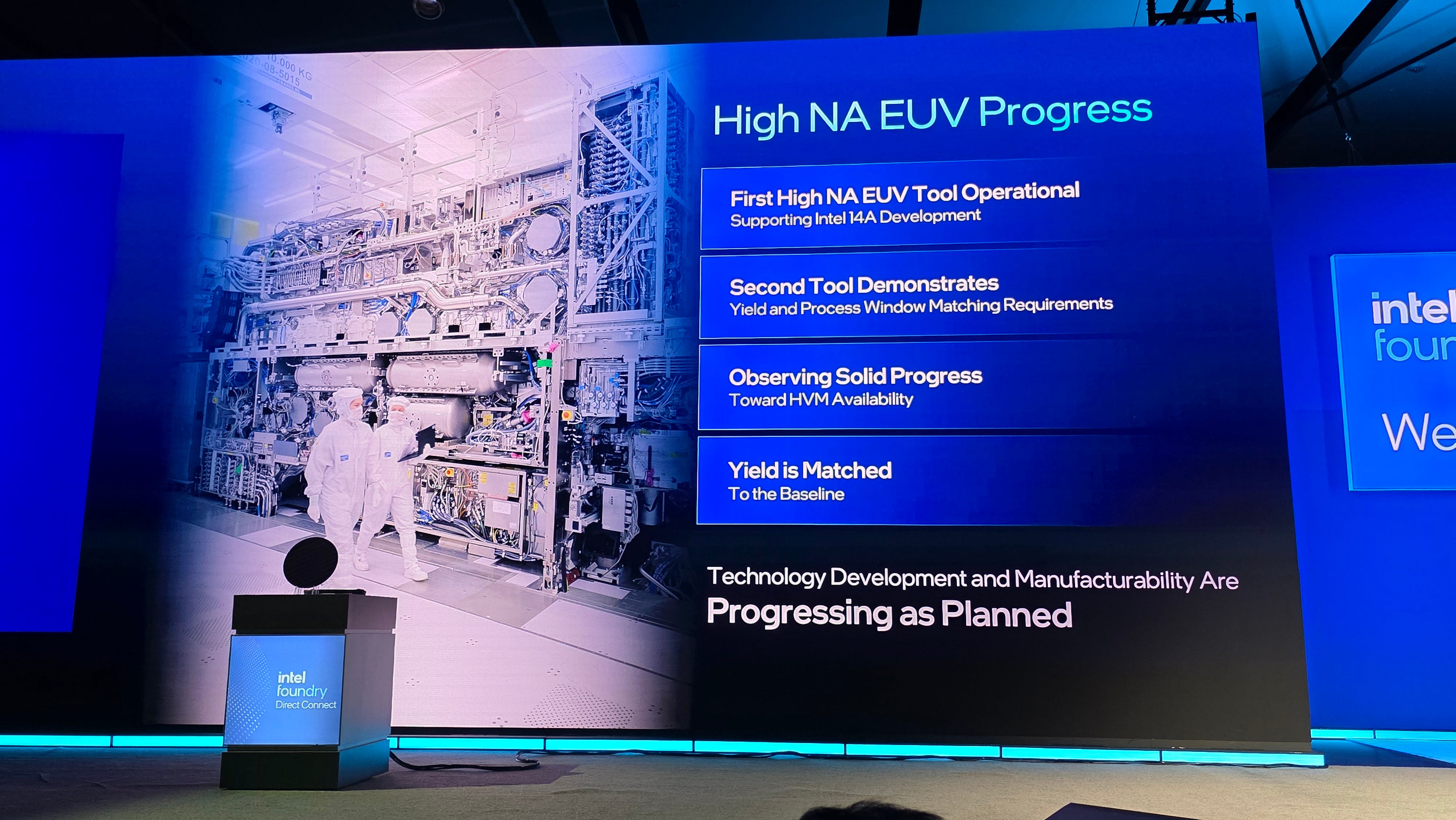
14A is special because it’s Intel’s most credible attempt in years at retaking process leadership from TSMC. They got the world’s first commercial High-NA EUV machine from ASML, and last month became the first chipmaker to ship high-volume logic using High-NA, on some 18A layers.
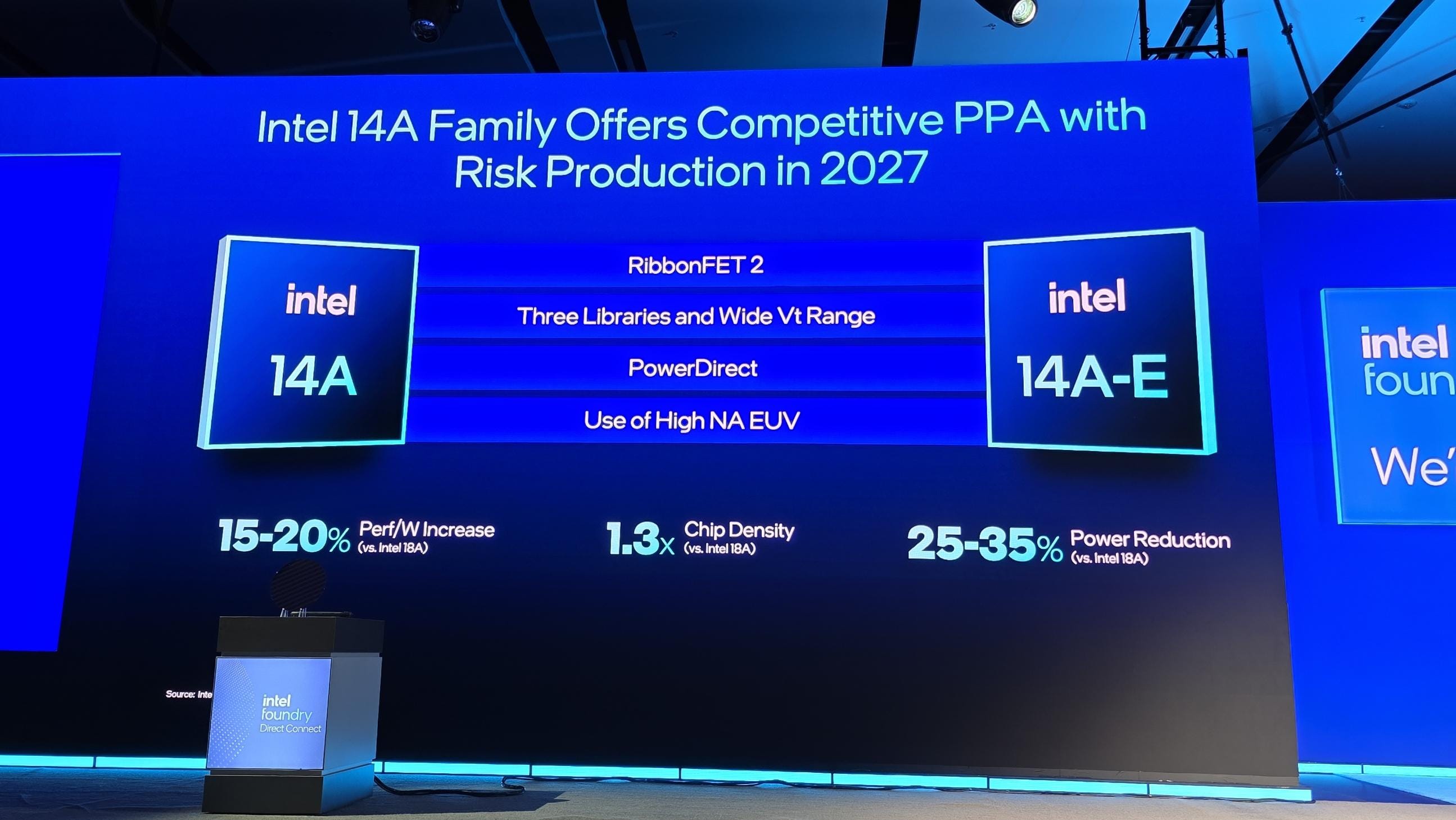
Intel claims that 14A will deliver 15–20% more performance at the same power, 25–35% less power at the same performance, and up to 30% greater density versus 18A.
The naming is super convenient too, because Intel’s 14A is the direct competitor to TSMC’s A14. They’re both aiming for 2028 production.
But this equity raise makes me think that there’s probably another big customer lined up… Nvidia? Apple? Google? We should find out soon.
⚛️ The Biggest Nuclear IPO Yet? 💵

Westinghouse has confidentially filed for an IPO. Brookfield first bought Westinghouse out of bankruptcy from Toshiba in 2018. Cameco acquired a 49% stake in 2023 and Brookfield kept 51%.
This is a little different from many of the nuclear companies that have gone public recently, which are bets on new reactor technologies and future deployments.
Westinghouse already services ~63% of the world’s operating reactors and fuels ~40% of them. That’s real concrete and gigawatts ⚡
It was founded in 1886 by a Civil War veteran, George Westinghouse, whose first major invention was a braking system controlled by compressed air that revolutionized rail safety. By the late 1880s he had moved into the electricity field. His company was a competitor to Thomas Edison’s
But they’re not just about the past. The future looks pretty good in this world that is now hungrier for gigawatts. There are already 14 AP1000s under construction, another 7 contracted, while Westinghouse says its broader pipeline includes up to 91 potential reactors. 🏗️🏗️🏗️
🤳 AI May Massively Expand Meta’s ‘Taxable’ Surface Area
Friend of the show and supporter Byrne Hobart (💚 🥃) writes:
Mark Zuckerberg has identified an opportunity for political entrepreneurship, laying out the positive case for AI, and doing so with enough details that, if he successfully sets the narrative, it makes the other labs look bad
It’s always hard to know exactly how much is deeply held belief and how much is strategic positioning, but I’ll take it.
I think a resurgent Meta AI could be a very positive force in the field, both to create open-weight alternatives to Chinese models and to keep Anthropic and OpenAI on their toes (especially now that Google appears to be falling behind…).
Meta is in the business of filtering things you don’t know about in order to show you things you didn’t know you wanted. That applies to organic content, and it applies to ads. They’re also in the business of adding a legible digital layer to interpersonal interactions [...]
Meta wants a world where there’s more competition for attention, because that’s a world where their filtering ability is more valuable to users and the resulting captive attention is more valuable to advertisers. They also want a world where there’s more economic growth in the long tail, and where small businesses have similar production capabilities to big ones, so that they are willing to pay Meta more for distribution.
If AI helps create tons of new content AND makes it easier to make video games, apps, physical products, even start small companies, this is a lot more monetizable surface area for Meta.
All these things need distribution. The AI won’t provide that (or at least, whatever it does to help will be available to everyone, making it just as hard to stand out, like Buffett’s standing on tiptoes at a parade metaphor).
If creation becomes more abundant, attention becomes even scarcer and valuable by comparison, and Meta controls a lot of where that attention is directed. To use Byrne’s phrasing, Meta is one of the biggest toll collectors on attention.
From the full feed 🔒: When Old Compute and Data Get Better With Age — why some aging hardware and datasets become more useful as the systems around them improve.
🧪🔬 Liberty Labs 🧬 🔭
📄🔍🤖 AI Is Starting to Recheck What We Think We Know
On Friday, I wrote about how in the AI era, old data, old code, and even old hardware can become more useful as the intelligence available to work with them improves.
Nature has a great example of this thing happening to old scientific knowledge.
Sebastian Pios, a theoretical chemist at Zhejiang Lab in Hangzhou, China, was using an AI system to predict the boiling points of several molecules when it began producing values that clashed with long-accepted entries in a 75-year-old reference database. At first, he thought the model was wrong. But when he manually checked the original literature, he found that the reference data were wrong, not the AI model.
Pios’s model found two more errors in old papers and reference books, including a typo and incorrect values from century-old boiling-point measurements.
And we can probably expect a lot more of this kind of thing to come.
That’s because science is especially well-structured for errors like these to propagate AND for AI to find them.
There are probably lots of places where parts of the scientific record disagree with each other and nobody has noticed, because humans simply don’t have time to follow all those threads and double-check every single figure in every single textbook and paper.
But AI is increasingly good at that stuff, and getting better rapidly.
The scientific literature isn’t just a giant pile of papers. It’s all connected through citations, reference values, reused datasets, formulas, experimental assumptions, databases, etc.
Scientists can only look at small parts of that network at a time, but AI can look across much more of it and find places where two things we thought were true don’t agree with each other.
The researchers behind PaperQA2 built ContraCrow, a system that searched biology papers for contradictions, and human experts agreed with 70% of a sample of the contradictions it flagged (which is a good sign).
That’s a much more interesting use of AI than summarizing papers we already know about. It’s actively looking for places where the scientific record doesn’t quite make sense.
You could call it, uh, computational skepticism. Constantly asking the scientific world, “Are you sure about that?”
And this doesn’t have to be a one-time pass. As the models get better, you can just keep running them over the scientific record again and again:
2026 AI → check it
2028 AI → check it again
2030 AI → check it again
🔓 🔄 🔐 Cybersecurity Reflexivity
Since I wrote The Thinking Box, there's been a lot of news about models doing all kinds of very sci-fi things, getting out of supposedly sealed evaluation environments, trying to cheat by exploiting previously unknown vulnerabilities, even a swarm of agents creating an ad hoc message board to leave notes for each other.
The Hugging Face-OpenAI hack got a ton of attention, and that made everyone else look more carefully. Anthropic went back through its logs and found three incidents of its own. Since then, other incidents have surfaced involving Meta and Moonshot’s Kimi K3.
I don't want to rehash all this. I'm sure you've seen it.
I just wanna discuss one aspect of all this that makes me a bit more optimistic: The system is reacting to the warning signs. 🚨⚠️🔊
There’s a reflexivity aspect to this: Concrete evidence of the risk, the fact that it’s no longer just theoretical, changes what people do. 🔄
It doesn’t make the problems go away. But if we catch these things early and enough people freak out about them, then it should have an impact on what the labs do to prepare, how they improve security and safety, and how they train models.
And hopefully, outside the labs, a lot more of the infrastructure players and sysadmin types out there will take even more seriously their duty to harden their infra and patch everything they can patch. And maybe make use of cyber defense projects like Anthropic’s Glasswing and OpenAI’s Daybreak (which now includes GPT-5.6 Cyber, a new specialized cybersecurity model that is supposedly very strong).
I’m still worried about what can happen as these capabilities diffuse more widely and aren’t just in a few lab tests, but I’d much rather have these wake-up calls now, while the models are mostly trying to win benchmarks, than later when someone is deliberately pointing much more capable versions of them at the real world.
👨🔧 Jeff Dean on AI’s Past, Present, and Future 🔮
Great rec by Linas Beliūnas:
Instead of watching 1 hour of Netflix tonight, watch this ex-Google Chief Scientist Jeff Dean’s lecture. It’s the clearest explanation I’ve seen of the full AI engineering stack - from building LLMs from scratch all the way to one human coordinating 100 agents.
The best part is that it’s useful whether you’ve never touched a model or you’ve been shipping agent systems every day for the past year.
From the full feed 🔒: Citadel, Point72, and Other Hedge Funds Targeted by AI Voice-Cloning Attacks — what happens when AI lets scammers clone voices and call hundreds of high-value targets at once?
🎨 🎭 Liberty Studio 👩🎨 🎥

🎬 Beatles Biopics (x4!) by Sam Mendes and Greig Fraser 🎶
After I watched ‘1917’ with my boy (I wrote about it here), I was curious what director Sam Mendes would do next. Having also recently watched ‘Project Hail Mary’ (and recorded a podcast about it), its cinematographer Greig Fraser has been rising on my list of favorite filmmakers (he also did Dune 1 & 2).
So I was very happy to learn that Sam Mendes and Greig Fraser are working together on a new project! It’s a biopic of the Beatles, and it’s incredibly ambitious.
They want to make FOUR films, one for each band member, and release them all in April 2028. I don’t know if they’ll pull it off, but they have the talent to make something really special.
The actors will be:
Paul Mescal (Gladiator II) will play Paul McCartney, Joseph Quinn (The Fantastic Four: First Steps) will play George Harrison, Barry Keoghan (Saltburn) will be drummer Ringo Starr, and Harris Dickinson (Babygirl) is playing John Lennon.
The latest news is that they’re actively filming now. Just a few days ago, reports said Sony will do a major shoot at Abbey Road involving roughly 80 extras, period cars, street closures, and filming in front of Abbey Road Studios.
Sony says the four perspectives will “intersect,” but I wonder what that actually means: Will the films show mostly the same events from four points of view, or will each cover different stretches of the Beatles’ story, with the timelines occasionally crossing? 🤔
In any case, I’m so in for this!
The only thing we have so far is those cast photos in costumes (above).


If you want recipes like this, check out CookingForEngineers.com (this isn’t an ad, I just think it’s clever and funny) 🧑🍳👨🔧
Next time you’re in Southwest PA, you can go see an original Westinghouse atom smasher: https://en.wikipedia.org/wiki/Westinghouse_Atom_Smasher
Love the bit on Apps - thanks for the Media player tip - have also had VLC for years. As I got older I check for updates less frequently. Recently had a look for browsers - will have another look at Helium - I also have Fluid, Librewolf & Waterfox to try (I am less keen on Chromium now that mublck origin etc doesn't work so well.