


Being enthusiastic is worth 25 IQ points.
—Kevin Kelly
🤒 🛌 😵💫 I’ve been under the weather the past few days. This edition will be a little light (if you’re still catching up on past issues will be happy to learn this! 😅).
Everyone in my family got sick. First my youngest boy, and then the other dominoes fell one by one.
I realize I’ve picked a bad time to be sick. So much is going on.
But such is life, it doesn’t slow down to accommodate us ¯\_(ツ)_/¯
💚 🥃 🙏☺️ If you’re a free sub, I hope today is the day you’ll decide to become a paid supporter:
🏦 💰 Liberty Capital 💳 💴

🤦♀️ Oh, Jensen
First, I have to say that I’ve been disappointed by many of our elites and leaders in recent years. I don’t know if things have always been that way and I’ve just not been cynical enough, or if in the internet age it’s so much harder to keep a secret and more things come out and can’t be buried as easily by a few friends in the media.
I’m not in Jensen’s marriage. I won’t comment on that. I don’t know what relationship he and his wife have. I feel like that’s a private thing, even if it’s disappointing to learn about.

The part about Jensen’s girlfriend allegedly being a Chinese spy. Now that’s something worth thinking about. I’ll leave it to others to create flowcharts of various shell companies and try to figure out what impact this could possibly have had.
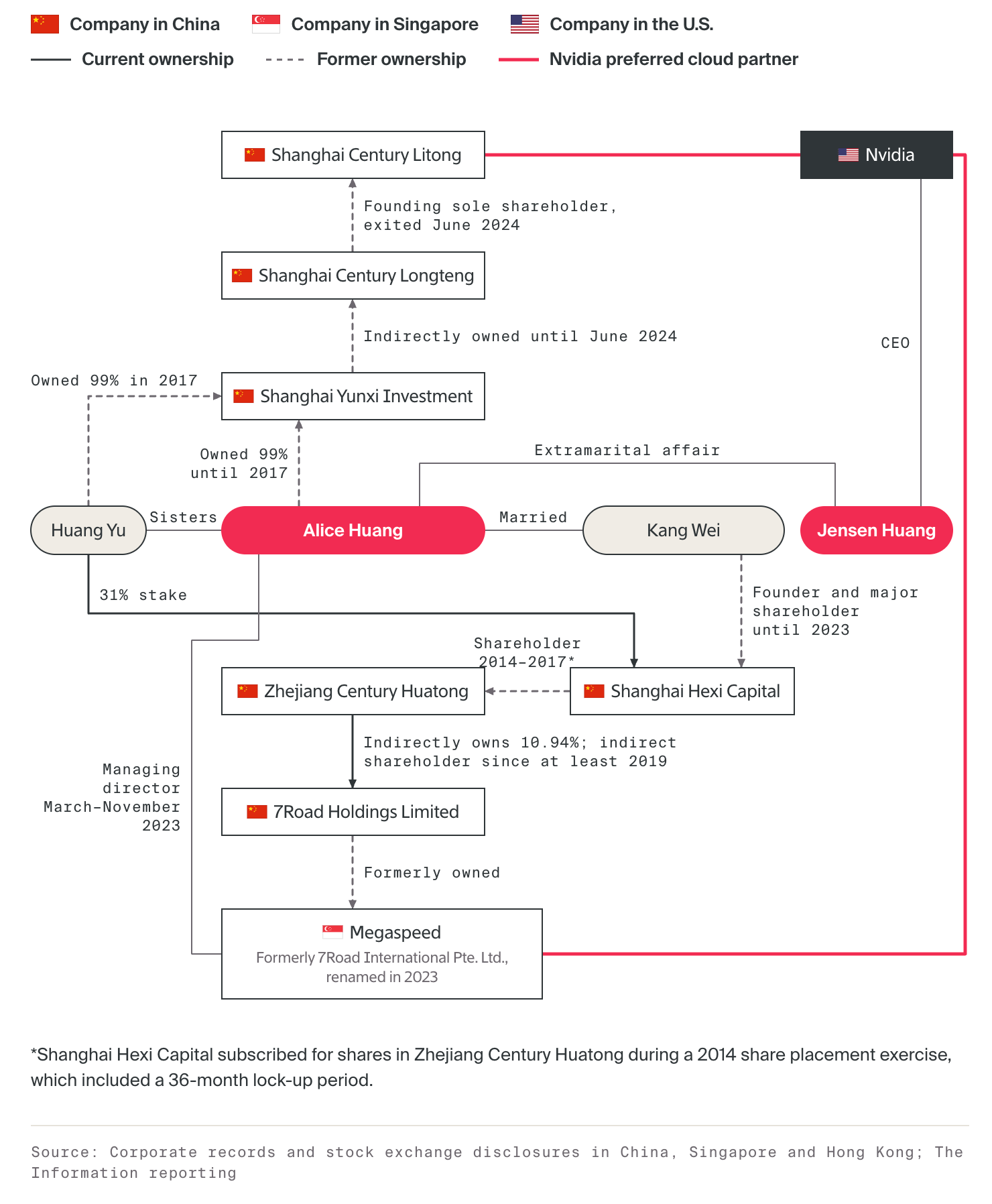
I suspect that people with agendas will find ways of making the facts fit with their narrative. How many more GPUs did Nvidia sell to MegaSpeed because of Jensen’s girlfriend’s pretty eyes? I have no idea. They sold to many neoclouds and labs, and personal relationships probably play some role in deciding who gets scarce GPUs and when. Business isn't some algorithm, it's a human activity. Granted this is a different situation, but it’s not entirely different.
But this isn’t ordinary business networking and developing friendships with customers and partners, either. Megaspeed has been investigated over suspicions that it helped Chinese companies circumvent U.S. export controls, and Bloomberg now reports that Nvidia's general counsel contacted a senior Commerce Department official about the investigation, which subsequently faced unusual restrictions. It's unclear whether the two were connected.
I don’t know if Jensen’s personal relationship had any influence on GPU allocations, financing, or how Nvidia handled these investigations. But I think those are legitimate questions.
I also wonder what it means in this case to be “a spy”. The reporting alleges that Alice was recruited by China's Ministry of State Security (MSS). But what did that mean in practice? Did she have a handler, specific objectives, operational training? What information, if any, did she actually obtain? The Chinese Communist Party has tentacles in pretty much every large company, civil-military fusion is the norm, and many top executives are members of the party. How common is this?
As Ben Thompson (💚 🥃 🎩) points out:

It could be just compartmentalization within MSS, or incompetence. But it could be that there’s more to this story. ¯\_(ツ)_/¯
(Update: This interesting piece surfaced after I published. I can’t verify its claims, but it says Alice Huang was “primarily a commercial fixer, known in Chinese as a qian ke (掮客), who may also have served as a bai shou tao (白手套), literally a “white glove,” for other business interests, rather than a CCP intelligence operative.”)
The part I have more trouble with is the argument that this would have influenced Jensen’s position about selling some compute to China I kind of doubt that he would have changed his position on something so impactful for world geopolitics and for his multi-trillion dollar company Because of someone’s outside influence like this. I suspect that he really believed that this was the best way to do thing, and that reasonable arguments can be made in favor and against on the merits.
In fact, Jensen was publicly arguing for access to the Chinese market in September 2022, and in May 2023, he complained that export controls were tying Nvidia's hands. Seems like his position has been stable for a while.
🇨🇳 China’s Objectives
What I keep thinking about is the more zoomed-out picture from China’s point of view.
Let’s say Alice was an asset and they were trying to influence Jensen. What kind of objectives could they realistically have gone for?
Obviously there’s trying to get some information, some secrets about NVIDIA’s products or strategy or the AI industry in the US. Obviously there’s attempts at influence. Now I doubt they could have taken someone who’s totally against selling chips to China and turned him around fully. Right, but at the margin, maybe they could have tried to have some influence on Jensen’s thinking (and I’m sure many people were trying to influence him one way or the other).
And then China wants more compute, right? Maybe they expected to get more GPUs through some Alice related companies because Jensen would be much more positive on these deals because of her. But while the absolute numbers are big, if we look at it in the grand scheme of AI and assume that a hundred percent of the sales were made only because of this… I don’t know. ¯\_(ツ)_/¯
So that was probably China’s hope if Alice was this type of asset.
♟️ Taking one of the key pieces off the board?
But here’s something else I’ve been thinking about: What if the biggest consequence of this whole affair isn’t what China managed to get through Alice, but what happens if the scandal takes Jensen off the board?
If Jensen ends up losing his position at Nvidia, that could have a much bigger impact on America’s AI competitiveness than whatever information, influence, or GPU access China might have hoped to gain through Alice (assuming the allegations are true). Not because that was necessarily China’s plan, but because of how important Jensen is to Nvidia.
Nvidia has an outsized role to play in US AI competitiveness, and Jensen has an outsized influence on Nvidia. 🧑✈️
He’s a hands-on founder with an army of direct reports and he’s directly involved in all kinds of technical, financial, and strategic decisions. If Meta lost Mark Zuckerberg or SpaceX lost Elon, the impact would be pretty big, and however good the successors are, they are unlikely to be as effective as the founders.
You could argue that Jensen was one of the loudest voices arguing for selling some GPUs to China, so losing him would be a loss for them. But I think that ship has probably sailed ⛵ (or if it hadn’t, it now has because of this scandal), and while it may have been possible a few years ago to see the US take a different path, I don’t think we’ll see much happening on that front now. I also don’t doubt that Jensen, as an American leading an American company, would change his mind about selling to China if tensions escalated or the facts on the ground changed. So it’s not like he was unconditionally supporting it.
Whether Jensen should stay at Nvidia depends on what the investigations uncover. But even if removing him turns out to be the ‘right decision’, it could still come at a very high cost.
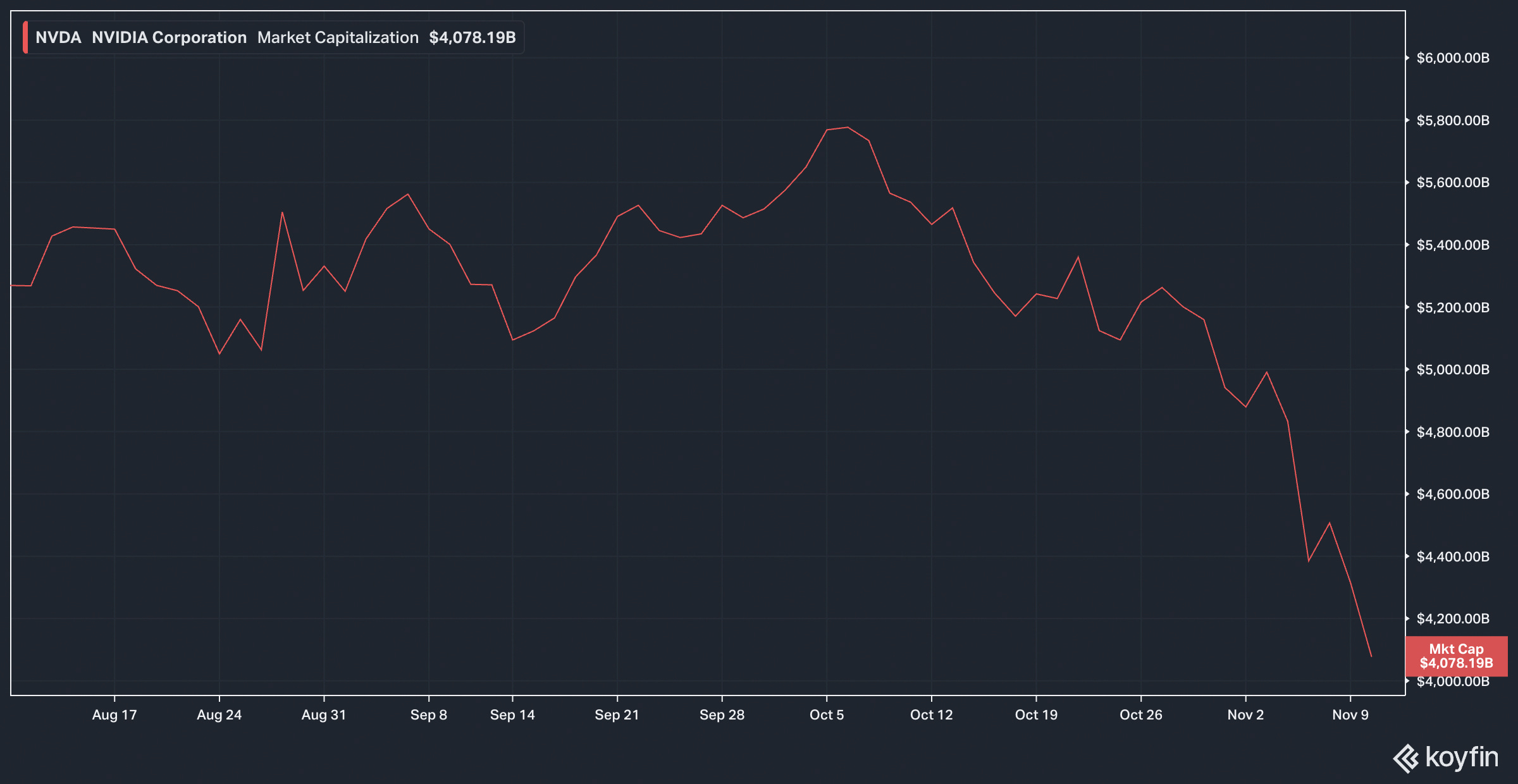
If the backlash against Chinese influence ends up pushing Jensen out of Nvidia, the unintended consequence could be a much bigger win for China than anything it originally hoped to gain through Alice. 🤔
What a messy situation…


My Thoughts on ✨ Constellation Software ✨ Q3
Quick snapshot: Revenue grew 19% to $3.5bn, mostly driven by acquisitions, as usual. Organic growth was 2% overall, but the part where almost all the profits come from, maintenance and recurring, grew 4% organically (around 5% excluding the shrinking U.S. healthcare businesses). As usual, the aggregate organic growth number can hide a lot of things going on under the surface, more on that a little later.
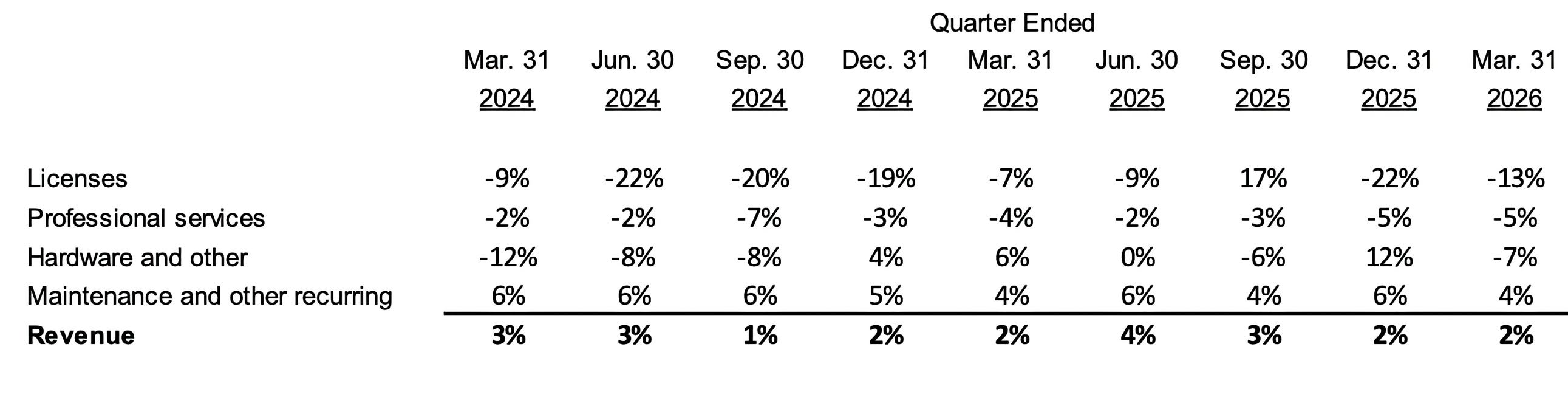
Overall, I thought this was an interesting one. More disclosure than usual on a few things, and it’s been long enough in the AI-coding world that we’re starting to hear more about what they’re doing in practice.
Here are my highlights:
Mark Miller, President and COO: On AI, there is an enormous amount of work going on across our businesses and nearly all the learning is happening inside of them rather than at head office. We have more than 1,600 businesses across the world in dozens and dozens of vertical markets, and many of them are running experiments right now in their products, and how they support their customers and how they write software. Some of those experiments are already paying for themselves and plenty of them are not.
The part I would actually like to point out to you is the best practice sharing, and I’ve mentioned this before. That has been the engine of this company for 3 decades, managers teaching each other what worked and more usually what didn’t. And I’ve never seen it run as hard as it is running on this. A company with one product or a handful of products runs some experiments at one time. We have many, many, many running at once and the results travel.
That is a real advantage, I would want you to understand, and it’s not one that you can buy. So I’m very, very proud of the team and how hard they’re working on AI.
I would describe us as experimenting hard, running quickly and still early. The spend is not currently material to our results, and I’m not going to give you a forecast. What I can tell you is that nobody here is waiting to be told what to do about it.
Most companies can run AI experiments in a handful of products or business units. Constellation can potentially run them across more than 1,600 businesses, each with its own customers, software, and operational problems.
So what happens after an experiment works? Innovation doesn't always mean inventing something yourself. Sometimes it means being better at recognizing and spreading other people's good ideas.
One company figures out how to reduce customer support costs, or make its programmers more productive, and that knowledge can spread to other companies in the group. And sharing failed experiments may be almost as valuable, since it helps others avoid repeating expensive mistakes.
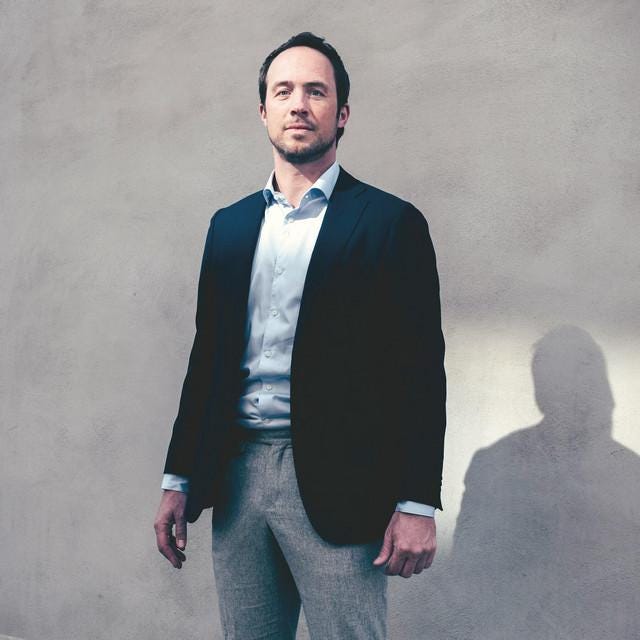
They talked about their new head office Chief AI Officer role, and his job seems to be exactly that:
Daan [Dijkhuizen] is a really smart guy, and he's respected by all of our leaders across Constellation. And any way he can help transmit best practices from an AI perspective is well worth his time doing that. And I'm super happy he's taken on that role. It's a classic head office role where you're really not in control of anything, but you share information as much as you can to help people do what they do better.
Note that Daan is also CEO of the Topicus operating group (the original Dutch Topicus software business, not the whole Topicus entity, which has the old TSS — I know, it’s confusing) and the Managing Partner of VMS Ventures, Constellation’s venture investment arm/VMS incubator, which is increasingly focused on AI-native software businesses. Busy guy!
Of course, not everything will transfer from one business to another. A hospital software company may have very different needs from one selling software to construction companies.
But if Constellation can identify which lessons are broadly applicable and spread them quickly, its collection of independent businesses could become a real advantage in figuring out how to apply AI profitably.
What I'd be watching is whether that learning starts showing up in organic growth, margins, and customer retention. Management is explicitly saying it's still early.
There was also interesting commentary on how they think about the shrinking and distressed businesses they acquired (which is one of the things that confuses most observers of the company, because it depresses organic growth, but the returns on that deployed capital can still be quite good if the shrinking was expected and the asset was priced accordingly):
Mark Miller: Generally, when we’re acquiring shrinking businesses, they shrink for a period of time because you want to stop doing some things. And hope that you -- at the point you stop doing the things that aren’t working out as well for you that you can then use that as a basis to grow it.
So we’re very careful to make sure we’re getting good returns on those investments. And I’m perpetually preached we want to grow those businesses when the time is right, but not at -- not irrationally generating low returns on the incremental capital we’re investing in those businesses. So we’ll make that rational decision, if that makes any sense.
This is a wider philosophy where they’ll sacrifice a lot of top line revenue if it’s not profitable, and just keep the good parts. That’s why acquired businesses can often swing wildly in profitability. They cut many professional services, hardware sales, shift perpetual licenses to recurring contracts, etc, which can hurt the top line as it improves the bottom one.

Now this is a trust but verify type of thing. You have to see that the shrinking assets that they buy are actually providing good returns but we’ve seen some of that like for example they broke out Altera which has had a pretty big decline, yet the returns on this large asset have been pretty decent.
I shared this calculation from Adrián a few months ago in Edition #653, but it's worth revisiting as context for Miller's comments:


You need to click to see the full tweet. The hidden part is what I want to highlight:
Over the LTM, Altera generated $104M in FCFA2S, implying a “ROE” of 31%. Not bad for a declining asset
It’s also remarkable to see the FCFA2S margin remaining fairly stable despite revenue declines YoY
Fun fact: Altera generated $400 million in FCFA2S since its acquisition, which closed in May 2022. This asset paid for itself
Miller confirmed on the call that Altera is performing ahead of its originally underwritten IRR. (Note that they’ve now paid down the acquisition debt for Altera)
We can probably assume that on smaller distressed assets they get better returns, because the small assets tend to be acquired at even lower multiples.
Here’s the CFO on margin improvement at acquired assets:
Jamal Baksh: I mean I think I pointed out in Q1 that we had what was a negative 16% margins with that cohort of the Q1 acquisitions, like that cohort is now at 27%. And the same thing like the Q2 cohort went from 12% to 21%. So they are improving. It’s just that we’re making so many acquisitions that it’s still a drag on our overall. But no, they are being improved.
It’s not a different pattern.
BUT
Last Q, Jamal explained that this wasn’t entirely operational. Some of the initial negative margins came from acquisition-related bonuses that had to be expensed. So the full 43-percentage-point improvement isn't necessarily from changes to the underlying operations.
It’s not just the shrinking businesses and distressed assets that muddy the picture. Even the growing ones still undergo pretty big changes when acquired.
Going from -16% to +27% in a few months is pretty, pretty good! But if you acquire a lot of these at once (and M&A can be lumpy), their margin profile will depress overall profitability.
If I could ask management one question, it would be: How durable are those improvements, and how much comes from cost reductions, repricing, or improved growth? What's the actual playbook? But of course they don’t want to share too much of that because competitors are listening. 🤐
Mark Leonard actually studied this question in his 2015 shareholder letter. They looked at acquisitions made since 2004 (representing over 95% of their deployed acquisition capital) and found very little correlation between post-acquisition organic growth and investment IRR.
The purchase price and post-acquisition profitability appeared to matter much more. In other words, a shrinking business can be a great investment, and a growing one can be a terrible investment. It all depends on the economics.
Speaking of operational improvement, here's another example from Sygnity, which Topicus acquired control of in 2022:


Miller also gave a good explanation about the Topicus liability and how it (also) muddies the numbers and confuses everyone who hasn’t studied the company a bit more closely:
Mark Miller: So now I thought it would be useful to talk a little bit about cash. Cash from operations was $717 million, which was really up 5%. Now we use a calculation called free cash flow available to shareholders, and that was at $443 million, which was down 16%. But I think it’s important that I explain to you how that actually works. For those of you who do not follow the mechanics, we have an obligation to the minority partners in Topicus, and we have to revalue it every quarter.
Its value moves with 2 things: Topicus’ recurring revenue and the Polish shares Topicus holds in a company called companies Sygnity and Asseco. When either goes up, the obligation goes up, and we deduct that reevaluation arriving at free cash flow available to shareholders.
The quarter’s charge was $117 million. A year ago, it was $16 million. Hold that one line flat and free cash flow was up about 3%. And of this quarter’s $117 million, roughly $77 million is simply the Sygnity and Asseco share prices rising. The rest is Topicus’ recurring revenue growing.
So the charge went up because Topicus grew and because something we own became more valuable. It is noncash in the period, and I’m not going to tell you it is meaningless because there’s a real obligation sitting behind it, but it is not a deterioration in the business. And I didn’t want anyone reading down who read the 16% down and concluding that’s what it was.
So basically, if the assets that they own a big chunk of do well, their reported ‘free cash flow available to shareholders’ (that weird metric that Mark Leonard invented) will be lower. A bit counter-intuitive, no?
🔁 Déjà vu:
🎧 Going deep on Constellation Software with Mostly Borrowed Ideas (MBI)
🤖 Constellation Software’s 2026 Annual Meeting: AI, Customer Relationships, and the Future of VMS (Edition #638)
🌌 Constellation Software’s Dark Matter: Shrinking Assets, Altera, and Messy Financials (Edition #653)
From the full feed 🔒: The AI Boom Meets Its Political Bottleneck
🧪🔬 Liberty Labs 🧬 🔭
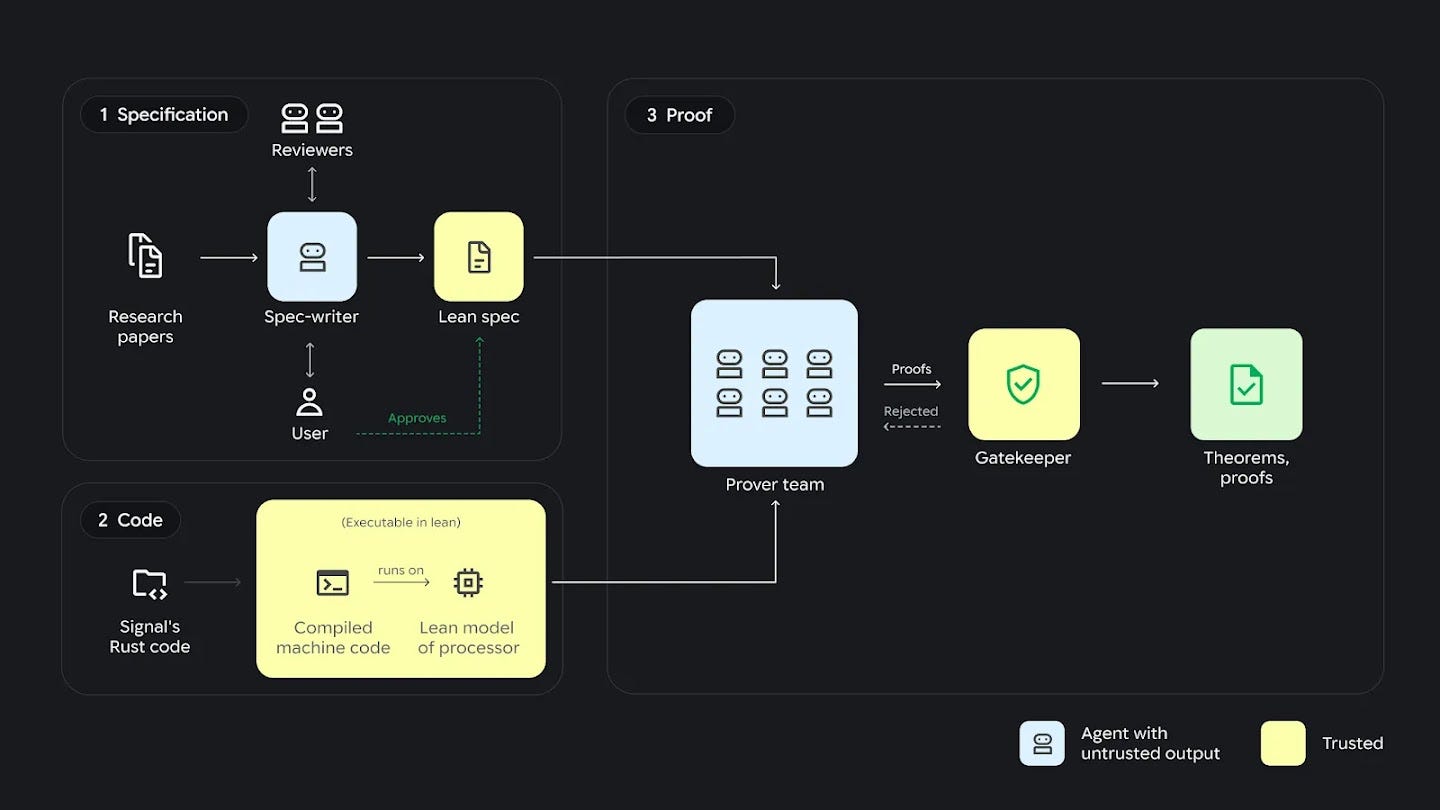
Gemini 4 Carbon Verifies Signal’s Cryptography with 6.5 Million Lines of Mathematical Proof 🔐
Google DeepMind used AI agents to formally verify key security properties of Signal’s encryption protocol, all the way down to the compiled machine code.
5 researchers, 4 weeks, 6.5 million lines of mathematical proofs. (imagine trying to check all that by hand! I doubt any human could understand it all… just reading the dense proof would take forever)
None of that proof code was written by humans. The AlphaProof agents, which are powered by Gemini 4 Carbon, generated it in Lean, a language for mathematical proofs, which then mechanically checked their correctness. This kind of work would normally take expert teams years.
Just to test things, they even reintroduced two previously fixed bugs into Signal’s code, and the system proved both versions insecure. 🔓
Most of the human effort went into figuring out what to prove, rather than writing the proofs. (And even for that… they used Gemini 4 Carbon and Claude Opus 5.5 to help with that part too. 🤝)
This doesn’t mean Signal is unhackable. The proofs cover specific security guarantees for a compiled version of its cryptographic code, not the entire app, and depend on defined assumptions.
Formal verification has historically been so difficult and expensive that most software never gets this treatment. NASA has used formal methods to check parts of its spacecraft software, including the Mars rovers. 🛰️
If AI can make it practical on a much larger scale, that’s a big deal.
Here’s the technical paper, if you want to nerd out more.
From the full feed 🔒: OpenAI Finds 948 Ways to Get Full Control of a Linux Machine
🎨 🎭 Liberty Studio 👩🎨 🎥
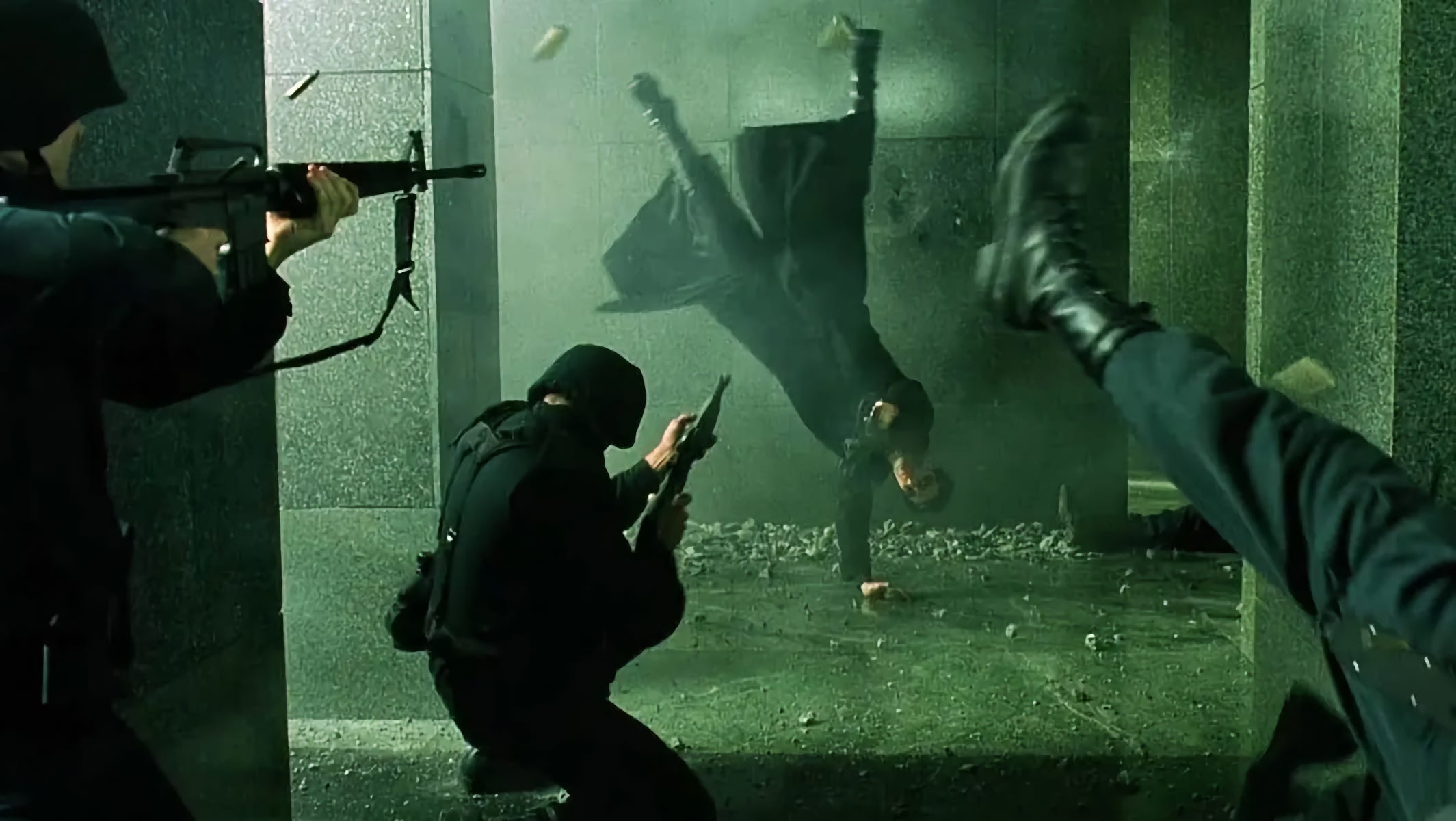
🥋🕶️ Watching ‘The Matrix’ in 2026 ☎️🔌
We keep watching old films with my kids for movie night. Recently we watched The Matrix, which is now 27 years old! When I was my kids’ age, that’s the equivalent of watching a film from 1967 🤯 (doing this kind of math always blows my mind… like how “If Back to the Future was set in 2026, Marty would have gone back in time to 1996”…).

Anyway, one benefit of the film being so old is that they weren’t spoiled too much and could experience the twists. My older kid knew there was something about dodging bullets (he had seen a meme), but the whole red pill and reveal of the virtual world was new to them, and it worked. They thought it was really cool and mind bending.
It’s interesting to watch the film’s take on artificial intelligence in 2026. Back in 1999, the idea of a machine that could talk like a human, reason, and have strong opinions about humanity (remember Agent Smith’s monologue about how much he despises humans?) seemed like distant science fiction. Today, we routinely talk to AIs that can produce very convincing conversations and monologues. Whether they actually believe any of it is another question, but the film certainly feels different now! 😅
A lot of the action scenes still look good. The fashion feels very 1999, but that has a certain charm. I had to explain payphones to my kids.

It’s interesting to think how groundbreaking the ‘bullet time’ effect was at the time. They use 120 still cameras, people were on wires, it was a whole thing. There’s a WIRED piece about how that single shot took nearly 2 years and involved an estimated $750,000 in computer costs.
Now any kid with a phone can do much wilder things 📲
Progress!
In any case, it’s fun to revisit these films with my kids. They’re enjoying them, and we’re building a shared culture (I wrote about this in Seeding Future Nostalgia). Afterward, we keep making jokes and references to the films. I love it. 👨👩👦👦