


Liberty Workbench is an occasional series where I put one idea on the bench and think it through with you.
I think taste matters a ton. In a world where it’s easier to build things, it’s more important to make sure that your time is spent figuring out what you should be building in the first place.
—Adam Mosseri
I was listening to an interview with Adam Mosseri (head of Instagram since 2018), and he said this 👆
I've believed this for a long time. But there are levels to it, and I think we're jumping to a new one.
Rewinding a bit: taste was always important. What kept changing is how far you could take it.
(By taste, I mean the ability to notice meaningful differences, choose among plausible alternatives, and know what to reject. Agency matters too, but it does a different job: taste turns the wheel, agency presses the pedal.)
🧭 Direction
A lot of people have technical ability and creativity, but what usually distinguishes great artists is the filter sitting on top. The captain at the helm saying 'that way' or 'nope, not that way.'
If you have a powerful engine but you’re driving in the wrong direction…
In fact, sometimes great taste can compensate for limited ability in other areas. People made some great things with basic musical skills or simple prose. Good doesn’t have to be complex, even if it sometimes is.
Before industrialization, extraordinary taste could produce magnificent things, but its reach was limited. If you were lucky, you became some great lord’s “guy”. Like, yes, I have a guy who does my paintings. I have a guy to design my cathedral. ⛪︎
🏭 🌐 Leverage
Industrialization changed that. Judgment could now be embedded in a repeatable system, reproduced at scale.
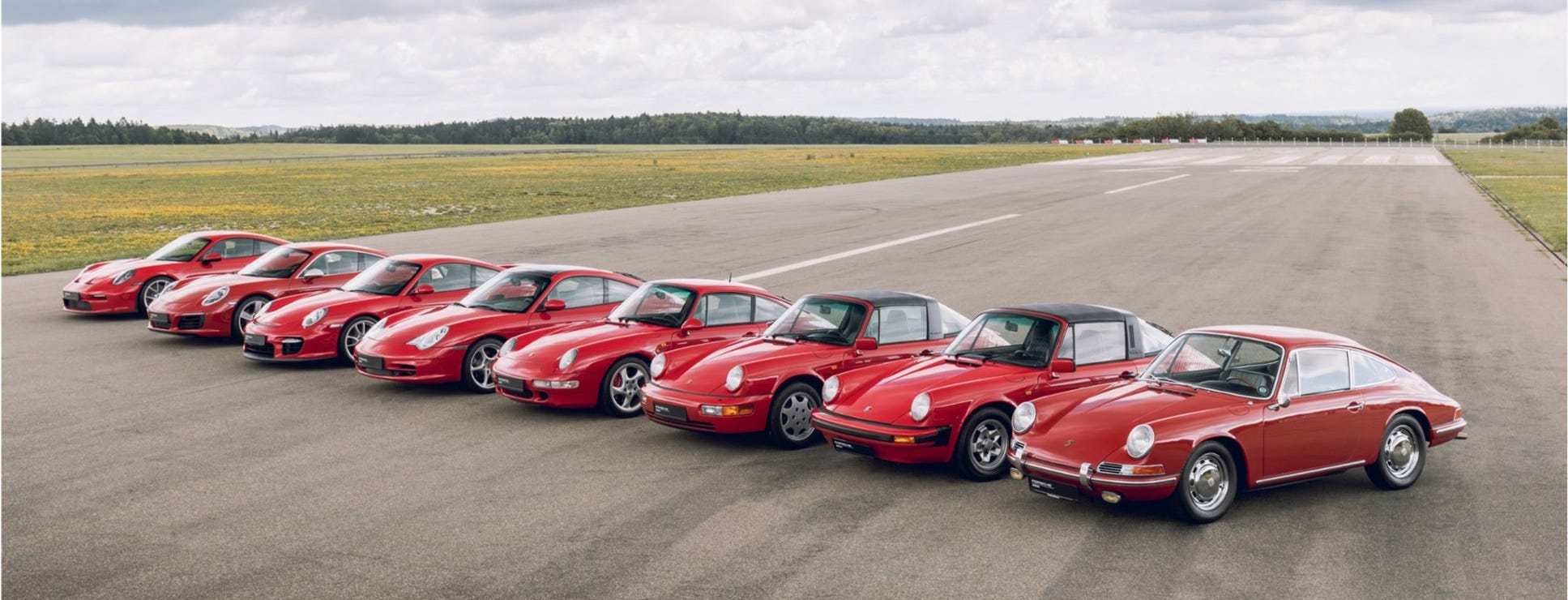
The Porsche family (Ferdinand, Ferry, and Butzi) created a system that translated aesthetic and engineering judgment into beautiful cars made by the thousands, generation after generation. Steve Jobs’ taste had huge leverage because it rode the giant secular wave of personal computing, which went from almost nothing to almost everyone on Earth carrying a computer in their pocket (what computer is more personal than the smartphone?).
The internet added another layer of leverage on top of that industrial leverage: global reach and (near) zero marginal cost (👋 Ben).
The right product could now be put in front of the whole planet, and if it was found truly superior, it could pull far ahead of the competition. That’s the Google era. We forget it now because the company has ‘matured’ a lot since, but for a long time, early Google had both superior technology AND superior taste. Go on the Wayback Machine and look at the homepages of other popular search engines at the time.
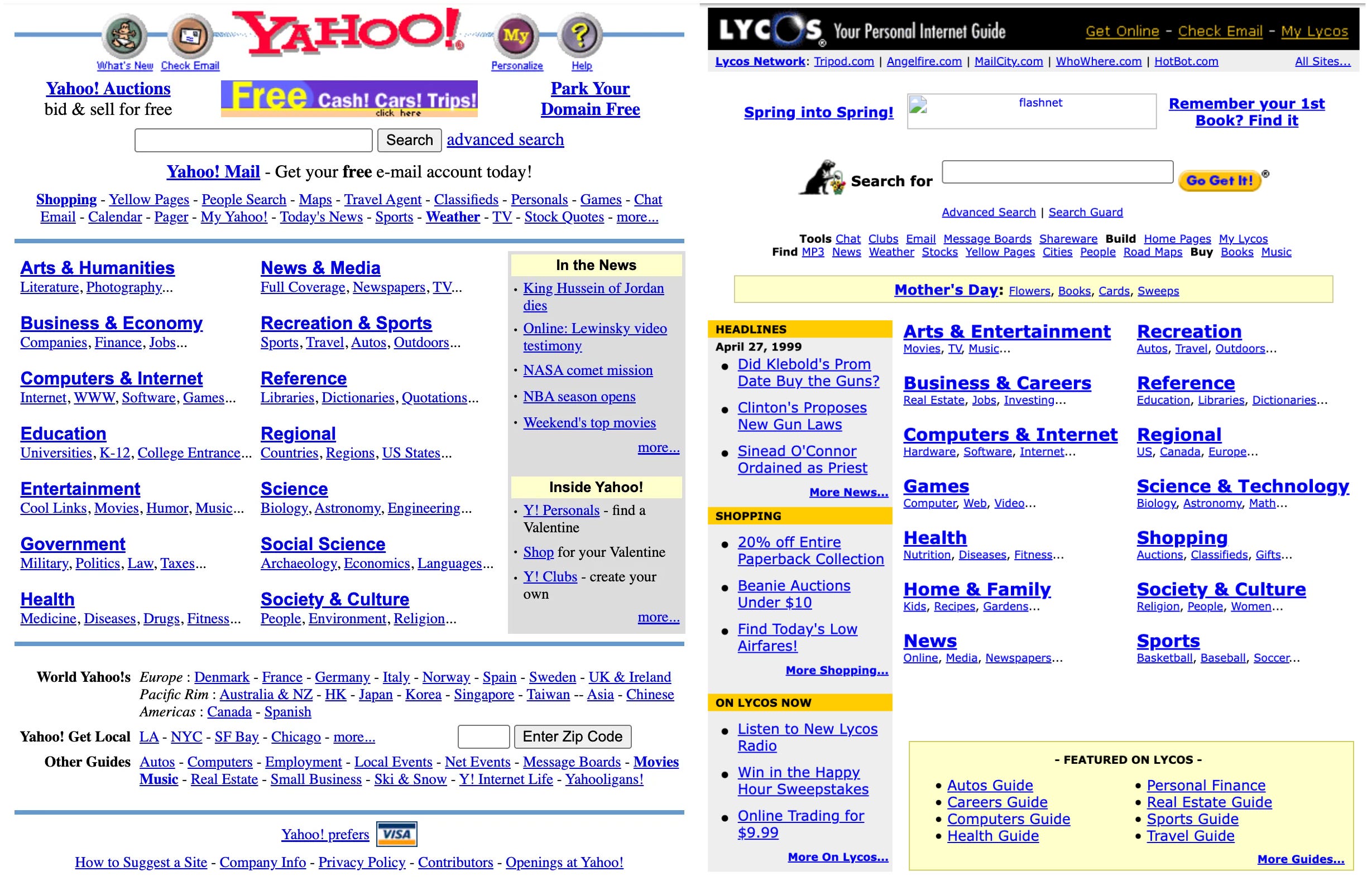
Internet age = Power-law outcomes became more extreme
But scale amplified a different problem: organizational dilution.
Ambitious, complex products required large teams, long timelines, endless meetings, and repeated handoffs of tiny shards from one person to the next, with almost nobody owning the whole. At every stage, someone else had to interpret, approve, finance, or implement the original idea. By the time the product came out, it was more ‘design by committee’ than ‘singular vision’.
Part of Steve Jobs’ extraordinary ability was organizational. He had such a forceful personality that he effectively fought these tendencies, designing a system to protect a coherent vision: small teams, focus on a few products, directly responsible individuals, his Eye-of-Sauron 👁️ attention to every detail. The vast majority of other places don’t have that. How many things have you bought that were so aggressively mediocre that you wondered if the people who made them ever used them, even once? That’s the disconnect, the gap between someone with taste and the final product.
🧠💻 Thinking Sand Era
AI is a different kind of leverage than the ones before. Industrialization and the internet were both largely about reach. AI has the potential to work on a different axis. It may not provide much more reach than the internet, but it can increase fidelity by narrowing that gap.
Earlier forms of leverage made taste louder. AI may make it less lossy: more PNG than JPEG. If it becomes much easier to prototype, build, and iterate, the person with the vision and the filter can remain more directly connected with the final outcome. Less dilution, less derailing. Not necessarily louder, but ideally truer.
We went from:
A world of gatekeepers and 'idea translators' (publishers, large technical teams, manufacturers) → much more direct access.
We’re reducing the number of people a creator must persuade before an idea can become real. Fewer people need to interpret, approve, finance, or implement.
But there’s a different trap that must be avoided: if you escape design by committee but then fall into ‘design by model consensus’, it’s out of the frying pan and into the fire 🍳🔥 (is that how that idiom goes?).
Models are trained on the preferences and outputs of millions of people, and now everyone is using the same few models in similar ways. That combination can act as a different kind of virtual committee, one that sands off the edges and removes the spikes if it isn't robustly steered by someone with strong opinions and the willingness to stand behind them.
Have you noticed how every startup’s website looks the same lately? It used to take effort to copy Linear.
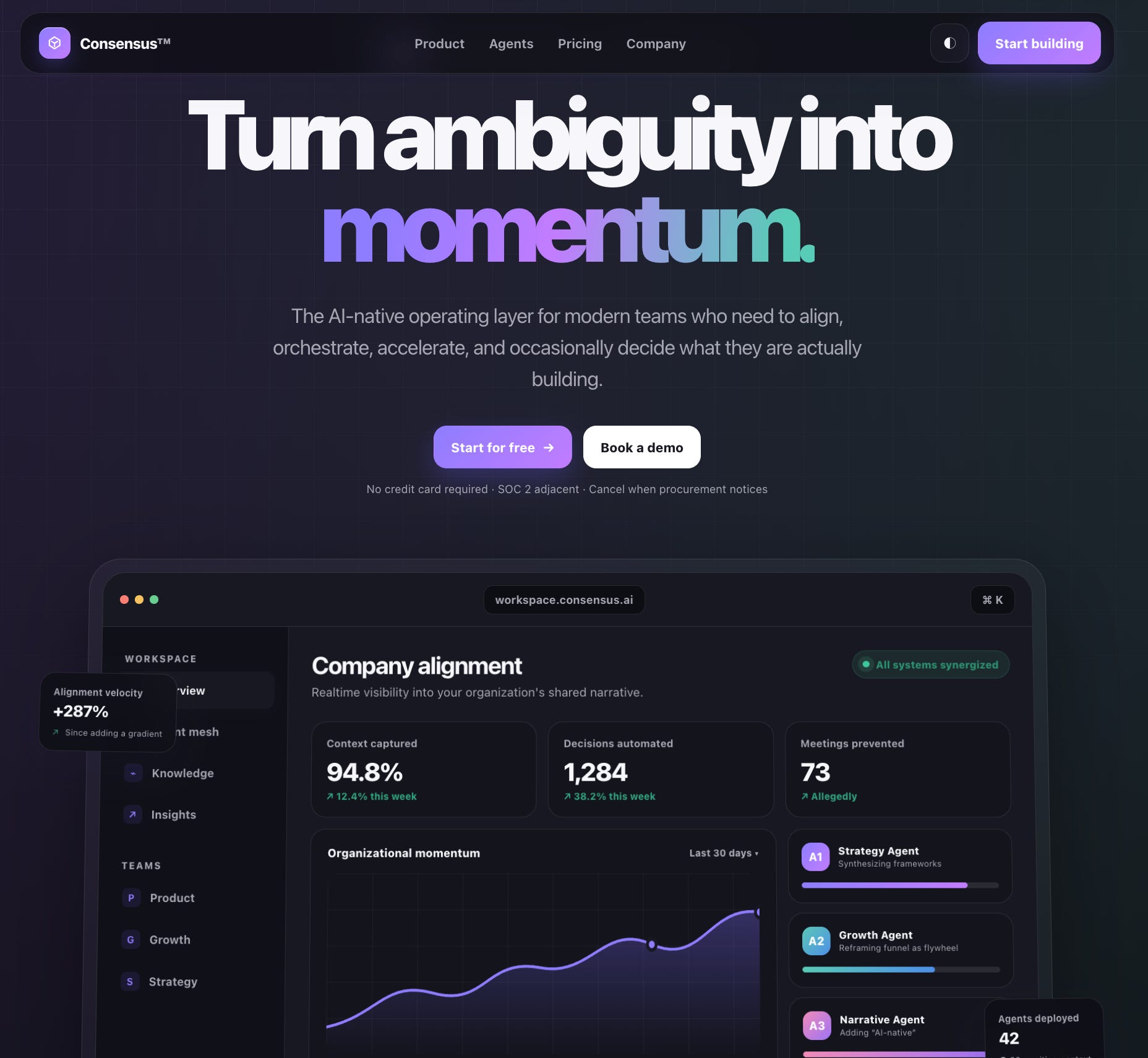
AI can also improve your judgment and taste, if used well. But knowing how to steer it well, what feedback to trust, and what to ignore is itself a form of taste. There’s a bit of a bootstrapping loop there.
🦄 Differentiation
Making was scarce → distribution was scarce → now judgment is scarce.
That's the pattern that keeps repeating in every era: some part of making things gets commoditized, and the value migrates to whatever's still hard.
As execution gets cheaper/easier, polish stops signaling exceptional judgment. You can ask AI to do something aggressively mediocre and uninteresting, and it’ll execute it beautifully.
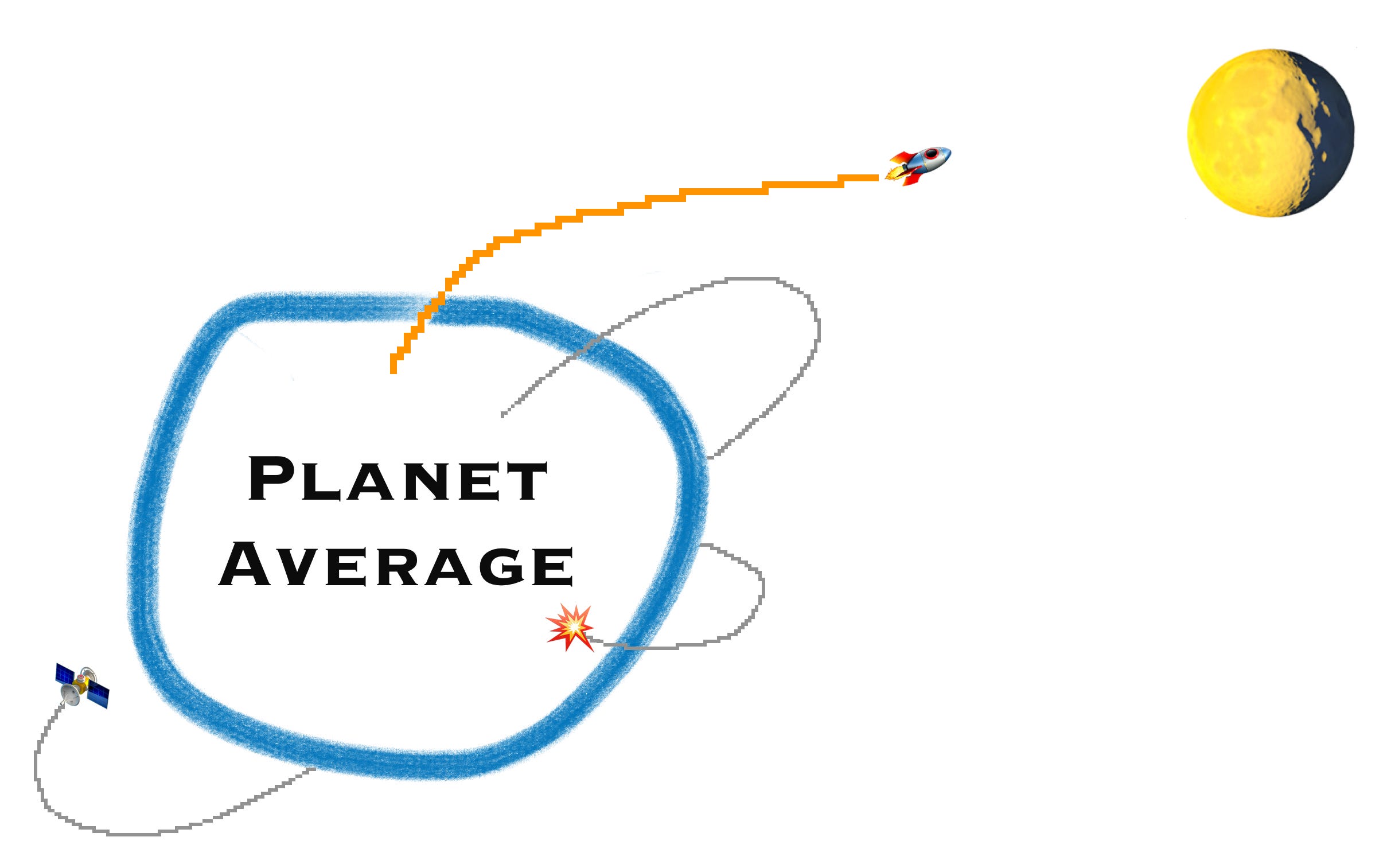
Taste is escape velocity from Planet Average.
A paradox:
When everyone can make something impressive, what was impressive until recently stops being impressive, and something else will impress.
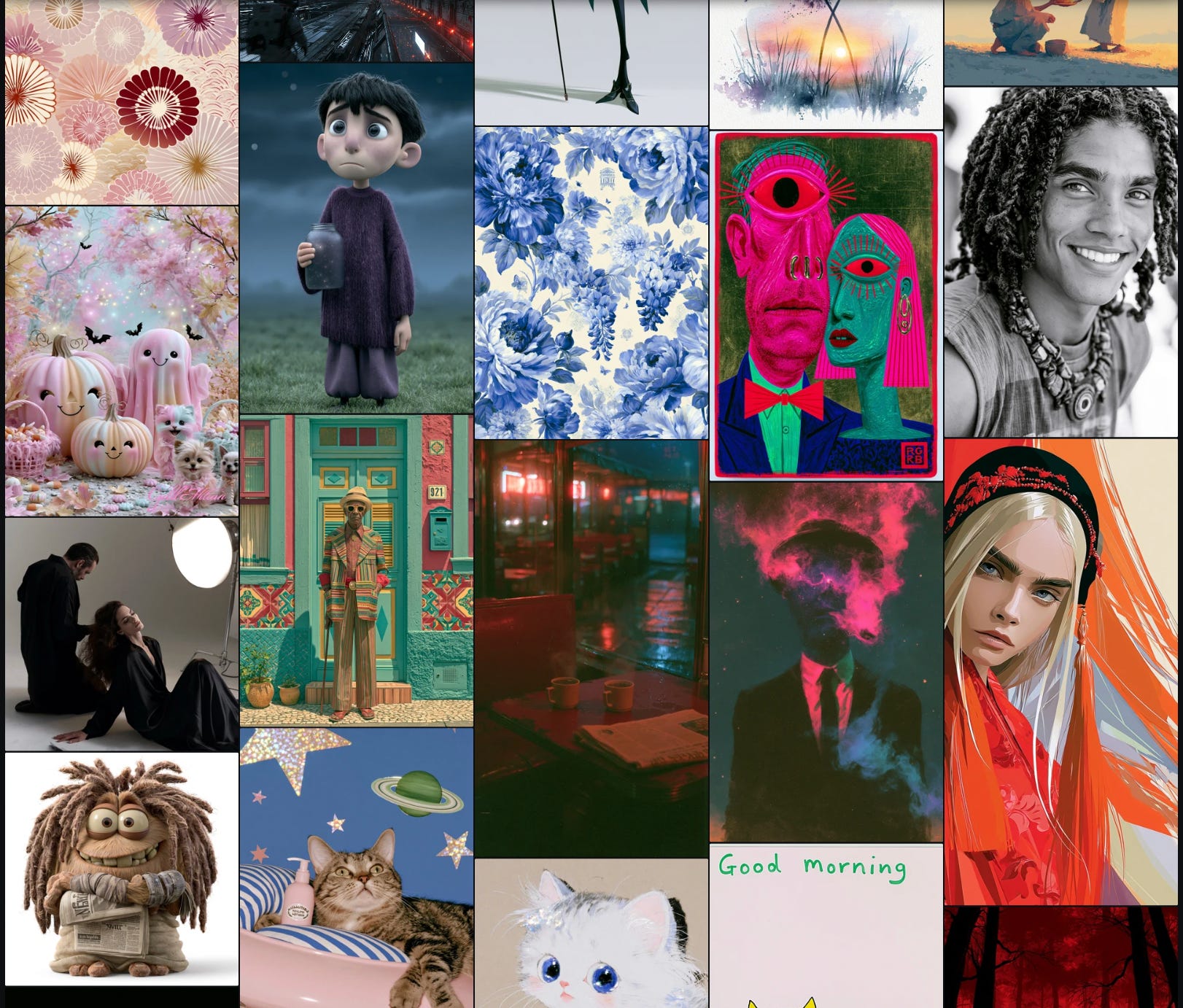
How quickly did the standard Midjourney image go from 🤯 to 🥱?
When everyone is good, the difference between the winner and the rest of the pack may be very small in absolute terms (look at the Olympics 🥇).
But a few percent of performance doesn't pay a few percent more. The gold medalist beats fourth place by a hair and walks away with the medal, the anthem, the YouTube homepage highlight clips, and the endorsements. Power-law outcomes, like we said about the internet era.
So if taste has the potential to matter more, what can you do about it?
🧑🎨 How can you train your taste? 🎯
Here’s the ‘obvious’ part that very few people actually put into practice.
If you listen to those who have great taste, many will tell you that part of it is innate, but a big part of it is trained.
The model-consensus trap, Planet Average where all the edges are sanded off…?
Training your taste is the defense. If the danger is getting pulled toward the middle, the whole game is stocking up on reference points that pull you off-center and make you spikier (to be clear, there’s great stuff in the middle too, but you can’t look *only* there). You want to deliberately feed on what isn’t averaged: the specific, the old, the weird, the deeply personal, the out-of-left-field stuff. Everything below is a way to do that.
📥 Improve your inputs
The best way I know to train your taste is to consciously consume a lot of great work. I’m always impressed when a favorite filmmaker, musician, or writer nerds out about their craft in an interview, and reveals how much they’ve seen, heard, and read across many genres and eras.
Great films, great books, great paintings, great music. Passive exposure isn’t enough. It's like what they say about deliberate practice: you get a lot more out of it if you do it with intent and intensity. Ask why why why why.
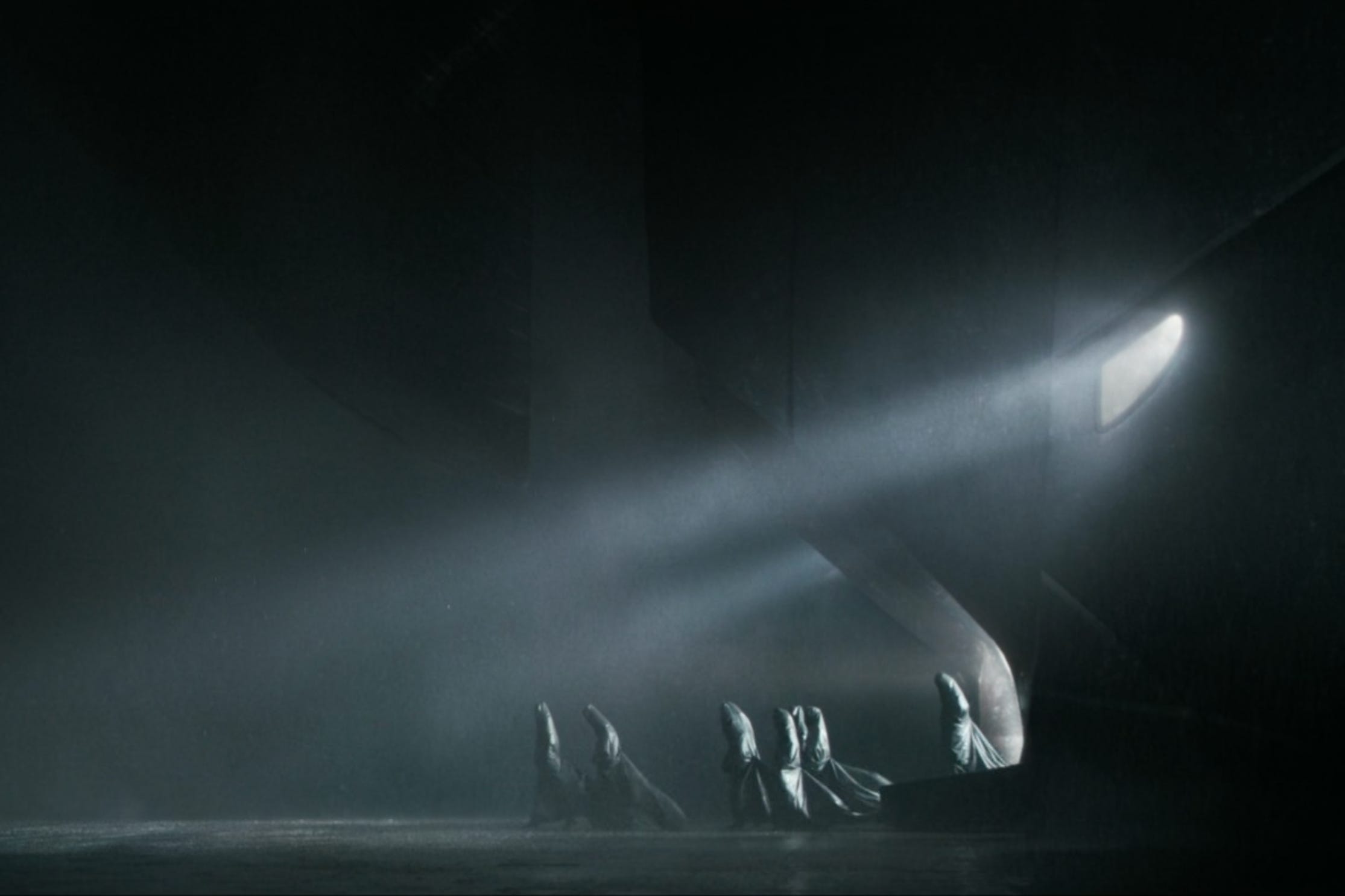
I see it all the time, the Exploration vs Exploitation imbalance. You can’t learn new patterns, find new reference points to calibrate against, or recharge your creative batteries if you never explore new things or have new experiences.
🔎 Deepen your attention
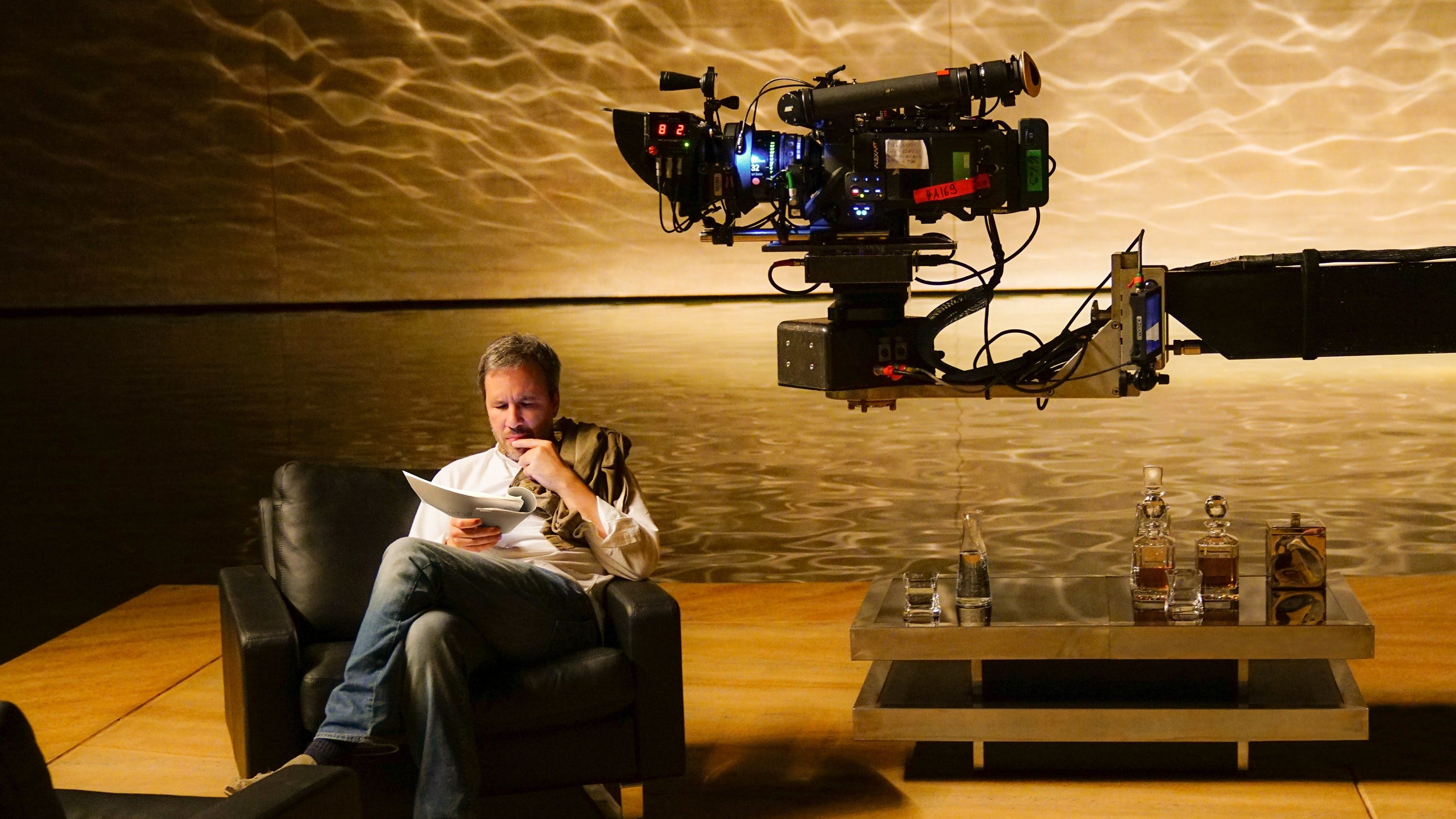
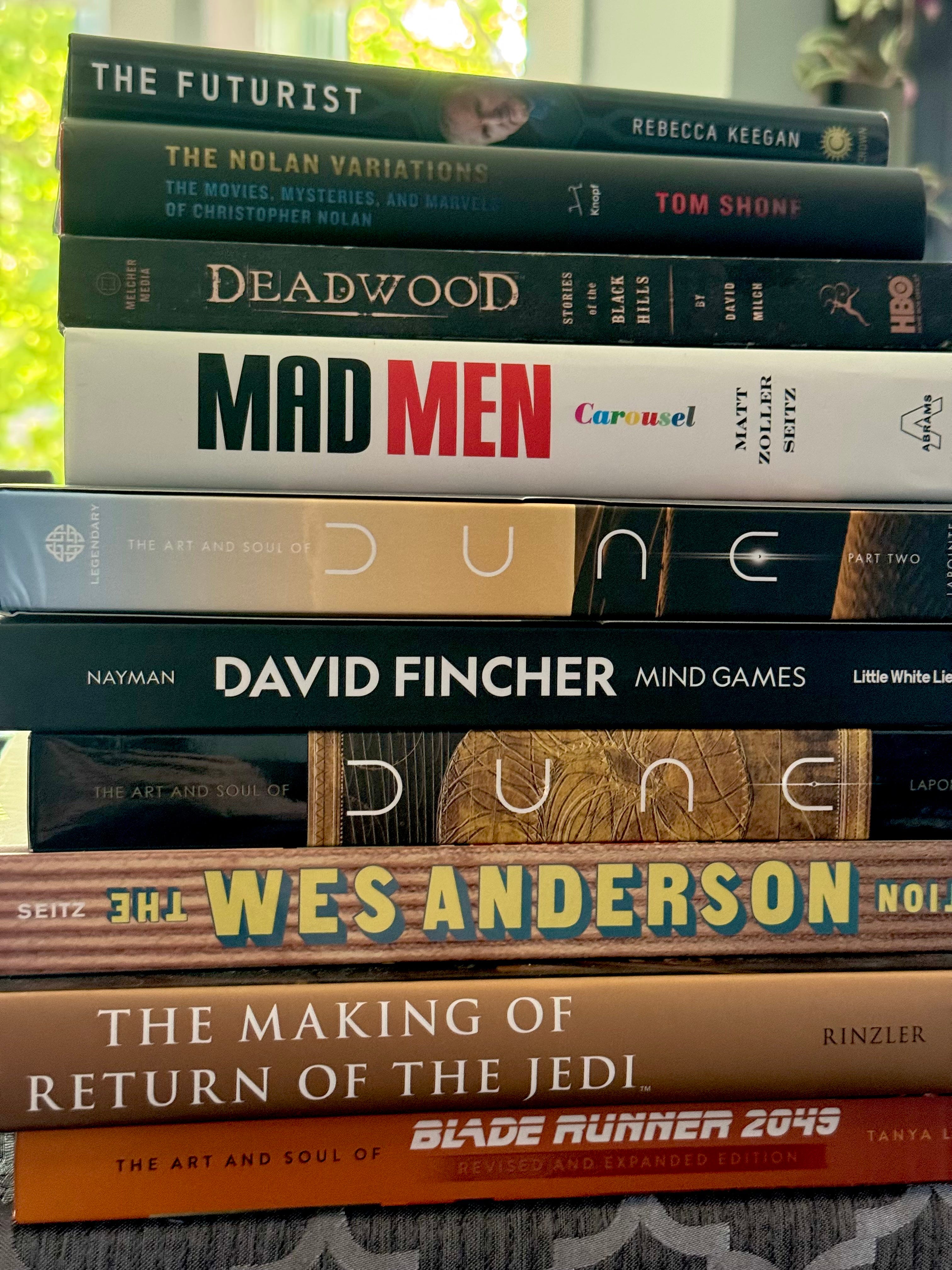
Don’t just casually watch your favorite films. Pay close attention, listen to interviews with the director, buy the making-of book that has the backstory on how it was created, the pre-production design work and concept art.
Another way is to find someone who really knows something and really appreciates it, and listen to them talk about it. It’s a way to see/hear through someone else’s eyes/ears. It can help you learn those skills of appreciation and analysis.
(Here’s Elizabeth Zharoff, a professional, classically trained singer hearing Stairway to Heaven for the first time. Watch what she notices.)
Why does this matter if you’re not making films or writing books? Because I strongly believe that taste, pattern matching, whatever you want to call these creative skills… They’re transferable to almost anything you do in life. From raising your kids to designing an experiment to giving a presentation to the C-suite.
🏋️ Exercise your judgment
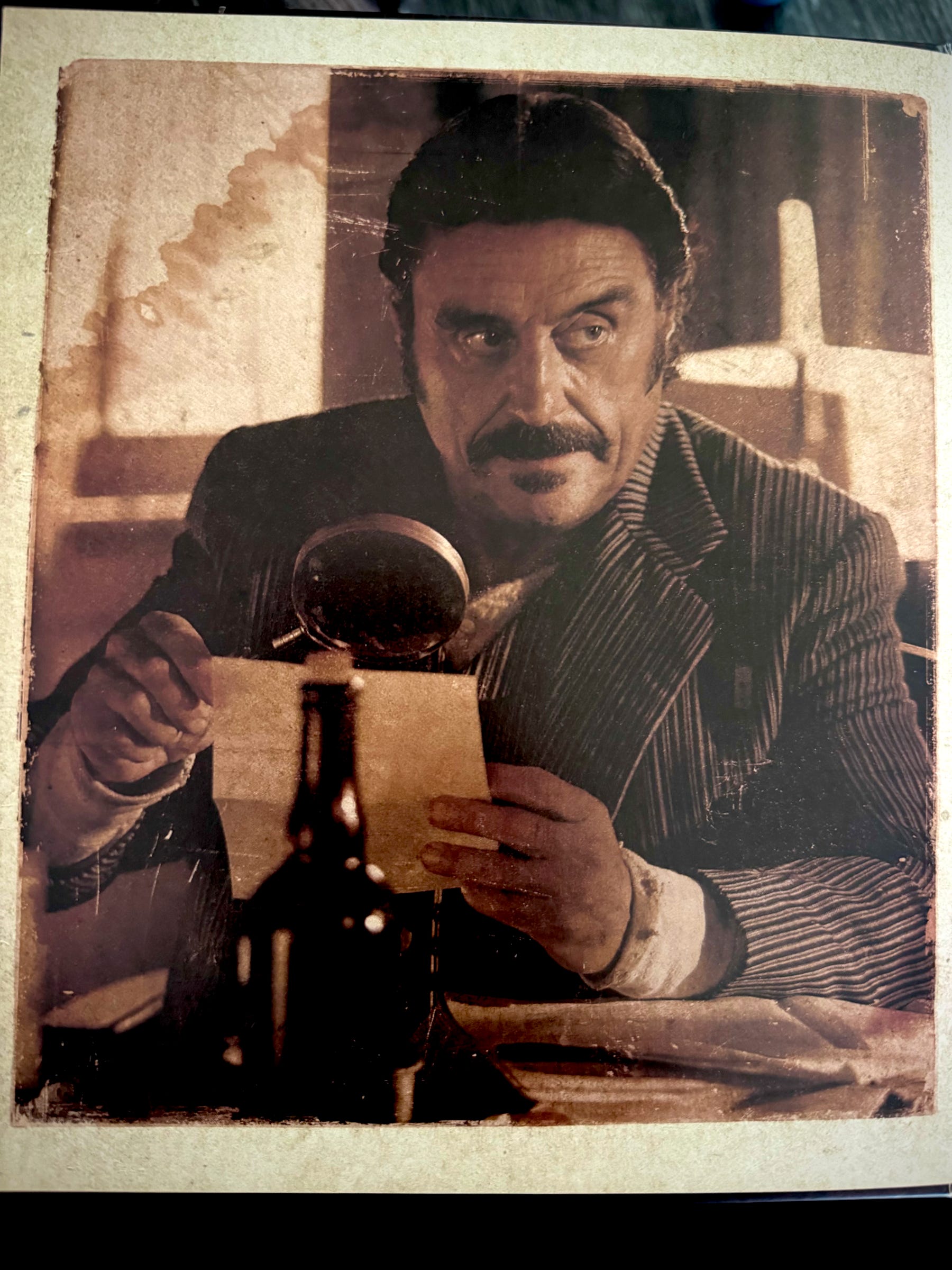
A powerful way to exercise it is to make things yourself, do lots of iterations, and get lots of feedback. Generate alternatives. Predict what will work and see what happens, calibrate against the cold harsh reality that it’s really hard to make good things.
This is powerful feedstock for the pattern machine 🧠
If taste is pattern matching, then you have to train your brain on the right patterns. And you can’t stop at appreciation, you have to turn what you learn into understanding and decisions.
Roughly:
Quality of inputs × depth of attention × frequency of judgment × quality of feedback = raw training data for taste
Try to increase all four factors.
Or the less mathy version:
Better inputs → closer attention → explicit choices → real feedback → updated taste ↺
That last bit is important. Taste develops recursively. It’s not static.
How can you expect to know what’s good or interesting if you rarely encounter really good or interesting things? (I’m trying to resist the impulse to make an analogy to doing pre-training and post-training/RL on an LLM 😅)
🧩 Putting it all together
AI makes taste more consequential than it already was in two ways: it gives individual judgment greater leverage, while making competent execution less distinctive.
AI can increasingly help you make almost anything. It can even help you judge the options. But at some point, you still have to make the call: Is this good? Is it interesting? Is it even worth making? That’s your job. And it may become the part that matters most.
The thing I'm least sure of: taste only captures value in a market that can perceive it. In feed-mediated markets (Insta, TikTok, YouTube), people still do the perceiving, but an algorithm decides what gets the chance to be perceived.
Optimized slop may win the mass game while taste matters most where people deliberately choose what to seek out: subscriptions (*cough* this Substack *cough*), word of mouth, or premium products. Though even if taste only drives a minority of the volume, it can impact a large fraction of the total profits (see: 🍎). Maybe slop wins attention while taste wins profits and cultural impact 🤔. I think that dynamic will hold, but if we notice that the most-rewarded work keeps getting blander and keeps working, maybe I’m wrong.
Invert it: All this new power WITHOUT taste just means you can create a lot more mediocre crap and add to the slopocalypse.

Liberty Workbench is where I put one idea on the bench and think it through. Every Workbench edition is collected here.
📋 What I want to remember
Taste directs skill. It is the captain, not the engine.
Technology gave taste leverage. Industrialization made the results of judgment reproducible, and the internet gave it global low-friction reach. But that scale meant large organizations diluted the vision along the way.
AI is a new kind of leverage. Earlier jumps made taste louder (reach) but AI can make it truer (fidelity). Less is lost between vision and result (more PNG than JPEG).
The catch: AI can also create a new kind of committee effect by pulling toward the consensus average, where everyone prompting the same models the same way ends up. Fidelity only pays off if someone with good judgment and strong opinions is steering.
When polished execution becomes abundant, judgment becomes the bottleneck. The ability to choose, reject, and refine is what differentiates the result.
Taste can be trained: quality of inputs × depth of attention × frequency of judgment × quality of feedback.
Taste may win the profits even if slop wins the attention — but if the blandest work keeps winning and keeps working, that bet is wrong.
I definitely think consuming top tier art can embed "taste", as you said. Reading a powerful piece of writing, watching a great movie, and listening to a timeless song can leave a certain feeling in its wake that I think is some form of taste waiting to manifest...
Nice switch up from the standard steamboat.
What’s interesting about taste is also trusting yourself. That sounds silly, but I think a lot of people will get that ‘real feedback’ you talk about and over or under index. Maybe someone else just has unrefined tastes, or different tastes. That can be quite a challenge to consider what’s real or not to refine your own, similar to AI averaging. And sometimes if the audience is only you (your clothes, furniture preferences), or larger (like Apple) that’ll change the weighting in the equation.
I’ve heard some people find great insight in the equivalent of mood boards. Just saving stuff down on an app like Obsidian in a “hey that’s neat” folder and seeing how it forms. I do want to try this out myself, you might just inspire me to