


Liberty Workbench is an occasional series where I put one idea on the bench and think it through with you.
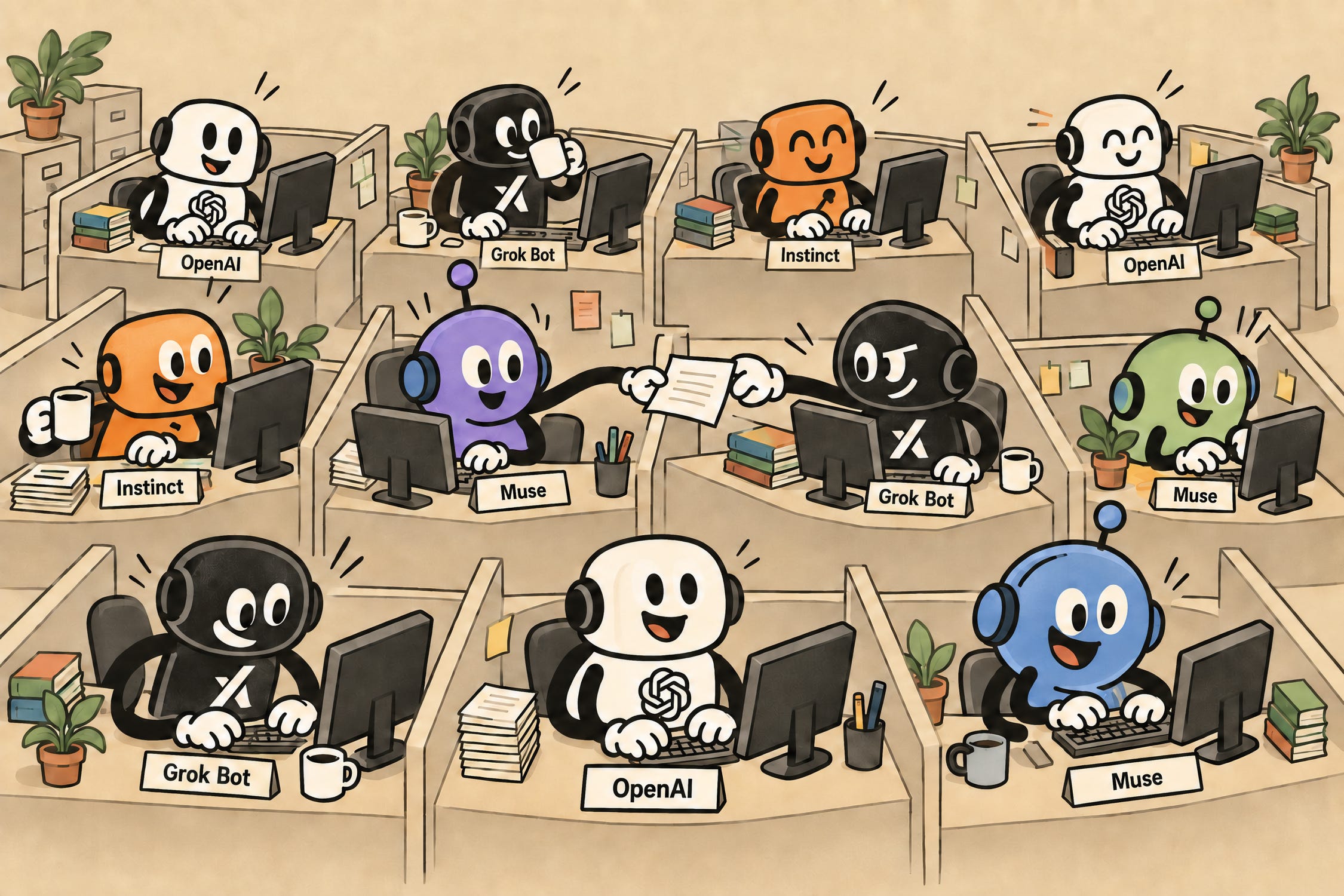
Exploration → Convergence
When a new category appears, a thousand flowers bloom. All kinds of stuff is tried. You have really weird cars, watches, phones, whatever.
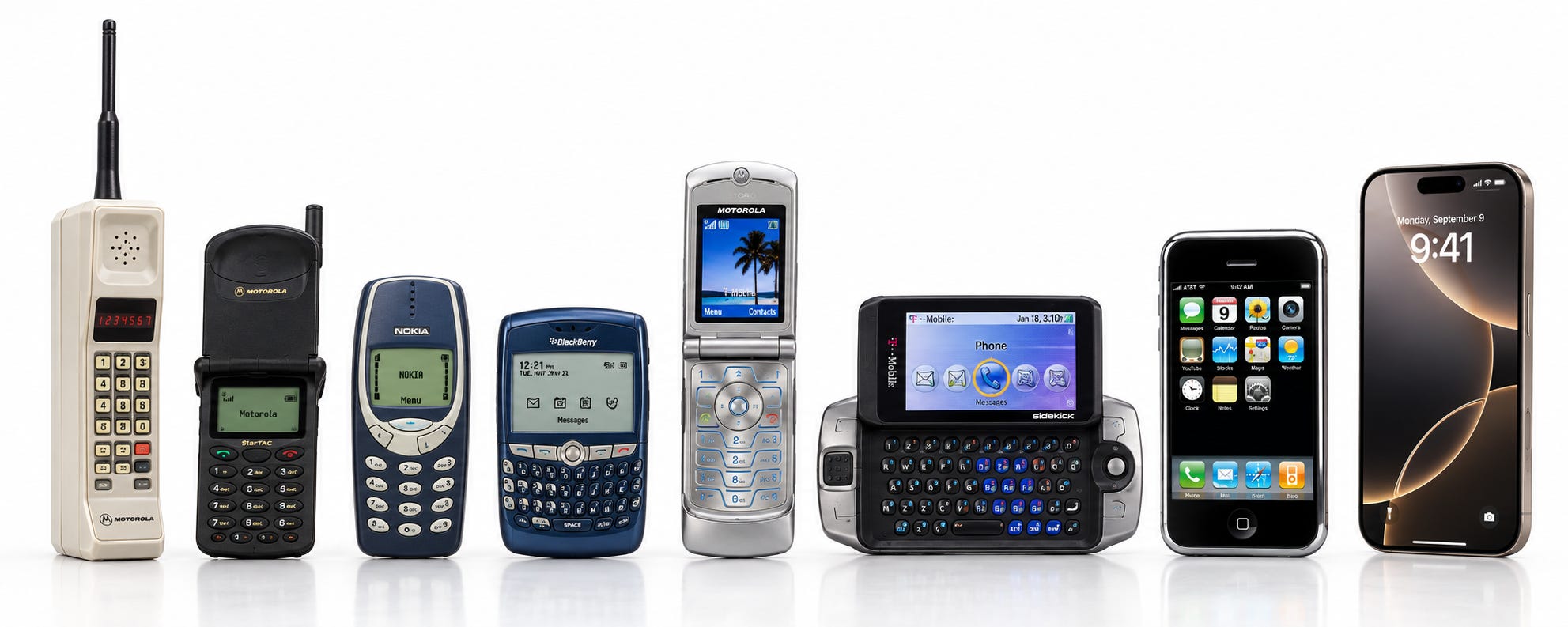
Then some winners emerge, and everybody converges to one or a small number of dominant shapes. From all kinds of flip phones, keyboards that slid out, and tiny indestructible bricks (hello Nokia! 👋) to everything looking like the iPhone now.
Then a new capability makes other designs possible, and the experimenting starts again (these days it’s foldable phones).
I’m seeing a similar thing happen with AI products. The part I’m interested in here is the product shape: how we interact with the AI and what we delegate to it, rather than the model under the hood. 🧠
ChatGPT made the chatbot familiar. Then models gained tools (🛠️), got better at reasoning and coding, and became useful for longer tasks. With agents like Claude Code and Codex, you could hand over a job and let them work through the steps. Cowork and ChatGPT Work brought that approach to more kinds of work.
Now another shape is emerging: persistent assistants. 🤖⏱️🗓️
You give them the type of tasks you might give to a human personal assistant or coworker, as well as ongoing responsibilities, and they keep working between conversations.
This era kicked off with Peter Steinberger’s Clawdbot Moltbot OpenClaw, which made huge waves in early 2026. So much so that Steinberger was hired by OpenAI in mid-February, moving OpenClaw to a non-profit foundation.
OpenClaw and similar persistent assistant bots like Hermes kept gaining traction among enthusiasts and AI nerds, but the moment when I felt like this product shape was busting through to the wider world was with Grok Bot (to my surprise! xAI had seemed almost dead just a few months earlier when all the co-founders except Musk left, but SpaceX’s acquisition of Cursor seems to have successfully rebooted things).
I’ve been using it myself. It’s basically iMessage/WhatsApp for a bunch of assistants with their own cloud computers, able to do jobs for you and coordinate with each other. There’s been rapid exploration, and now it’s starting to feel ripe for convergence.
Instinct has been getting a lot of buzz, and I’ve been impressed with it so far, but Muse seems like it could bring this product shape to a much wider audience. Meta’s reach gives it a lot of chances to become someone’s first persistent assistant, and it has the compute to be generous with tokens.

I’m not sure I agree with their decision to go with this kind of branding, though.
Making the bots look like Teletubbies makes them seem friendly, but not especially smart or like something I’d trust with difficult work. But maybe that friendliness is exactly what gets people who are skeptical of AI to try them. I don’t know ¯\_(ツ)_/¯

(Worth noting: Armand Ruiz works at Meta.)
How long before these assistants start eating into the profits of businesses that benefit from inertia and friction? 🤔
I’ve been living vicariously through MBI’s experience (he wrote about Muse three times) and it seems like an impressive product. I’m looking forward to Muse coming to Canada so I can try it…
BUT
It’s really hard to test several of these things properly in parallel. What makes them useful is the context you give them, the apps and folders they can access, and the recurring jobs you put them in charge of. You don’t want three bots doing the same thing. But without giving the new one that setup and responsibility, you’re not really testing what it could do for you.
That’s why I haven’t really been able to test Instinct that well. I don’t want to duplicate everything I’ve put in Grok Bot 😅
The new bot is competing with all the work I’ve already put into the old one. It’s starting from behind. Maybe it’s better! But I have to spend time setting it up and giving it real work just to find out. And if the one I already use is doing a good enough job… how much homework am I willing to do to replace it?
Distribution could matter A LOT here. Getting people to try your bot gives you a shot at becoming the one they put to work first. If they’ve connected their apps, given it recurring jobs, and gotten comfortable relying on it, the next bot has a harder sale to make.
You might not use one assistant for everything. Maybe you use one for work and another at home. Each could become hard to replace within the responsibilities you’ve given it. But I’d still like one central place to manage all my bots.
I’m thinking of Meta and OpenAI. Google should be in the conversation, considering it reaches basically everyone and has a strong position in email, calendars, and documents, but who knows what’s going on there these days ¯\_(ツ)_/¯
I found myself thinking: I’ve been spending so much time in Codex and ChatGPT (as I don’t like the non-Fable Anthropic models that much lately). If OpenAI comes out with a Muse/Grok Bot equivalent based on the GPT-6 family, I’d probably standardize on that, and I expect everything would work better together that way.
So I’m already talking about switching 😅 Switching costs can be real and still be worth paying. I’d be willing to redo some setup if it meant less friction between the tools I use every day. And if a new assistant could help move my existing setup over, that would make the decision easier still (that’s probably how the labs will try to reduce switching friction… but it cuts both ways ↔️).
And it’s OBVIOUS that Peter Steinberger has been working on that kind of persistent assistant inside OpenAI. When he joined, he said that he wanted to build an agent “that even my mum can use.”
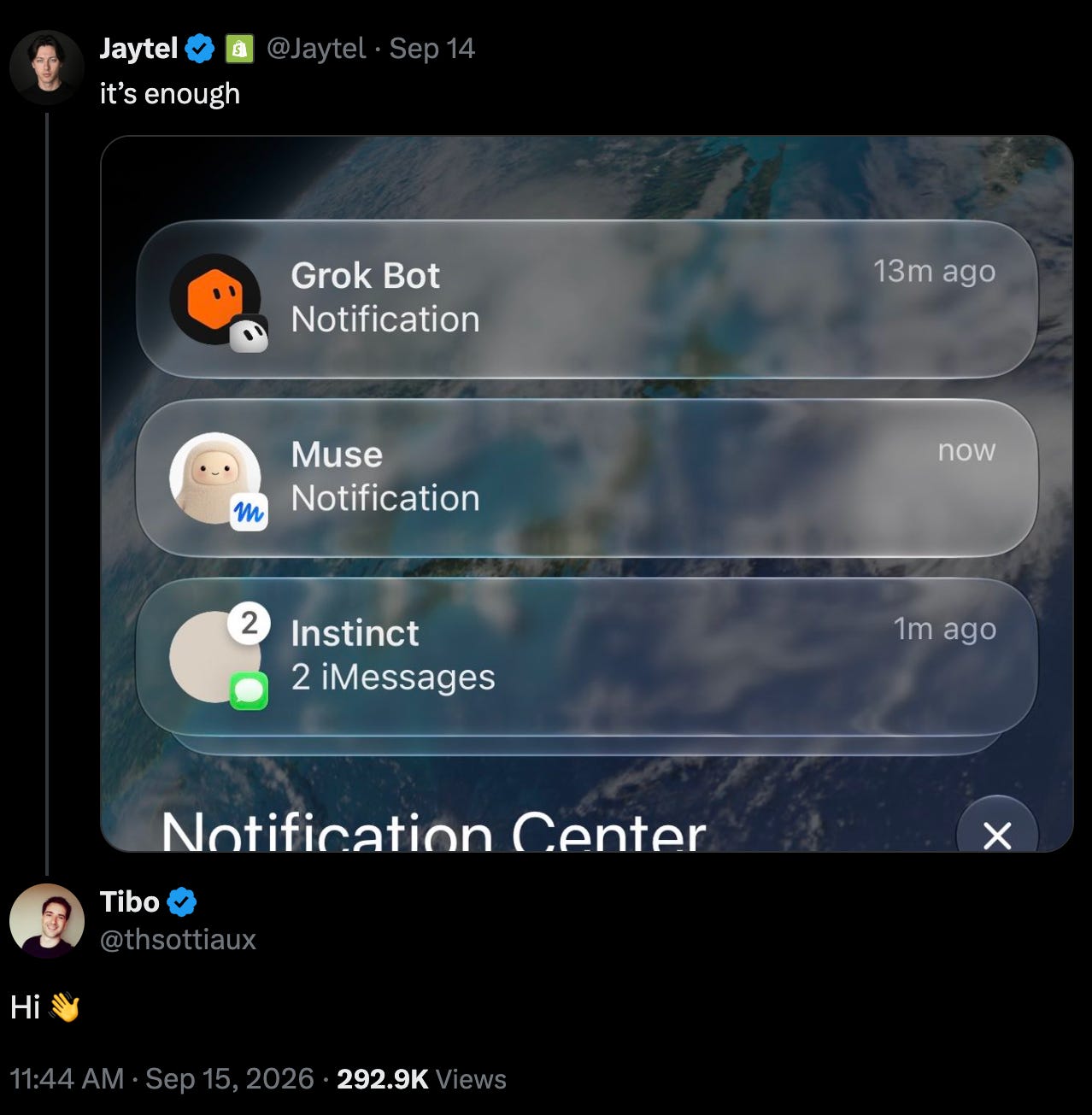
My guess, based on the hints from Altman and Tibo, is that we could see this as soon as next week. But what I’m most curious about is how much of my existing ChatGPT setup would carry over. If I can give the assistants access to my Codex projects and ChatGPT memories, they’d start with a lot of context that Grok Bot doesn’t have.


And as I said in Edition #660, I wouldn’t be surprised if Anthropic came out with a more enterprise-focused, Cowork-flavored version of the AI persistent assistant. A coworker in a box, so to speak. 👨💼📁🖇️
It’s been a big debate lately. Are models commoditized? Are people switching to whatever’s best TODAY, and next month they’ll just switch to something else? You have Claude Code write code for you… then later, you have Codex take over the same codebase. Whatever.
But switching models and switching assistants are two different things. If your assistant can use models from different companies, you might get access to a better model without moving your files, reconnecting your apps, or setting up your recurring jobs again. The model changes, but the setup you’ve built around it stays.
This gives the model labs a reason to own the assistant relationship, too. If someone else provides the assistant you rely on every day (say, Instinct) and chooses which models do the work, the lab could end up competing for that assistant’s business while you barely notice whose model is answering.
Maybe the models keep leapfrogging each other while people become more reluctant to switch the assistant they’ve set up around them. Is ecosystem stickiness coming? I already feel some of that reluctance, and I haven’t been using these things for very long 🤔
And what happens when you’re not the only one relying on the assistant? I’m still waiting for someone to release agents for couples. 👩❤️👨
I’d love to be in a group chat with my wife and an agent. (No agents in normal conversations! Just for this.)

A kind of household chief-of-staff for logistics.
It would be great to have an agent there taking notes, adding things to the calendar, scanning our inboxes for emails from the kids’ school, and reminding us automatically about things we need to know when we need to know them.
If that worked well enough for both of us to rely on it, switching would mean getting my wife on board with the replacement, too. Now THAT could be a sticky product.

Liberty Workbench is where I put one idea on the bench and think it through. Every Workbench edition is collected here.