


Guilt has served its function when the lesson has been well and truly learned.
Thank it for its service and let it go.
—Stoic Emperor
⏫ I have a note file called “Upgrade my life”.
It contains ideas of stuff that I think would be nice upgrades for my life. Nothing I absolutely need with any urgency, but in the “nice to have” category. Once in a while I’ll add something when I come across it, and once in a while I’ll review it and see if I’m ready to get anything on the list.
One of the things on it is an adjustable powered desk that can switch between standing and sitting height.
Years ago when I suffered from debilitating RSI (how I cured myself is a story for another time) I got a standing desk and worked standing for years. I only went back to sitting when my first kid was born (yeah, short nights = sit down if you don’t want to fall asleep on your feet, fall over and give yourself a concussion).
Back then I went with the deep value approach: I got a used IKEA Fredrik desk for $40 CAD, and because every surface is adjustable, I set it to standing height. I also got a high quality gel floor mat designed for workers who spend all day on their feet. All in all, a very cheap way to test out this lifestyle.

And I loved it, I think it was good for my health, and I loved that every time I had an instant to think about something (ie. wasn’t actively writing on the keyboard or needing to look at something on the screen) I could walk around the room and then come back to the desk without much friction (don’t under-estimate how much friction there is in standing up and sitting down).
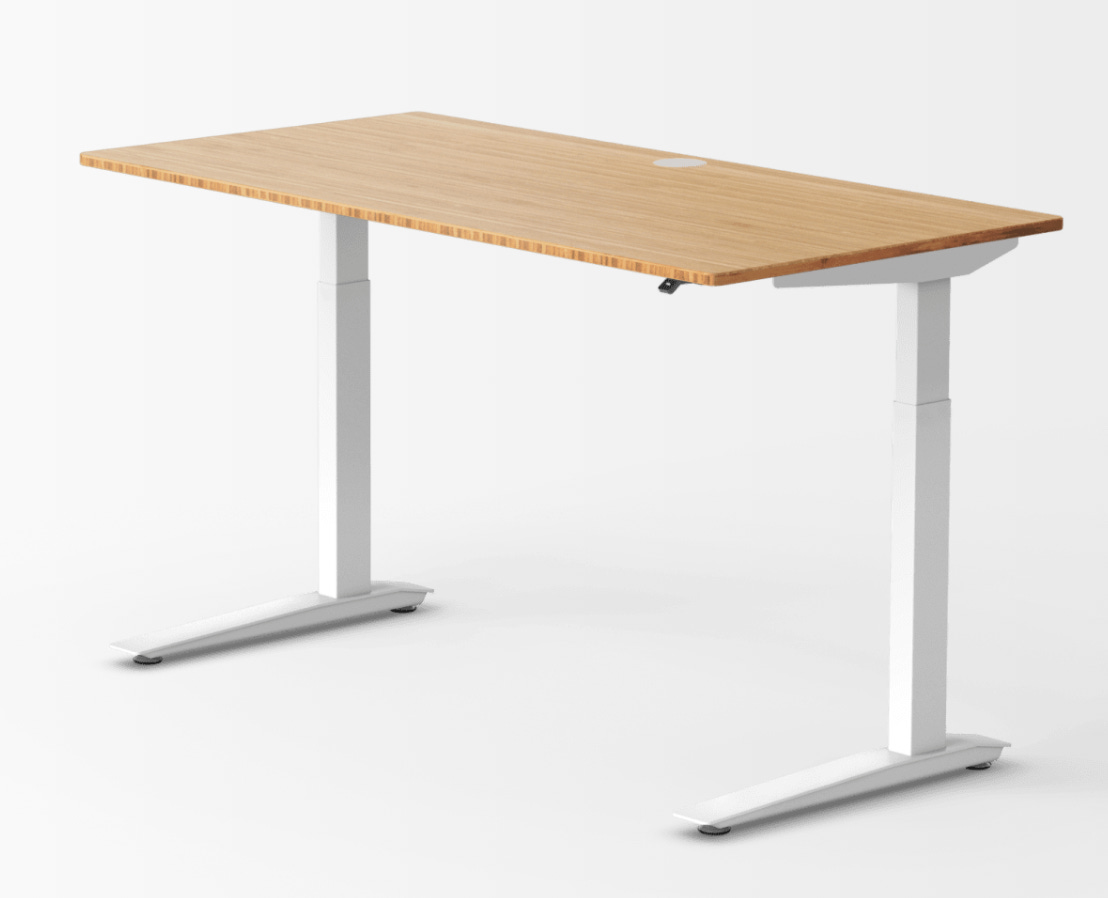
The downside of that setup was that it wasn’t easy to move the desktop surface up and down, and I don’t think I’m ready to go back to standing 100% of the time. That’s why I looked into desks with electric motors (on my shortlist are the Jarvis Adjustable Desks), but these are a lot more expensive than my $40 desk1…
But hey, maybe it’s time to start thinking about:
💫 𝓾𝓹𝓰𝓻𝓪𝓭𝓲𝓷𝓰 𝓶𝔂 𝓵𝓲𝓯𝓮 💫
(Maybe at some point I’ll talk about some of the other items on my list, and what the thinking is behind them)
🤔 I was having a email discussion with a reader and brand new paid supporter (💚 🥃) who will remain anon for now, and we were discussing the idea of book pairs from edition #115 (he recommended ‘The Match King’ and ‘Billion Dollar Whale’ as a synergistic duo), and the discussion went in the direction of how fraudsters spend:
I found it interesting how both fraudsters very consciously cultivated this "mysterious and incredibly rich" persona to gain status in wealthy/powerful circles and to get more money to keep their schemes alive. It seems like the money wasn't the primary goal sometimes, it was just a vehicle to get to where they wanted to be in those circles. I think that's why both main characters had such problems staying rich (prior to their frauds becoming unraveled) since they spent it all as soon as it hit the bank account.
My theory on this:
I wonder if the part about how they spend the money quickly and have trouble staying rich is because it’s much easier to spend money that you didn’t really earn.
Do the kind of people who actually build things and work for their money against all odds learn through that process more about staying rich? (of course it’s not fool-proof, but it has to help, right?).
They replied:
It's funny you mention that because in Billion Dollar Whale (minor spoiler alert), the real Jordan Belfort sees how Jho Low (the ringleader of the fraud) spends money and Belfort tells his wife something like "there's no way this guy (Low) made his money legitimately, look at the way he spends it".
This happened way before anyone in the US blew any whistles (although I'm sure some bankers/lawyers knew there was something funky going on but didn't want to get off the gravy train managing someone with billions of dollars to blow).
That’s interesting, how a fraud can more easily spot another fraud…
Probably similar to how a spy can more easily spot another spy, because they already live in that world, in that headspace, and if they’re good at it, they know what they’re trying to avoid doing and looking like, so the red flags are more available to mind to spot in others.
I wonder how this idea may translate to other situations…
It’s certainly similar to how the best IT security people have the same kinds of skills that would allow them to be black hat hackers if they decided to be unethical. Do assassins make the best bodyguards/security?
But what else? I’m sure this idea goes farther, to more unexpected places. Any ideas?
💪 I gotta admit, that cracking sound really took me by surprise and I was really confused for a second...
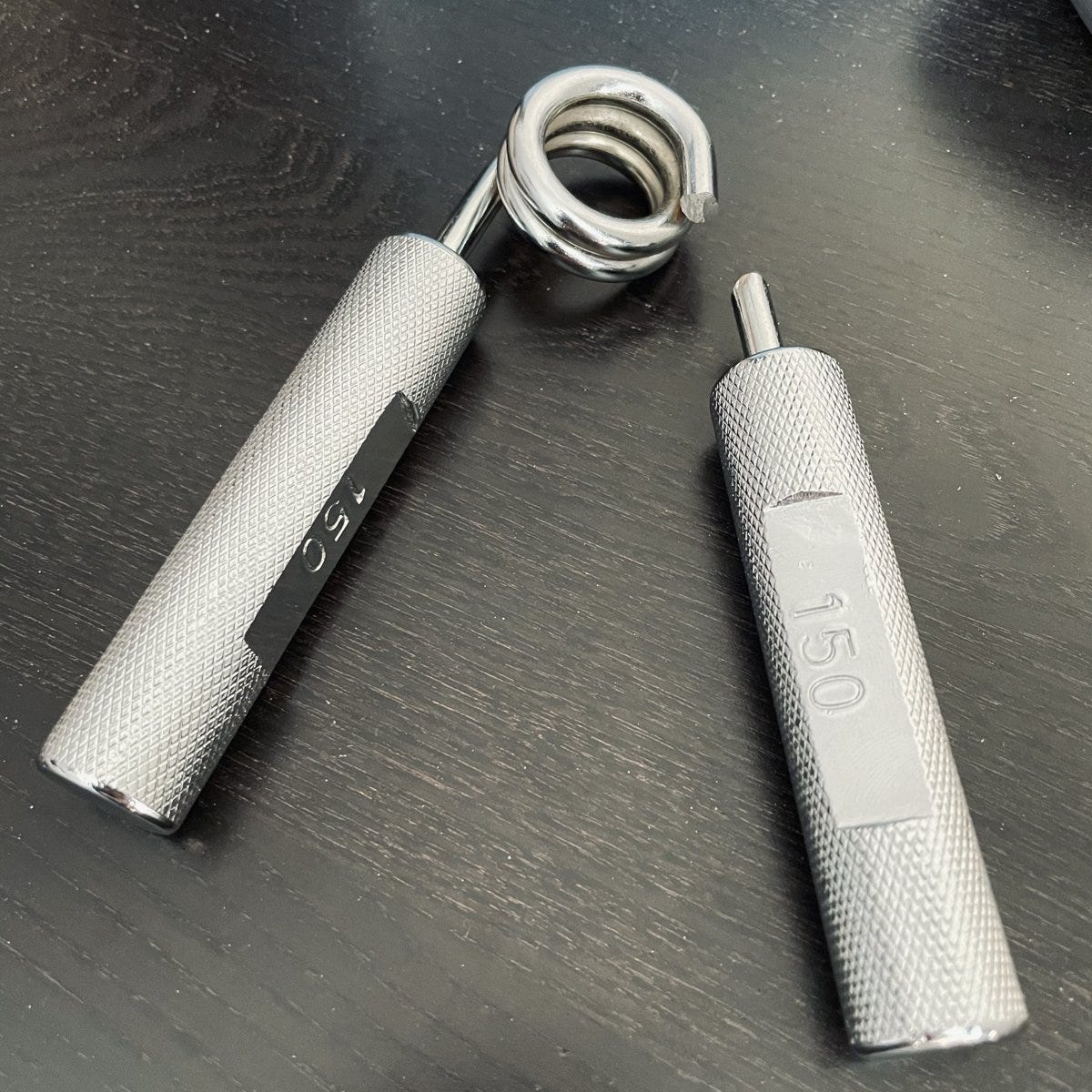
Either I'm stronger than I thought, or I should stick to buying higher-quality grippers ¯\_(ツ)_/¯
(this was the first no-name gripper that I bought. After that I got some Captain of Crush grippers and they seem of much higher quality)
💉 I received a email from Uber with some info from the government of Canada about vaccines. Very very basic stuff — did you know that mRNA can’t change your DNA? ha! — but many people need to hear that.
I think it’s a clever vector to get info out. These companies reach more people more easily than the government does — and people have a higher chance of opening a email from ‘Uber’ than from ‘Health Canada’.
I just wish a lot more high-quality comms had been done a lot earlier, and a lot more effectively…
💚 🥃 If you feel like you’re getting value from this newsletter, it would mean the world to me if you became a supporter to allow me to keep writing it.
If you think that you’re not making a difference by subbing, that’s incorrect. Only 3% of readers are supporters (so far — you can help change that), so each one of you joining this elite group makes a big difference.
I like free stuff as much as the next person, but when I like something, I also want it to continue and be sustainable:
Investing & Business
Apple Devices, Total Cost of Ownership Edition (I’m throwing in a boot metaphor, be ready)
You may know the saying about how poor people often pay more for things when you take the entire cost over a longer period into account.
f.ex. If all you can afford is a really crappy pair of boots, they’ll wear out really fast and you have to buy another pair and another pair at regular interval. Over 10 or 15 years, you'll probably have spent more on boots than a richer person who buys a really good pair of boots that lasts a decade+. 🥾
There's a similar phenomenon with Apple devices, but with a twist.
It’s true that you pay more for an iPhone than for all-but-the-highest-end Android phones.
But in most cases, you tend to keep them longer (if you want to) because they’re better built and the software is supported longer, and when when you do upgrade, either by choice or at the end-of-life, the resale value is much higher.
So upfront you may have a higher cost, but your TCO for being in the iPhone ecosystem over a decade is probably not much higher, and possibly lower, than owning a series of cheaper Android phones that you may have to replace more often and that are almost worthless when you want to resell them.
That’s my priors on this, anyway. I’m open to being convinced otherwise (by a good study with good methodology on this — I’m sure there’s all kinds of half-assed articles that say one thing and their opposite).
Segue Into Seeing Smartphones with Fresh 👀
This brings me to a different point that I’ve made a few times over the years and that I don’t see discussed often enough:
All smartphones are huge bargains.
If you compare them to the value of what they do, they’re all basically the same price, so paying up for the one that you prefer or find best makes sense.
By this I mean that a few short years ago, you could’ve told a millionaire that a working 2021 iPhone (let’s pretend that you had 2021 apps, fast internet connectivity, working cloud services and everything in this magical theoretical scenario) cost $50,000 and they’d have found it a bargain. 📱
You’re telling me I can take photos that are much nicer than the average camera (don’t compare to DSLR, most people don’t have those), shoot stabilized 4k HDR video, go anywhere on the web, watch video (professional movies and TV on Netflix or amateur but still great on Youtube), listen to any music I want, have maps of anywhere in the world with my position thanks to freaking satellites and see aerial photos of anywhere, even get turn-by-turn directions, the opening hours of stores, travel time estimates! I can get apps to get a driver or groceries to my house, play games with better graphics than the consoles of not long ago, send instant messages to any of my friends or family, do phone calls and video phone calls (remember when that was a Jetsons futuristic idea?), count my steps, keep track of my calories, my calendar, edit photos and videos, see the real-time weather, take notes (voice and text), listen to podcasts and audiobooks, read ebooks too, do my banking without leaving my couch and order stuff on Amazon with my thumb, etc, etc, etc.
Oh, wait mister, this one costs $800 instead of $500.
You’re getting tens of thousands of dollars of value from the thing, with probably more than a hundred hours of use per month, and you’ll probably keep it for 2-4 years (so divide the price by that to get cost per year).
Whatever you’re paying, it’s cheap.
People used to pay what we pay for a smartphone for just a camera that didn’t do anything else. 📸 Then they paid even more for just a video camera. 📹 Then a few hundreds more for just a GPS for their car. Then thousands extra for a non-internet-connected computer.
We’ve had massive deflation caused by tech in the area of whatever-can-be-done-by-a-smartphone and we’ve anchored rapidly, finding that $2 apps are “too expensive” (and man, I can’t afford $10 for a newsletter!).
But when you exchange money for something, what really matters is the utility/value you get in return. This is why Bezos says he wants to make Prime something you’d be “irresponsible” not to subscribe to, by providing a lot more value than what you pay. Well, smartphones are multiples of that.
I get that some people don’t have much money and saving $200 on a phone matters.
But for people who are spending more than the price of a smartphone per Costco trip and will spend thousands on toys they barely use, I don’t get trying to cheap out on a device that you use for hours each day, where any little annoyance or thing that isn’t as good as it could be for a few bucks more (camera, speed, storage) is multiplied by time-of-use.
I often say that just the better quality photos/videos of my kids is worth more than the price of upgrading my iPhone every few years.
Ok, this wasn’t supposed to be an old man ranting at the clouds essay. I’ll wrap it up before I get the hook from backstage.

Twitter Analytics 🐦
Why is Twitter's analytics page so bad & hasn't been changed in years & years? Isn't it a big entry point for their small advertisers?
I think that'll be my canary in the coal mine for a real change at Twitter. When they upgrade this thing, I'll trust they've changed.
It’s easy to focus on big new features that get attention, but a functional organization should be able to walk and chew gum at the same time.
They need to be able to work on opening new stores, so to speak, while at the same time keeping their existing stuff good and refreshing the decor and upgrading the appliances once in a while.
‘Jaguar Land Rover is shutting its two main car factories temporarily due to a shortage of computer chips’
I may be misremembering the terminology, and I don’t remember who first wrote about this, but this is a good example of a “devil dust” business, semis being something tiny, a small part of total cost, but without it, you can’t make your product and you can’t easily find a substitute.

Science & Technology
Thinking About Game Design with Byrne
Great (free) post by Byrne Hobart:
I haven’t gamed much in a long time, but video games have played such a large role in my formative years — including being a map-maker for Starcraft, Doom, Quake, Heretic, Hexen, Descent, etc — that I consider myself still a gamer, if mostly ‘culturally” (I get my dose by watching Twitch once in a while — in recent years PUBG has been my fave, watching either Shroud or ChocoTaco).
I’ve also always had a bent toward figuring how things work, how they’re made, what decisions have to be made on both the technical level and the artistic level (so how models and textures are rendered, but also the choices that the person who wrote the story and built the levels had to make), so games are great fodder to think about this stuff. Unlike the real-world, it’s a fully controlled environment in which to experiment.
In edition #111 I posted about the creation of Half-Life and how they got it to be that good and innovative.
Byrne goes through some of the high-level choices that are facing game designers when it comes to how much freedom you want to give your players, and the pros and cons that come from tuning that dial in one direction or the other:
Sid Meier once defined a game as "A series of interesting choices." This is a good way to look at games, and to look at game-like situations, because you can expand it: anything that stays interesting for a long time must have some way to create new interesting choices faster than those choices can be exhausted. [...]
Suppose the game has ten significant choices, i.e. ten ways you can permanently alter the outcome. This requires 2^10, or 1,024, discrete endings
He then goes through varying ways to deal with this combinatorial explosion, and how this influences the kind of game it is, not only in the storyline, but also in the graphics, since, if almost anything is possible, you can’t spend much time/resource on most things/scenes.
This is partly why Minecraft and Roblox look the way they do.
In a variety of games, there are two main levels of metagame: being good at the basic mechanics, and being good at modeling what an opponent will do and countering it.
So true. Back in my Starcraft 2 days (playing, but also watching professional leagues from South-Korea, where these types of competitive games are almost the national sport) keeping up with the meta-game and the innovations at that level was as important, if not more important, than having perfect mechanics.

In fact, since all players at that level tend to have excellent mechanics, what often differentiated them is innovation on strategy and tactics, and how they confounded the expectations of the current state of the meta-game in clever ways (you want to seem as if you’re doing one thing but you’re actually doing something else that isn’t easy to predict and that counters what the other person would do in reaction to expecting you to be doing the thing that you’re pretending to do — you see how this gets meta-meta-meta quickly and complex?).
I’m sure this complexity and constant mutation of the strategies and tactics is what Tobi Lütke finds so stimulating in the game.
It’s not something you can master — it’s like real-time chess but with more types of pieces, more resources to manage, a different much larger board each time, and you have to scout with your pieces to see what the adversary is doing with their pieces. Oh, and you can control as many pieces at the same time as your eye-hand-brain coordination allows you to.
Good luck!
An open-ended game can support a variety of different endings, but only because the story, and the meaning, is supplied by the player. The game is providing a framework for an external story, instead of telling the story itself.
This sounds good, but it’s very hard to pull off if you give player too much freedom, because players mostly aren’t writers, they aren’t game designers, they aren’t artists, so unless there are smart guardrails to stay in the “fun zone”, this can lead to terrible, tedious, boring gameplay.
I just wanted to focus on the game-design aspect, but Byrne also makes an interesting parallel with life-decisions and the job market. For more, go read the whole thing.
Non-Technical Explanation of Wifi 6 Standard
Curious what makes the latest wifi standard (Wifi 6 aka 802.11ax) better than the ones that came before and a bigger-than-usual step forward? This is a good overview in a language, and with drawings, that anyone can understand.
It goes all the way to why this is important for the IoT future and industrial applications with thousands of devices in a single factory, hospitals with medical devices, etc.
Wifi in general is a cool tech that we take for granted and that most people think is basically magic. Why not learn a bit about it, you’ll appreciate it more, and appreciating things is a good way to enjoy life more.
See, I can trace a direct path between wifi 6 and being a happier person. QED.
‘Facts are Pieces of a Puzzle, not the Puzzle Itself’
I keep featuring Zeynep Tufekci, but she keeps writing great stuff, so it’s not up to me.
This one is hard to do highlights for since one thing builds on top of the other all the way to the end, so here’s the link to the whole enchilada:
The Arts & History

😲
Just thought this looked cool when I saw it stream by from Archillect.
Had no idea what it was, but after following some bread crumbs, it turns out it’s a sculpture on a university campus in Mexico:
Central Campus of the National Autonomous University of Mexico (UNAM) [...] The Espacio Escultórico (Sculpture Space) is part of the central campus and is where large, colorful, abstract sculptures decorate and enhance the natural volcanic pedregales they sit atop.
The final structure represents Espacio Escultórico itself. A ring with an outside diameter of 393 feet (120 meters) topped by 74 massive stone prisms are meant to represent a pre-Columbian worldview. In the center of this ring, the undisturbed pedregal landscape can be fully appreciated.
If you want more, here’s the Spanish Wikipedia page on it (I read it via Google Translate).

I just think it looks awesome.
I’m not even using that IKEA desk anymore. I re-sold it for $40 about 10 years after buying it (inflation, eh?). I’m now using a desk that my wife had as a kid to do her high-school studying or whatever. I like very narrow desks — this one is probably barely 3 feet wide — because everything I do is digital, so as long as my computer fits on it, I don’t need more surface.
if you have a chance , pls report how you fixed your RSI problem, thx in advance