


The true test of intelligence is not how much we know how to do, but how we behave when we don't know what to do.
–John Holt
🧪👨🔬⚛️ Ambient learning ftw!
My oldest boy has been learning about chemistry lately. I think it’s because we’ve been reading Project Hail Mary together (have you heard the podcast I did about it? 🎧). The book has so much cool science that we were constantly stopping to talk about stuff like orbital mechanics, how time passes differently at near-light speed, and the chemical composition of various planets’ atmospheres.
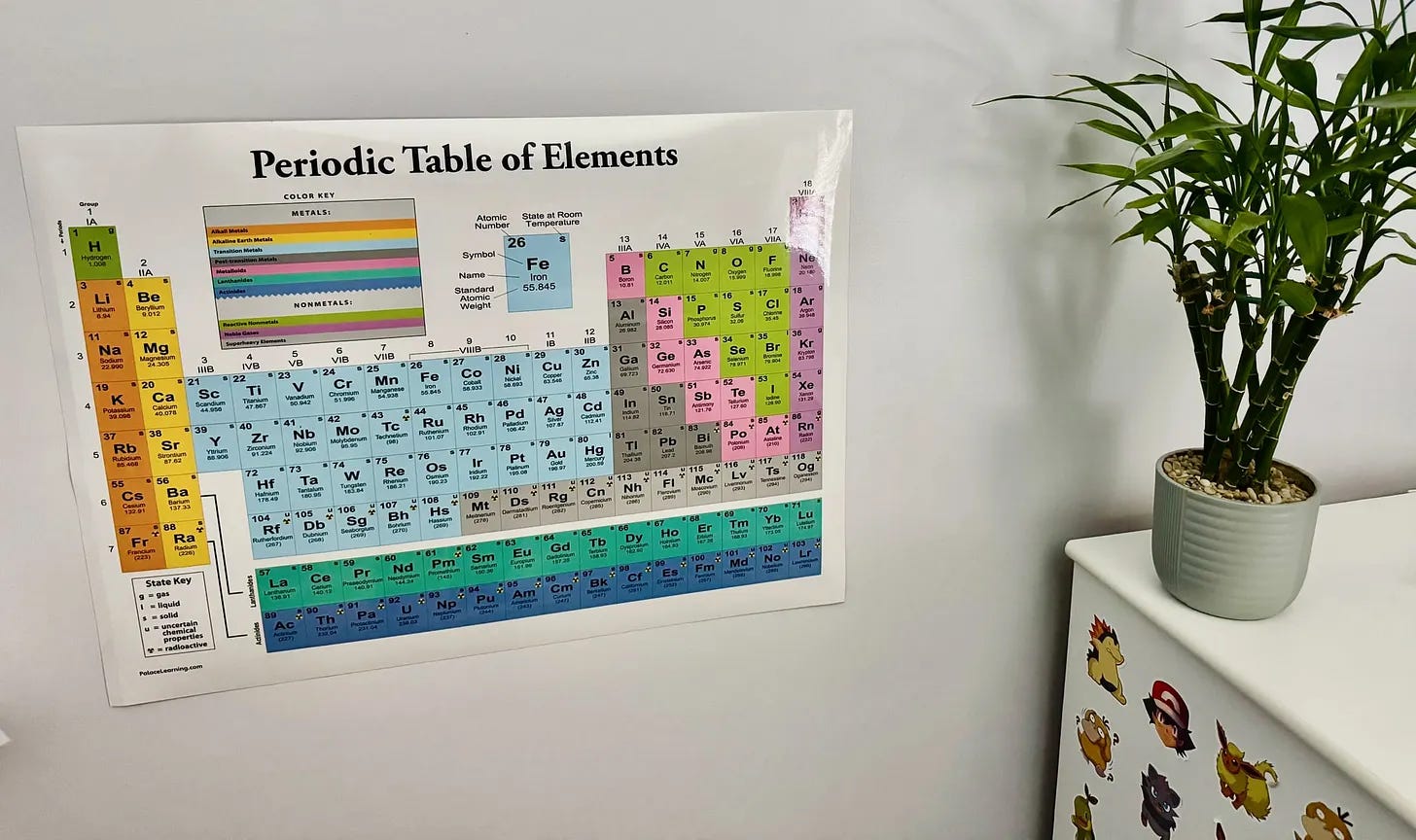
He’s been watching chemistry videos on YouTube, and I saw him looking up the periodic table on Google Images so he could print one as a reference.
Our printer is black & white, so I told him I’d get him a proper classroom version because the colors make the different categories much easier to see at a glance. I ordered a poster on Amazon, and now it’s on his bedroom wall.
The poster won’t teach him chemistry by itself, but it keeps giving him reasons to ask questions (to me or ChatGPT).
It feels similar to living in a house surrounded by books 📚. You’re more likely to pick one up when they’re always around.
I like the idea of having more things around the house that work the same way. I already have a glass block with a 3D model of a DNA double helix laser-etched inside it:
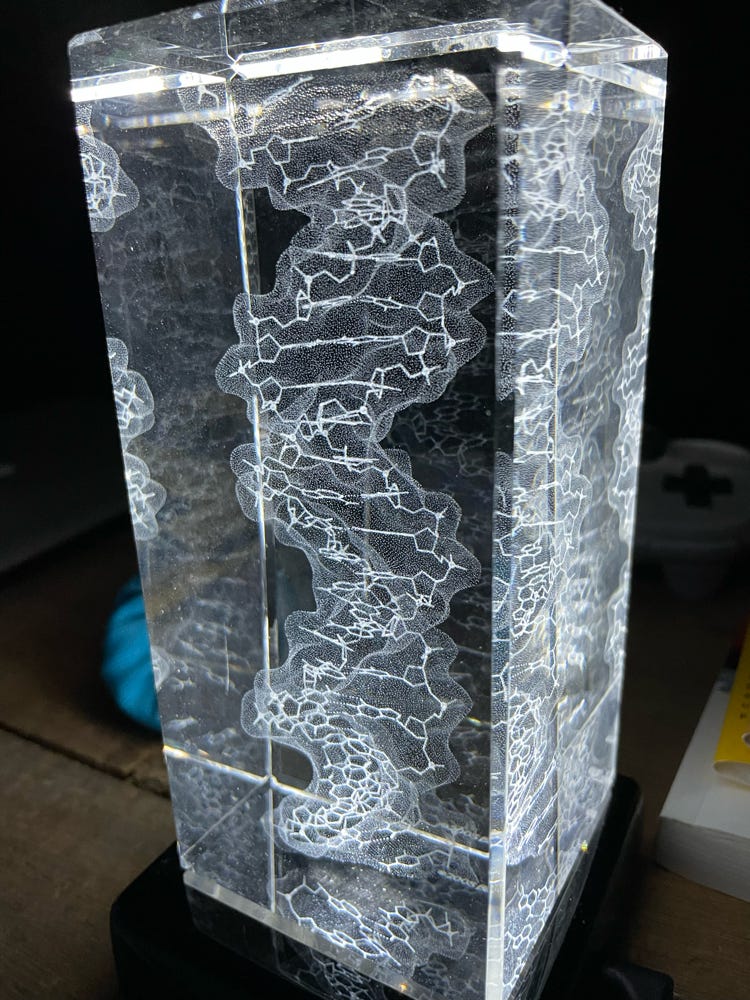
Now I’m trying to think of other things like this I could scatter around the house. Maybe a model of the solar system. What else? 🤔 Send me your ideas ✉️
📝 In case you missed it, I published a new Workbench issue on Monday:
I tend to be pretty critical of my writing (and I rarely mention it, because I know how it sounds 🥱🙄). But I worked incredibly hard on this one: straining my brain over AISI reports and lab papers, staying up until 2 A.M. a few nights in a row last weekend while the rest of my family slept.
I kind of dig how it turned out. I hope you enjoy it too.
🤬🗯️ I HATE how the Claude Mac app keeps scrolling you back down while you’re trying to read something upthread as it works.
Every time it takes another step or adds to the reasoning trace, it rudely yanks you back to the bottom instead of showing a small indicator that there’s new activity below.
Another huge papercut-with-lemon-juice-on-it: In Claude Cowork, if you close the right sidebar to switch to two-column mode, it reopens every time you switch chats. You have to close it again. Every. Single. Time. 😩
It’s super user-hostile. 😡
The ChatGPT/Codex desktop app is a mess for other reasons. I really wish both labs would treat interaction design as a core competency rather than shipping UX that feels vibe-coded.
💚 🥃 The paid version includes the full Friday Edition, every podcast, and access to the private Discord:
🏦 💰 Business & Investing 💳 💴
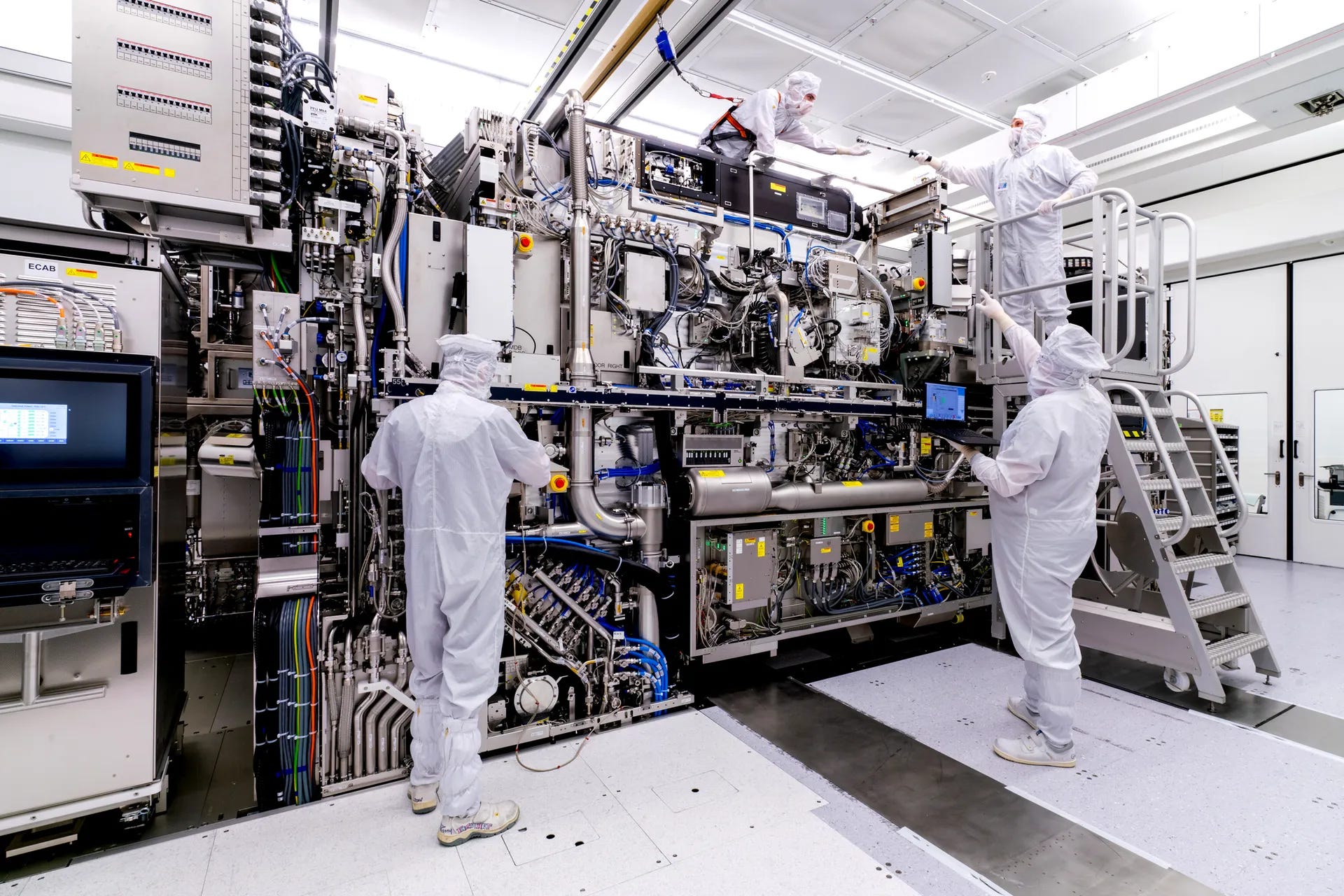
🇨🇳🔬 China’s DUV Machines: Not an ASML Killer, Not Nothing
ASML’s stock is down 21% from peak as I write this, getting hit twice. The general semi/AI malaise was already hurting, and then a headline about China starting “mass production” of deep ultraviolet (DUV) lithography machines also scared investors.
What’s going on? I thought ASML was the moatiest of moaty businesses, making magical devices that would take years to replicate…?
The first thing to know is the difference between DUV and extreme ultraviolet (EUV). China has NOT replicated ASML’s EUV machines. The story is about immersion DUV, an older (but still essential) technology.
It’s not a clean line. If I understand things right, DUV doesn’t suddenly stop working at 10nm or something.
It’s more like this: DUV can make very advanced chips, but it may have to split the densest patterns across several exposure steps. EUV can print those layers in fewer steps, which is faster and leaves fewer chances for defects.
So cheaper DUV steps don’t necessarily produce a cheaper chip. Stack up enough of them and they can cost more than doing the same layer with EUV. The crossover depends on the layer and process.
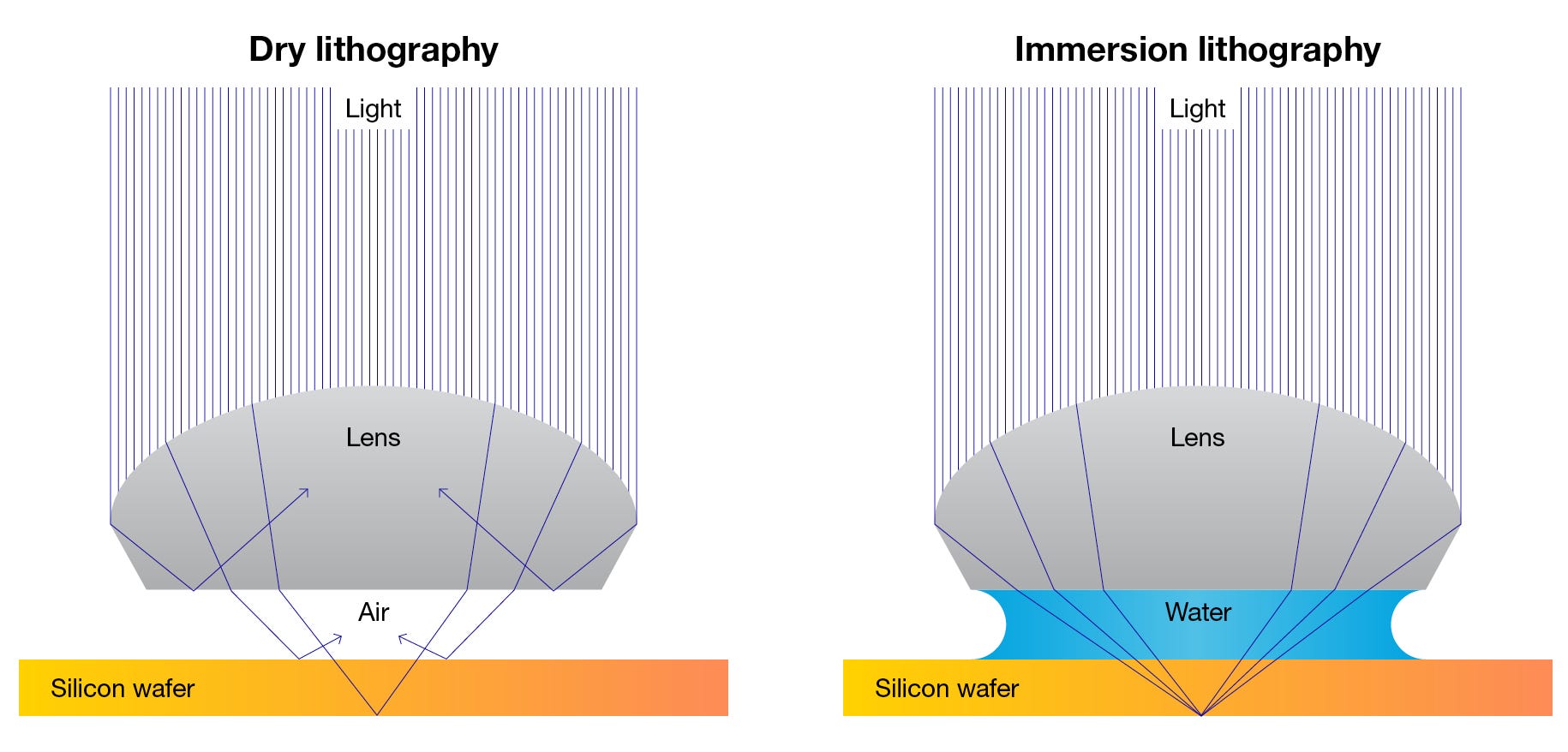
The report does not disclose the machine’s detailed specifications, but modern immersion DUV systems use 193-nanometre argon-fluoride laser light, with water between the lens and wafer to improve resolution. ASML’s advanced immersion DUV tools have a production resolution of around 38–40 nanometres in a single exposure.
That does NOT mean DUV can only make 40nm chips. The node names are misleading anyway. “7nm” and “5nm” are labels for whole process generations, not literal measurements of one feature printed by the machine. 🐜🏷️
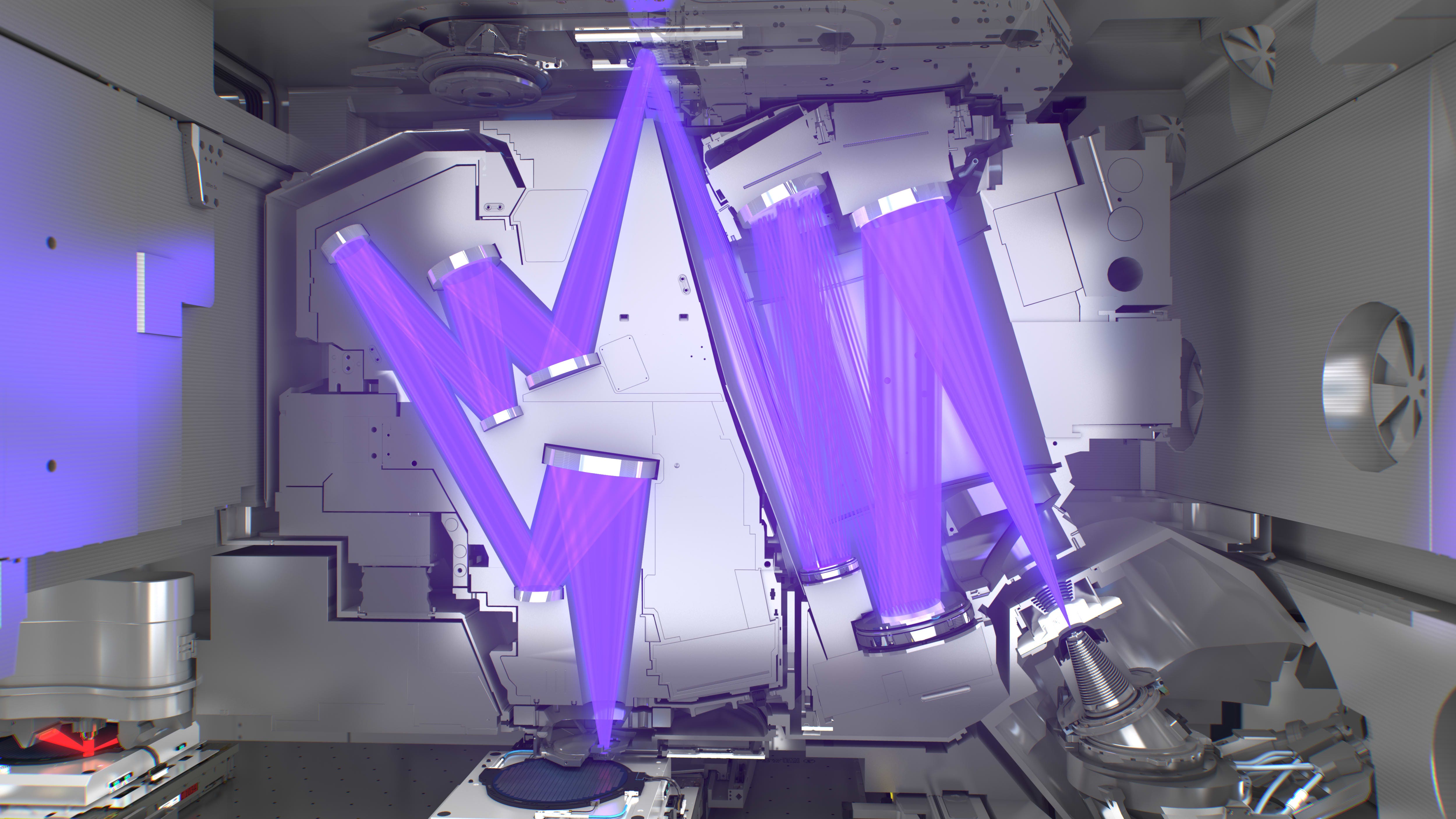
Chipmakers have pushed DUV far beyond what it can print in a single exposure by splitting dense patterns across multiple steps. ASML’s EUV uses much shorter, 13.5-nanometre light for the most intricate layers of modern 7nm, 5nm, and 3nm chips. DUV still prints many of the other layers.
Here’s a cheat sheet:
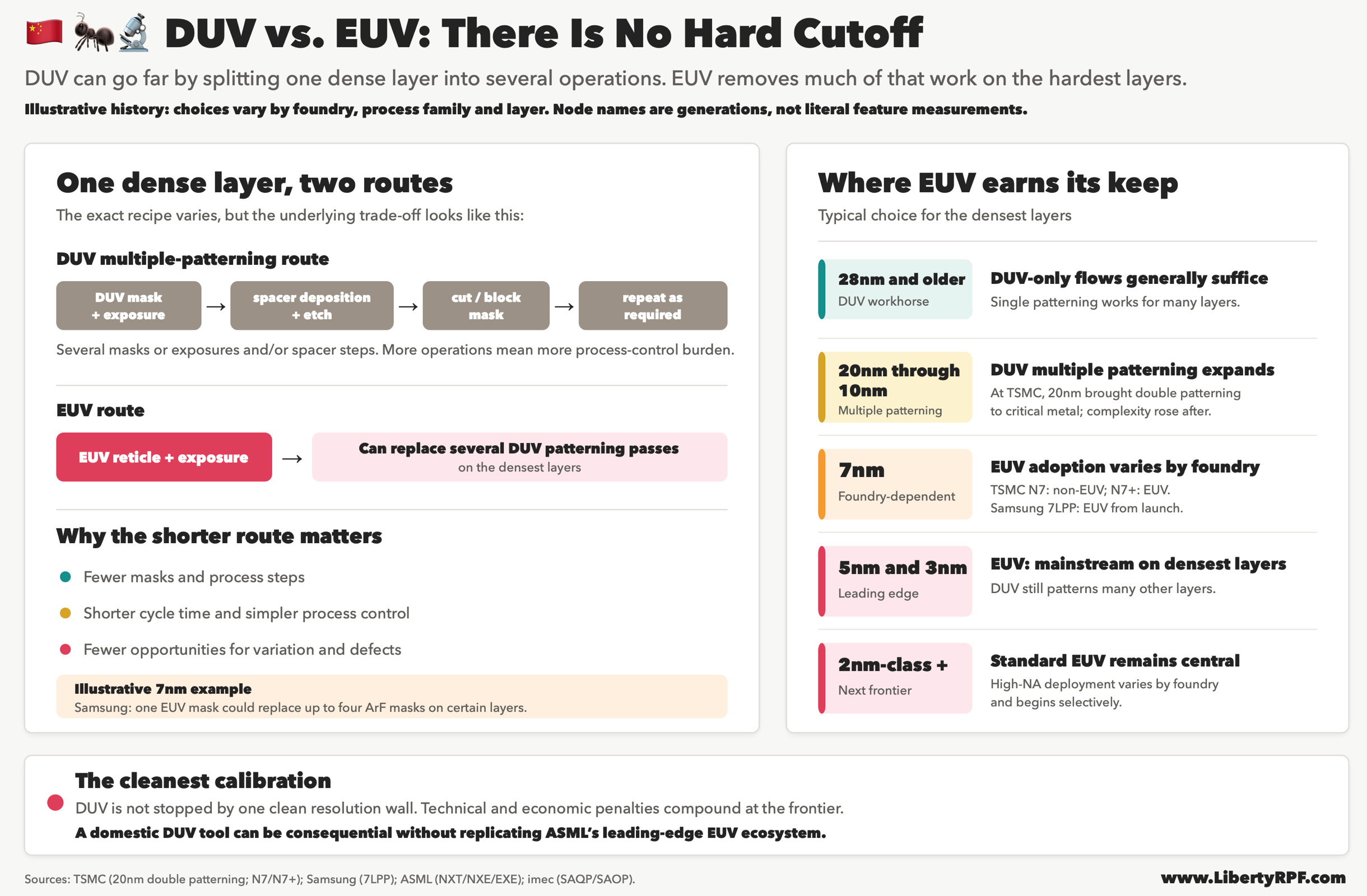
I hope it’s helpful (click for a larger version of the image).
The DUV advances are still at an early stage. The Shanghai company plans to manufacture about five DUV machines this year, and roughly 20 in 2027, the two people said. That output is tiny compared with ASML, which shipped 131 immersion DUV systems last year. [...]
If the Chinese-developed DUV machine is successfully put into mass production at Chinese chipmakers, it would replace equipment from Dutch company ASML, which is now the primary supplier of chipmaking equipment in the world.
That “if” matters!
Much still has to be done before the Chinese-made equipment is deemed a success. Moving the Chinese DUV machines onto mass-production lines could take many months or longer as chipmakers test their accuracy, reliability and compatibility with other equipment. Customer feedback should help fix problems and refine the machines, which still trail ASML’s products in performance and build quality, the two people said. [...]
So far, China has begun producing a small first batch that is expected to go to customers for testing. It has not shown that the tools can run reliably at high volume inside a fab. (Getting from the lab to commercial production is usually one of the hardest parts.)
Five early machines aren’t about to displace ASML’s huge installed base, global service network, or decades of process knowledge. China still accounted for €2.9 billion, or roughly 16%, of ASML’s total sales in the first half of 2026.
My guess is that these first domestic tools will mostly supplement the ASML machines Chinese fabs can still get, adding capacity where equipment is scarce rather than replacing ASML systems one-for-one.
But it’s not nothing. The first batch is small and inferior, but China now has domestic immersion-DUV tools entering production, with customer testing reportedly next.
While less complex than EUV, immersion DUV machines have traditionally relied on a global network of specialized suppliers. The Chinese DUV uses mostly domestic components, though some key parts come from Japan
“Mostly domestic” is itself an achievement, since a lot of ASML suppliers themselves have near-monopolies on very esoteric parts of the supply chain.
But it is not full independence. Some important parts still come from Japan, and delays from Chinese suppliers have already held back production.
Chinese fabs may be okay with worse performance and economics if it means getting equipment Washington can’t easily cut off. 🚫 🦅
China doesn’t need to match ASML immediately. It needs machines that are good enough to get into real fabs. Every installation gives engineers feedback and experience they can use to make the next machine better. 🔄
That’s the Catch-22: export controls slow China down AND create the protected market needed to build an ASML competitor. ⇆
💾 Roper Found a New Acquisition Target: Roper
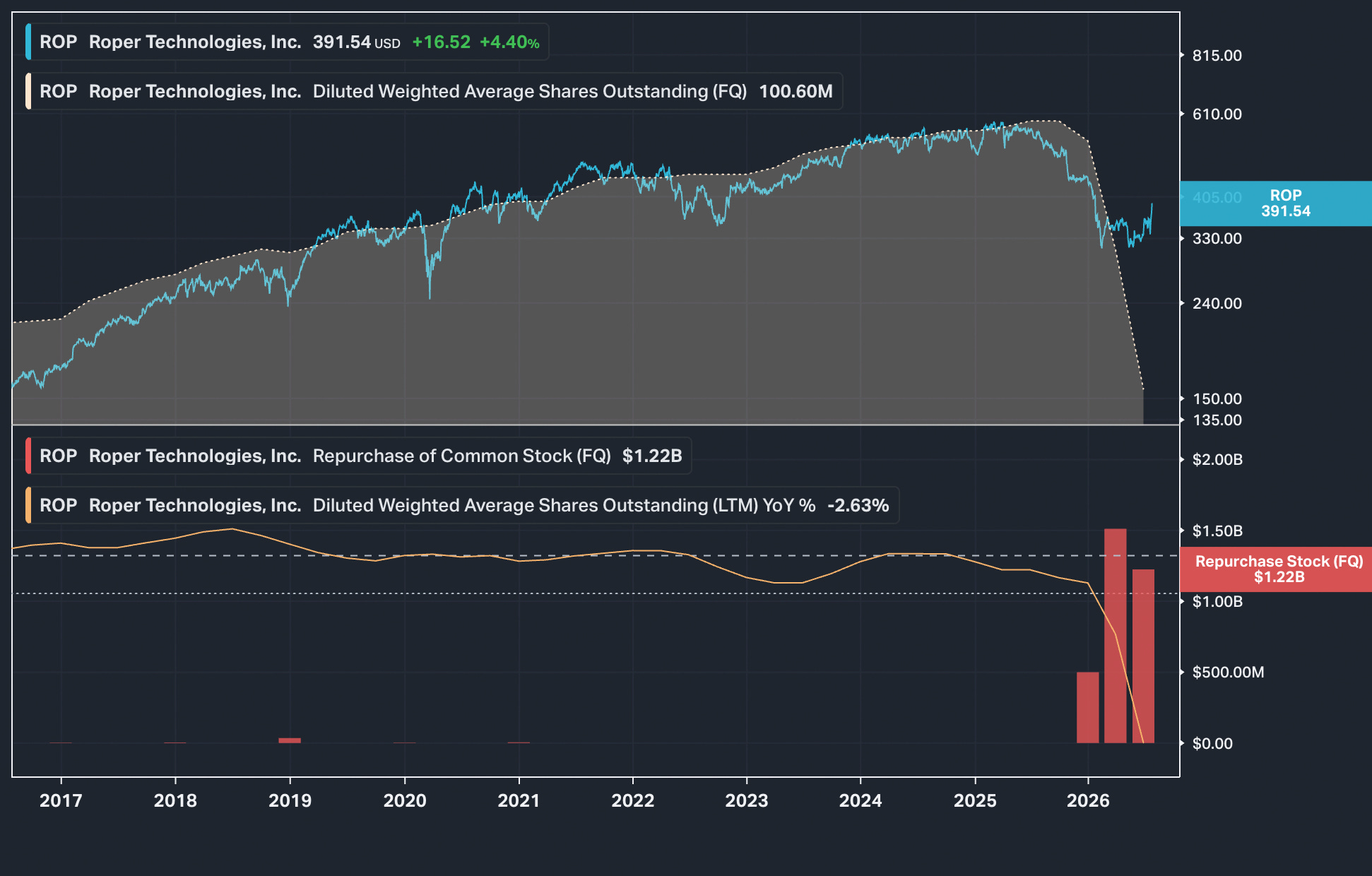
This shows the past decade of buybacks at Roper.
Yeah, basically nothing until recently. Then in Q2, they announced:
"We repurchased 3.6 million shares for $1.2 billion during the quarter, bringing our cumulative repurchase activity over the past three quarters to 9.0 million shares or more than 8% of shares outstanding, and rolling our share count back to 2013 levels."
Free cash flow was +11% in the quarter. Because of the lower share count, that turns into +19% in free cash flow per share.
Time will tell if it's a good move, but it's certainly nice to see someone doing opportunistic buybacks with conviction.
A lot of buyback programs feel like signaling exercises: management nibbles at the stock without materially changing the share count. Here, they pushed net leverage up to 3.4× EBITDA and ended the quarter with $2.9 billion drawn on the revolver. The average price paid for the Q2 repurchases was approximately $341 per share.
Repurchasing over 8% of shares as a company that DOESN’T usually do buybacks feels more like an actual capital allocation decision than an investor-relations exercise.
The CEO said Roper has always compared buybacks with acquisitions. Until the past eight months, “the capital allocation mathematically always favored M&A.” But after the brutal selloff in Roper (and the broader software space), buybacks became “significantly more attractive.”
He also had some commentary about private vs public valuations on the call:
Neil Hunn: looking forward, we expect the private values to mirror those or come down to the public values. We're starting to see some very early signs of that.
As we all know, public values are ultimately the gravitational force for all private companies. And when that happens, then the math turns quite interesting, quite accretive, quite more attractive towards M&A versus buyback.
We’ll see if he’s right. But if he is, Constellation Software’s vast, decentralized acquisition machine will be busy. ⚙️
☁️😩 Vibe-Coding Your Own SaaS: Pleasure & Pain Edition
A story in two acts:


We keep rediscovering why specialization and competitive advantage exist.
Vibe-coding is fun.
Maintaining production software that other people rely on to do their jobs, where any problem is costing real revenue, is a whole other barrel of painful monkeys. 🐒🙈
🗣️ Jason Fried Convo with David Senra
Authenticity.
Create something authentic to you.
I know that sounds like a fortune cookie 🥠
The trick is living it, not just saying the nice-sounding words.
🧪🔬 Science & Technology 🧬 🔭
🧊🧬 A 10-Year-Old’s Testicular Tissue Was Frozen Before Chemotherapy. Sixteen Years Later, It Was Transplanted Back
Here’s a slightly different angle on the fertility crisis:
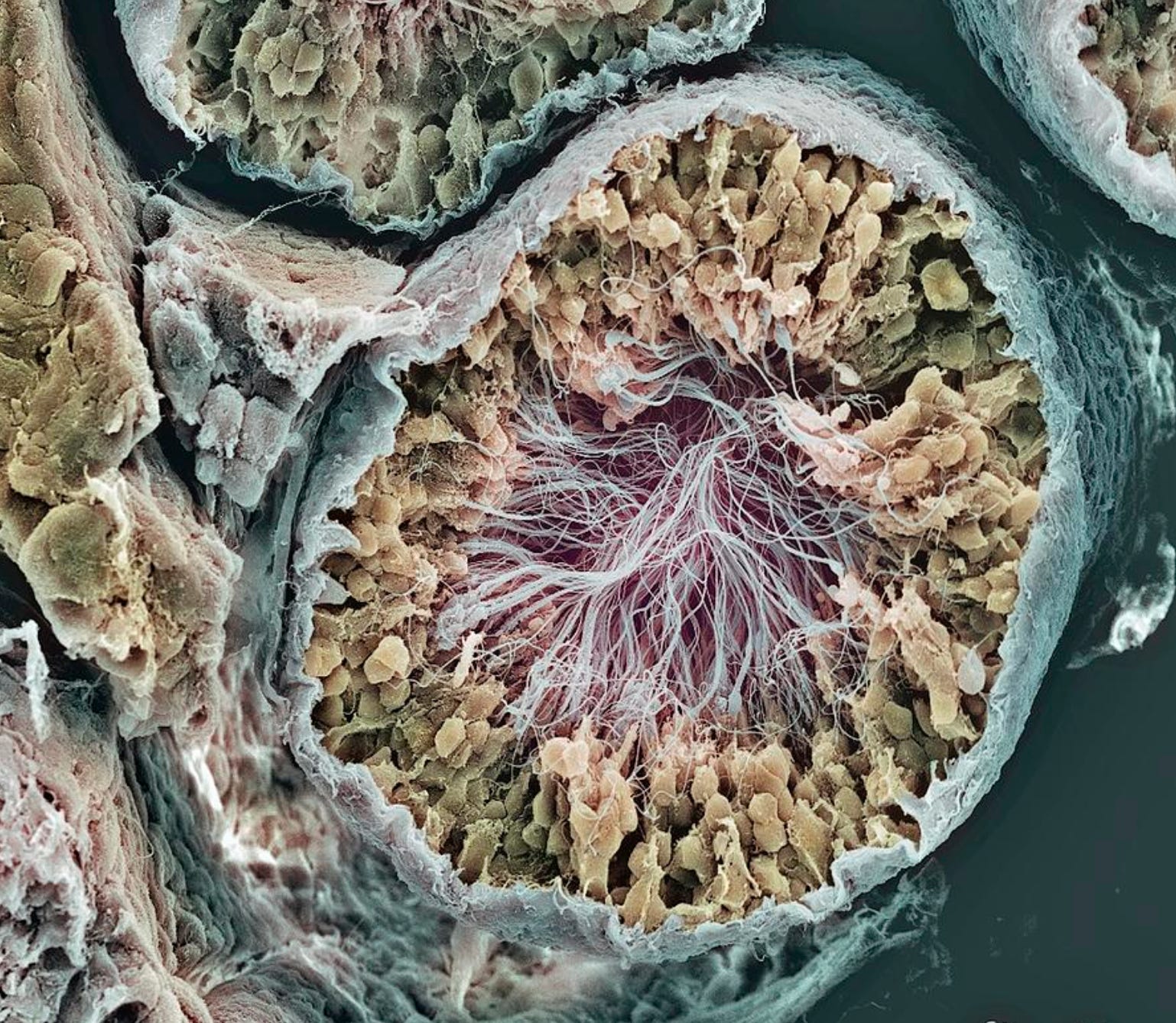
In 2008, a ten-year-old boy with sickle-cell disease was about to receive chemotherapy in preparation for a blood stem-cell transplant. The treatment could leave him infertile, but he was too young to freeze sperm because his body had not started producing any. So doctors removed one of his testicles, divided some of the tissue into small pieces, and froze them.
As an adult, he returned hoping to have children. 👨🍼
Repeated tests found no sperm in his semen, so doctors thawed eleven of the frozen pieces and transplanted them either into his remaining testicle or under the skin nearby.
A year later, the researchers removed and examined the grafts. Two of the four placed inside his testicle showed active sperm production, and they recovered one sperm cell from one of them.
The researchers stopped there and saved the rest of the graft, hoping to recover more sperm later for IVF.
This is still only one patient, one sperm, and an unreviewed preprint. Nobody knows yet whether that sperm can fertilize an egg and produce a healthy baby.
But this is still the first evidence in a human that testicular tissue frozen before puberty can survive for 16 years, be transplanted back into the body as an adult, and start making sperm. If it works in more patients, boys facing chemotherapy or radiation may someday have a way to preserve their fertility before they’re old enough to freeze sperm.
📖 Spoiler-Aware AI for Books & Media 📺

One of the dangers of asking questions to AI about a book you're reading, especially fiction, is getting spoilers. I always try to be careful to say where I am in the book, but there's still risk.
The way ‘Ask this Book’ is implemented on the Kindle app on iOS is pretty clever. You can ask its AI questions, and by default it answers using only the part of the book you’ve reached.
I haven't tried it myself yet, I think the feature is U.S. only for now. I saw reports of it online, but I’m not sure how well it's implemented.
But in theory it's a great idea.
The same thing should exist with media apps like Netflix and HBO Max. You should be able to pause a show or film, ask who someone is or why something just happened, and get an answer based only on what has appeared before that exact moment.
🤖🗺️ Opus 5: The Later Model Gets the Map
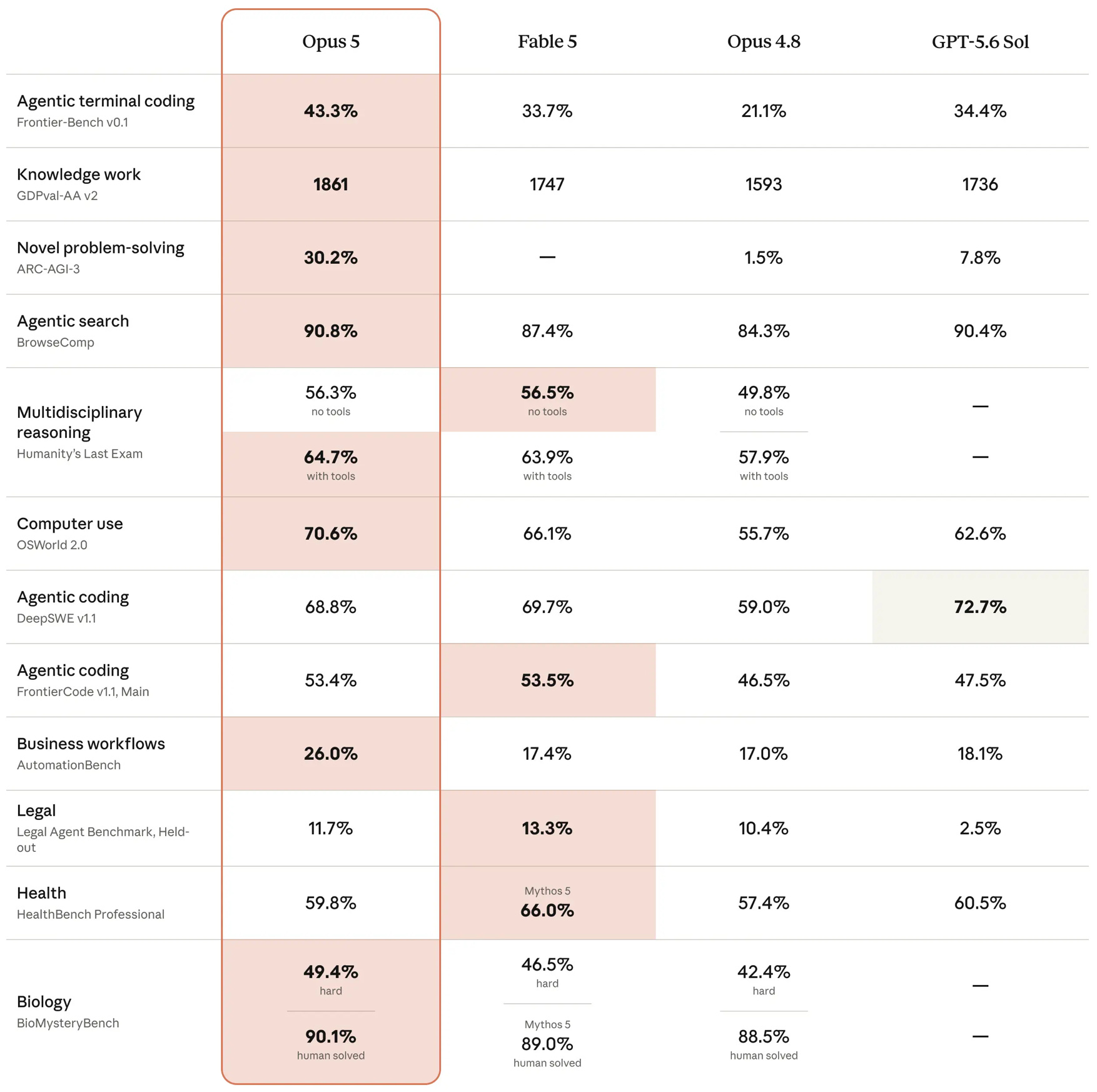
Opus 5 came out last Friday. The benchmarks are impressive. Anthropic says it comes close to Fable 5 at half the price, and on several coding and knowledge-work evaluations, it actually beats it. On OSWorld 2.0, a computer-use benchmark, it surpassed Fable’s best result at just over a third of the cost.
That made me wonder:
Does a cheaper model get a kind of fast-follower advantage?
🔁 Déjà vu: I wrote about this in Edition #554, Swinging the Machete vs. Sprinting Up the Trail: The Efficiency of Second-Movers, in the context of AI labs competing with each other. But the same dynamic may play out between models inside the same lab.
To be clear, Anthropic hasn’t disclosed the sizes of these models or explained exactly how Opus 5 was trained. So this is just my theory. But the logic seems plausible. 💡
Post-training requires the model to make enormous numbers of attempts, get feedback, and try again. If Opus is also much cheaper for Anthropic to run than Fable (because it’s smaller), the same compute budget buys more attempts, more experiments, more failed ideas, and more chances to find what works. 🟥 🟥 🟥 🟥 🟥 ✅
And it has another big advantage: Fable and Mythos already exist. 🥇
A stronger model is a better teacher. It can write difficult training problems, grade the smaller model’s solutions, and explain what it got wrong. It can also generate examples aimed at its specific weaknesses. 👩🏫 🎓
Anthropic says frontier labs routinely use this kind of distillation to create smaller and cheaper models. It also says stronger models can generate the tens of thousands of unique tasks needed for reinforcement learning.
They are likely part of the machinery used to build Opus. ⚙️🛠️🧰
Anthropic didn’t have to rediscover everything from scratch. Opus could inherit the lessons from building Fable and Mythos, along with a more mature training recipe. And because each round was cheaper, Anthropic could give it many more rounds of targeted practice.
That doesn’t mean it inherited everything. A cheaper model can receive a ton of targeted training on coding, computer use, and office work, but scale and broader world knowledge may still matter for strange, difficult, long-horizon problems.
The results look roughly like what we’d expect if this theory is right. Opus ties or beats Fable on several coding, computer-use, and knowledge-work evals, but it’s behind Mythos on offensive cybersecurity and long-running biology research. Anthropic says it intentionally avoided training Opus on cyber tasks, though it doesn’t say the same about biology.
I don’t know if this is what happened here, but this is my best guess.
The frontier models explore the territory and the later, cheaper models inherit the map. 🗺️
🤖🫤 Opus 5: Very Smart, Weirdly Hard to Understand
In any case, I spent many hours with Opus 5 over the weekend while working late into the night on The Thinking Box (Workbench #3). Whenever I didn’t understand something, I used it as a tutor and went back and forth with it until I did.
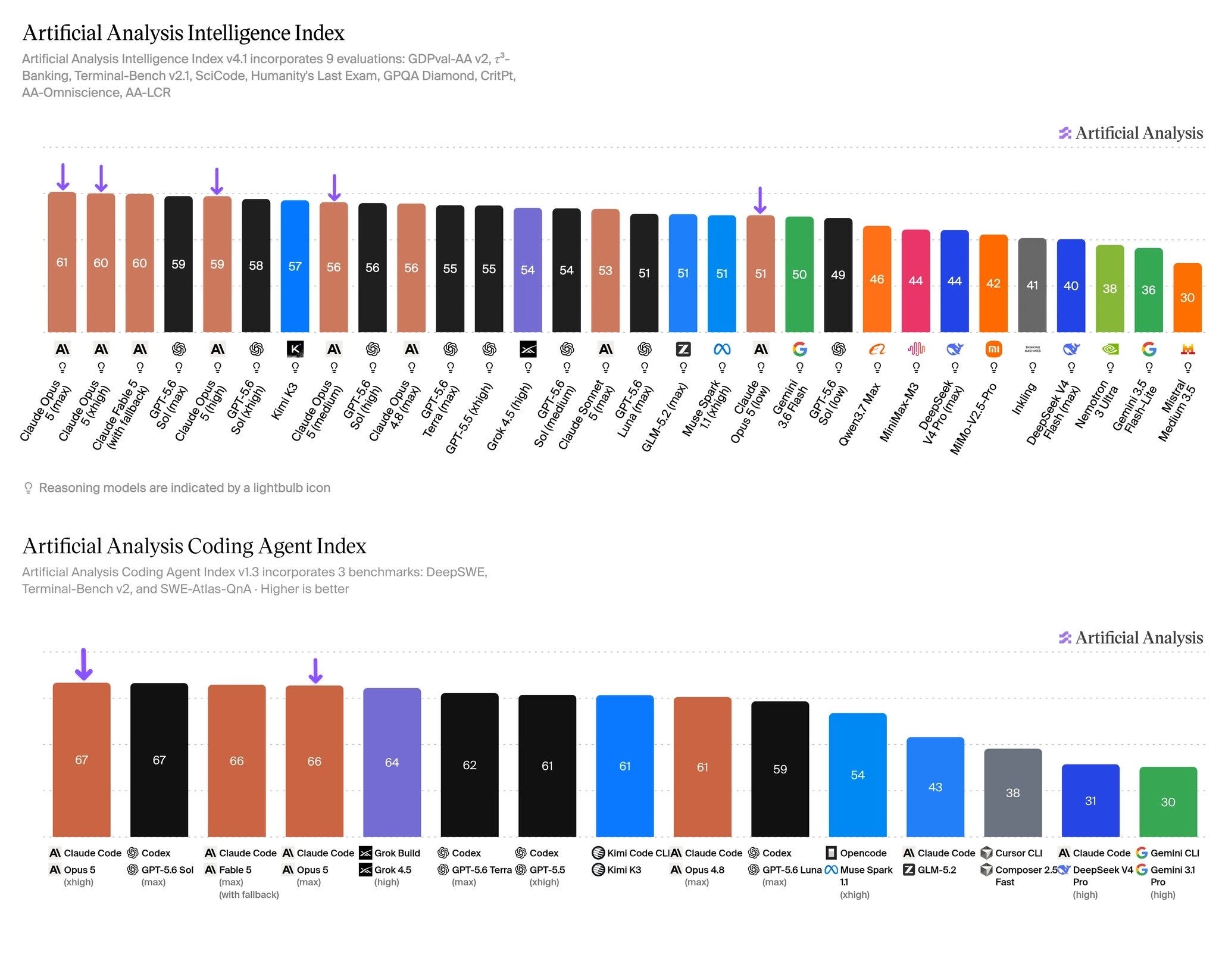
At first, I was impressed by its intelligence. Pretty quickly, though, I became frustrated by how it communicated. It used a ton of jargon, coined all kinds of impenetrable terminology, and wrote so densely that I couldn’t understand what it was saying half the time. ¯\_(🫤)_/¯
I wasn’t sure whether it was just something in my own setup: all the memories the model has about me, the Markdown files in my projects, or some instruction I’d written without realizing the side effects. 🤔
Then I saw a lot of other people describing the same problem on Twitter. I also had a milder version of it with Fable 5, so my guess is that something about this family of models pushes them toward denser, more jargon-heavy writing.
Anthropic’s prompting guide says Opus 5 tends to write longer responses than previous Opus models and benefits from explicit guidance about how to communicate. So at least part of this seems to be real, and not just something weird in my setup.
I’ve added instructions to my CLAUDE.md files telling it to communicate more clearly. The tricky part is keeping it from overcorrecting and dumbing things down.
I want simpler writing, not simpler thinking.
So far, those changes have helped, but it’s too early for me to know how good Opus 5 really is. It has made mistakes, hallucinated details, and sometimes failed to verify facts even when I explicitly asked it to. Then it caught errors that Codex missed.
So yeah: mixed bag.
Maybe we just need to get used to its quirks and update our files. I hope that’s all it is.
But maybe Opus 5 is one of the bad ones 😬
(It’s a story for another time, but GPT-5.6 Sol is very good, and I’ve had a great experience with it so far)
🎨 🎭 The Arts & History 👩🎨 🎥
🎥🪞 The Odyssey: How Nolan Used Giant, Super-Loud IMAX Cameras for Intimate Scenes 🏺🏛️
The concept of spoilers is always a little weird with a story that’s thousands of years old, but you can still spoil the specific way this version tells it.
If that worries you, the video is pretty safe. It includes a few shots from the trailers, so if you’ve avoided even those, save it until after you see the film.
Otherwise, it’s mostly Christopher Nolan and the cast talking about how they made The Odyssey, what it was like to be on set, and how Nolan works with actors.
The part that jumped out at me was how much engineering it took to film two people quietly talking.
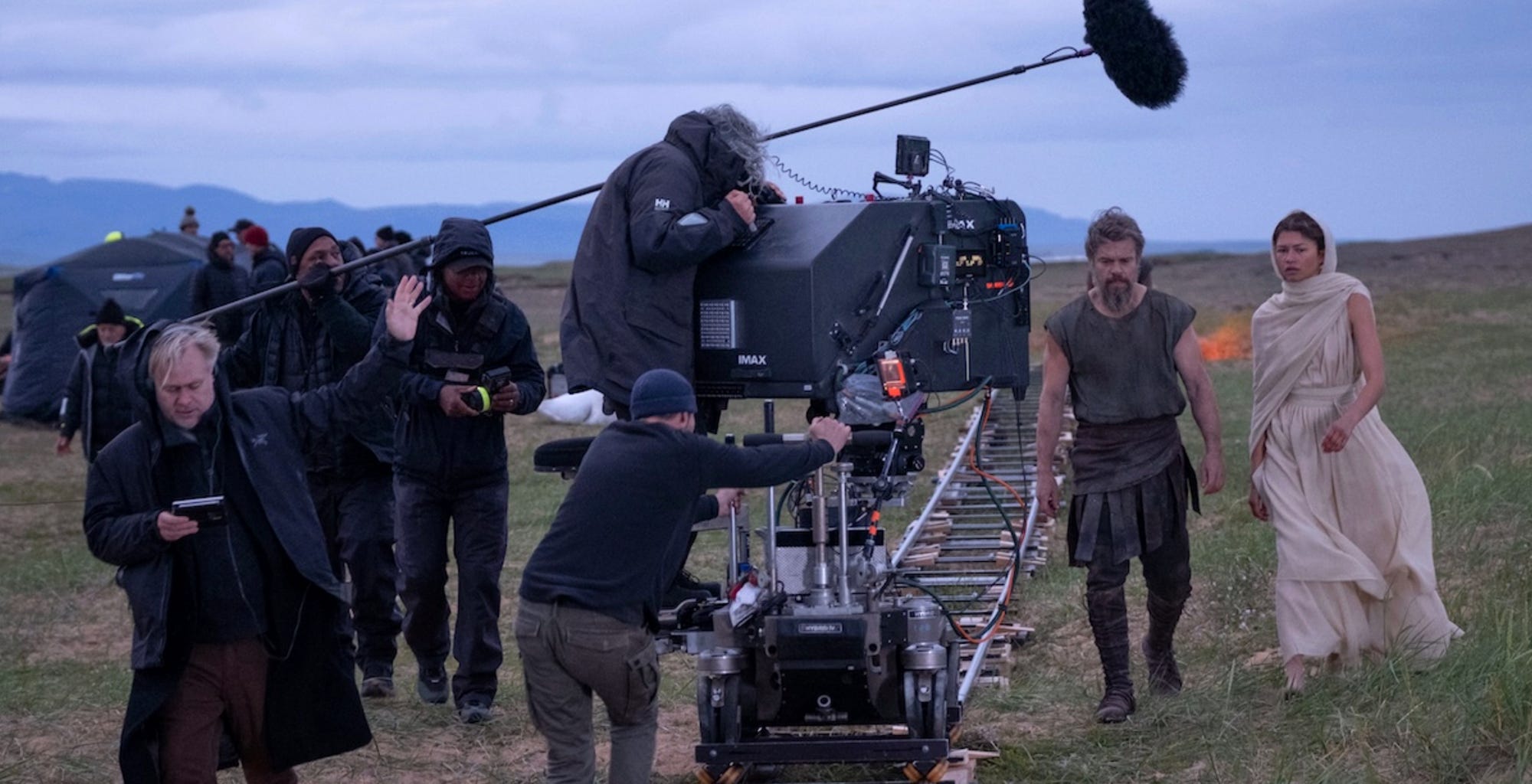
The Odyssey is the first feature shot entirely with IMAX film cameras. Those cameras produce spectacular images, but they’re also enormous and extremely loud.
To record intimate dialogue, IMAX built a new soundproof enclosure called a “blimp.” It solved the noise problem but created a new one: the thing was so big that the actors sometimes couldn’t see each other around it.
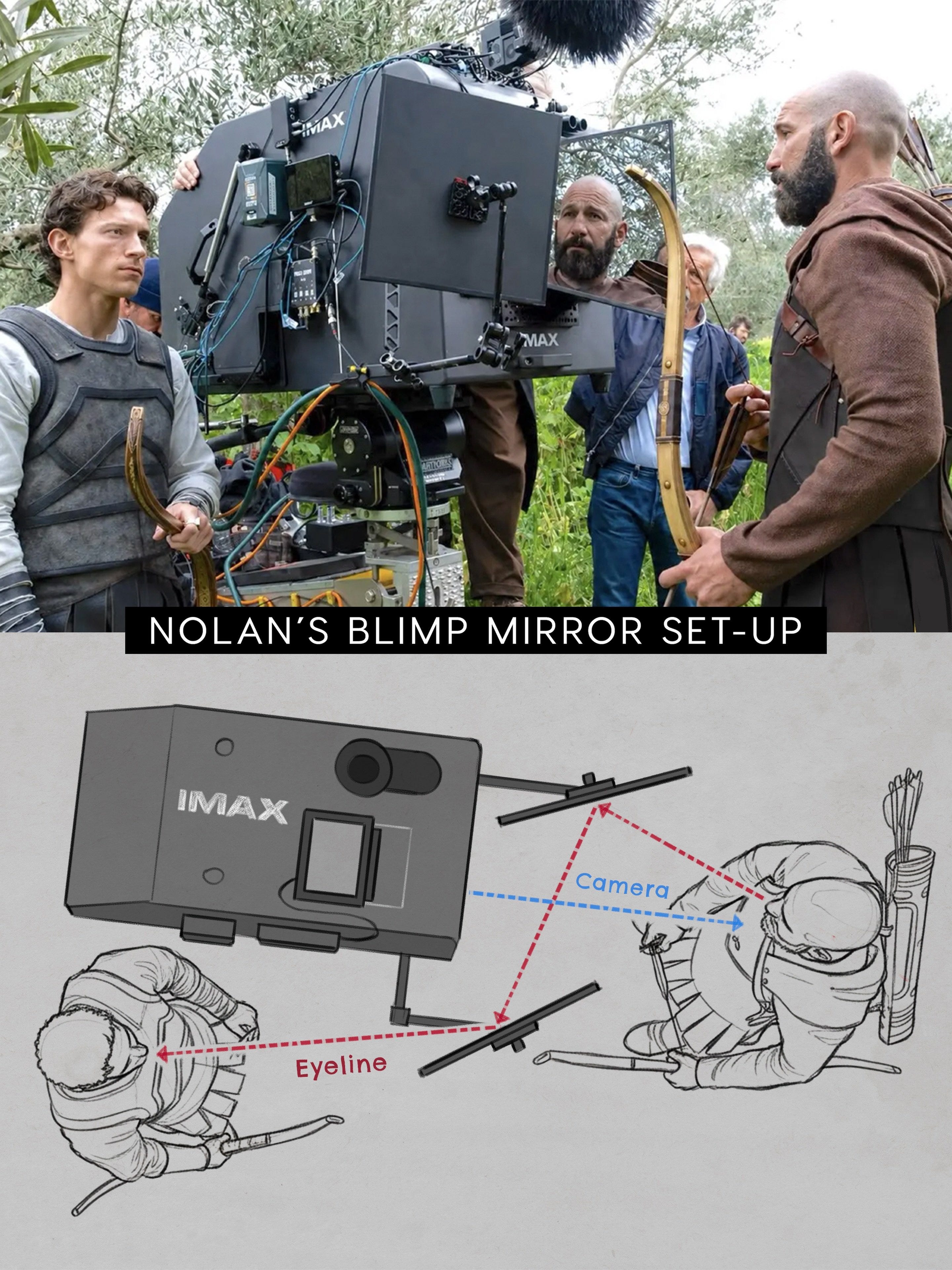
So Nolan’s team used angled mirrors to let the actors see around the camera. Each actor could look into one and see the other person’s eyes exactly where they should be, even with the giant enclosure sitting between them.
Matt Damon said the illusion worked so well that his memory of filming one scene with Anne Hathaway is of looking directly into her eyes, not at her reflection.
The rig looks like this:
This is the kind of filmmaking problem-solving I love. ♥️


it's not an avalanche.
https://claudebootcamp.ai/blog/replace-salesforce-zoho-with-claude-code
i wonder how many vibe coded SaaS CRM replacements would stand up to independent arch\sw audit? (even on the basis that its use is solely for the firm that built it)
and many sectors have hard compliance barriers, regardless of how simple requirements. but would be great to see EPIC (HIS) get tossed.
I also love the idea of putting things around the house to elicit curiosity from children living in the house and visitors. Globes and maps hold special places in our house.