


Deconstruction creates knowledge. Recombination creates value.
–James Clear
❤️🩹 Ben Wilson is a great guy. I don’t know him very well, but we had a couple great chats a few years ago, and we have friends in common that all say great things about him. I consider him a friend-of-the-show.
If you can help him and his loved ones in any way, please, I encourage you to do so. There’s a campaign to raise funds for his treatment and family.
💚 🥃 To keep this steamboat alive and afloat, I need supporters. Like you! 🚢
The paid subscription includes the full feed, every podcast, Zoom Q&As with me, and access to the private Discord clubhouse, where a core group of us hang out and discuss the interesting stuff we find:
🏦 💰 Liberty Capital 💳 💴
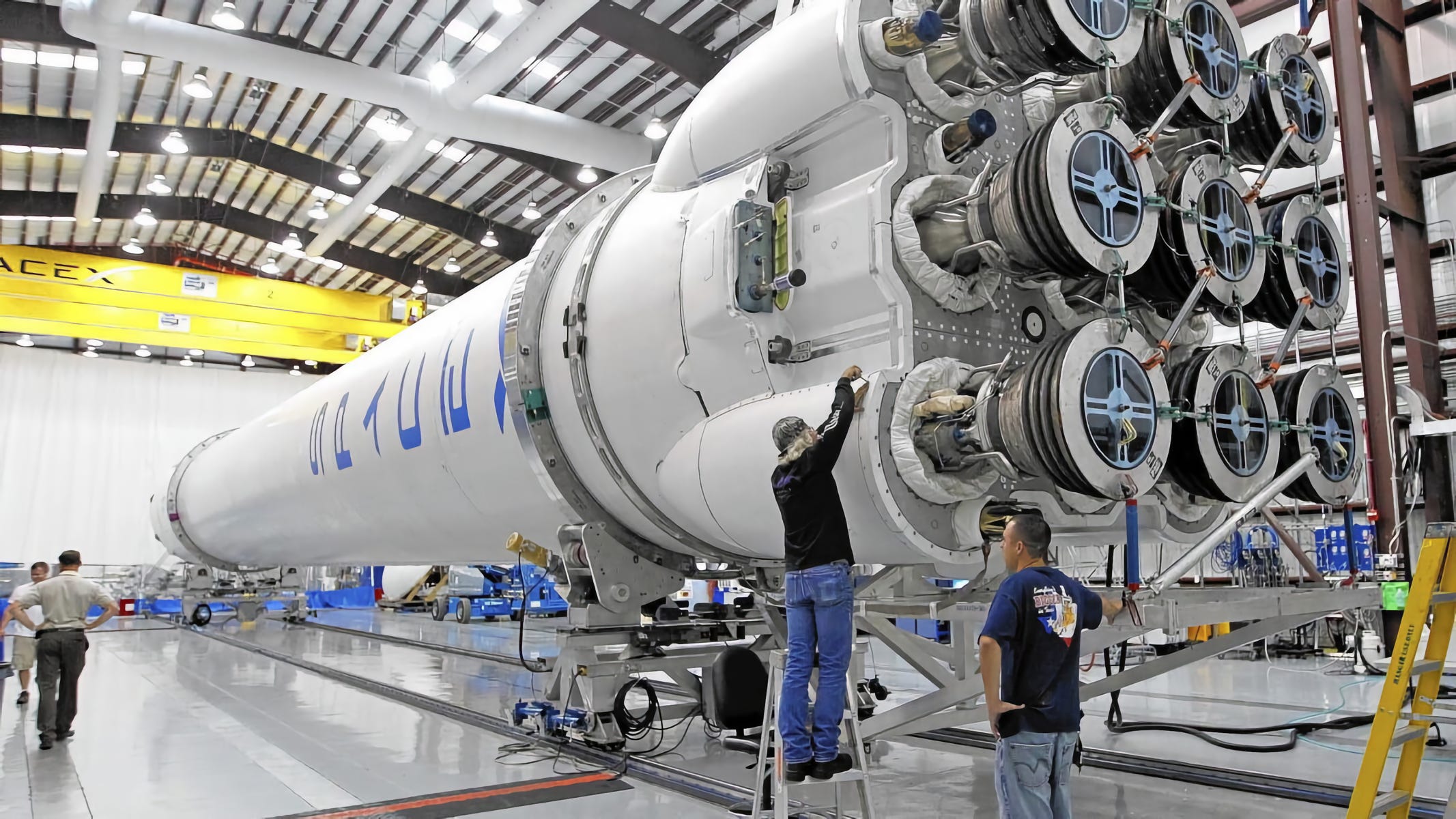
🚀🤝 Musk Says SpaceX and Tesla Are Considering a Merger 🤲
A lot of people have been expecting this for a while, but it’s getting more concrete.
From the quarterly call last night:
Elon Musk: so both SpaceX and Tesla have formed special committees to discuss this idea at the request of shareholders. [...]
I think some people out there assume that a SpaceX and Tesla merger is a certainty. And I think that would be overstating it. Do I think it would be a good idea, yes. But at the end of the day, the shareholders have to be supportive of this. And particularly on the Tesla side, we will need a 50% vote of all shares, not just those who vote, but of all shareholders.
For reference:
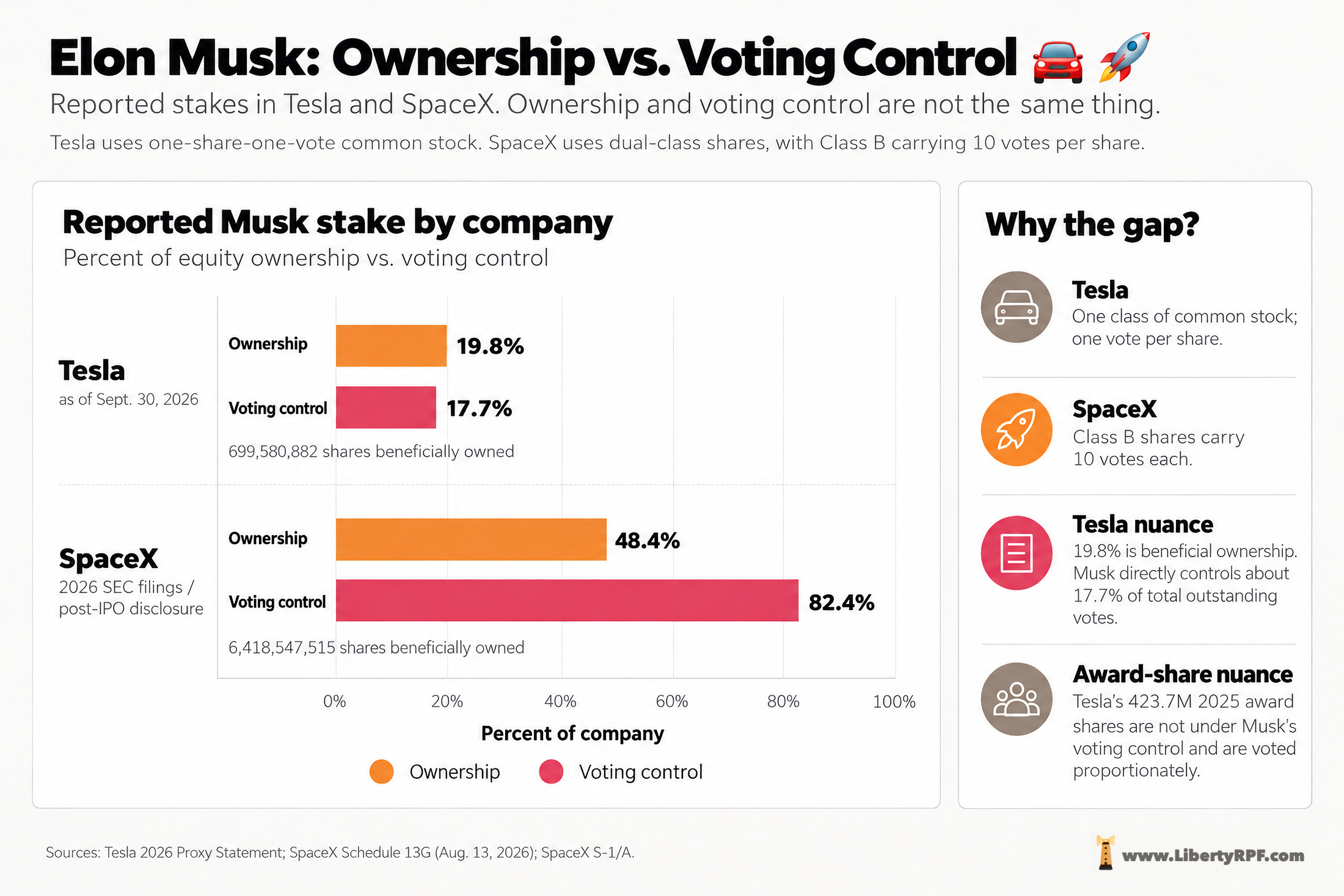
But considering how many of the shareholders of both are a self-selected group of Elon believers, I don’t think he’d have any problems getting a merger passed, unless the terms are REALLY bad for one side (which isn’t out of the question, to be sure!).
One thing is that if they did merge, what would that do to Musk’s control of the combined entity? He has overwhelming control of SpaceX, and would be diluting that.
But if the combined entity keeps the supervoting shares used by SpaceX, he could potentially maintain majority voting control, depending on how the deal is structured.
So and I can just say at this point that the special committees have not reached agreement on the terms of any transaction. And obviously, there’s no guarantee that they will.
But I do think there’s a lot of merit to combining the companies as we are pretty much in the super intelligence singularity. And there’s a lot to be gained from cooperating on developing super intelligent software, chip design, the Terafab, obviously, robotics, mass to orbit with the Starmind constellation.
All this talk of cooperation doesn’t require a merger, though.
The companies are already working together on various things like Terafab and energy stuff (and Tesla owns nearly 19 million SpaceX shares), and it’s not like either has had trouble raising capital in the past.
So what would the merger unlock? I guess it would make it easier to allocate capital and talent between the companies. and maybe a way to bury Tesla’s largely stagnant EV sales into the larger whole? 🤔
🔁 Déjà vu: Elon Makes Jensen an Offer the Hyperscalers Won’t
🚕🤖 Waymo’s Plan to 5x Its Fleet: From Science Project to Transportation Giant?
Semafor reports that Waymo wants to go from about 4,000 robotaxis today to 8,000 by the end of this year and 20,000 by the end of 2027. That’s a fivefold expansion in a little over a year (IF they pull it off). 🚀
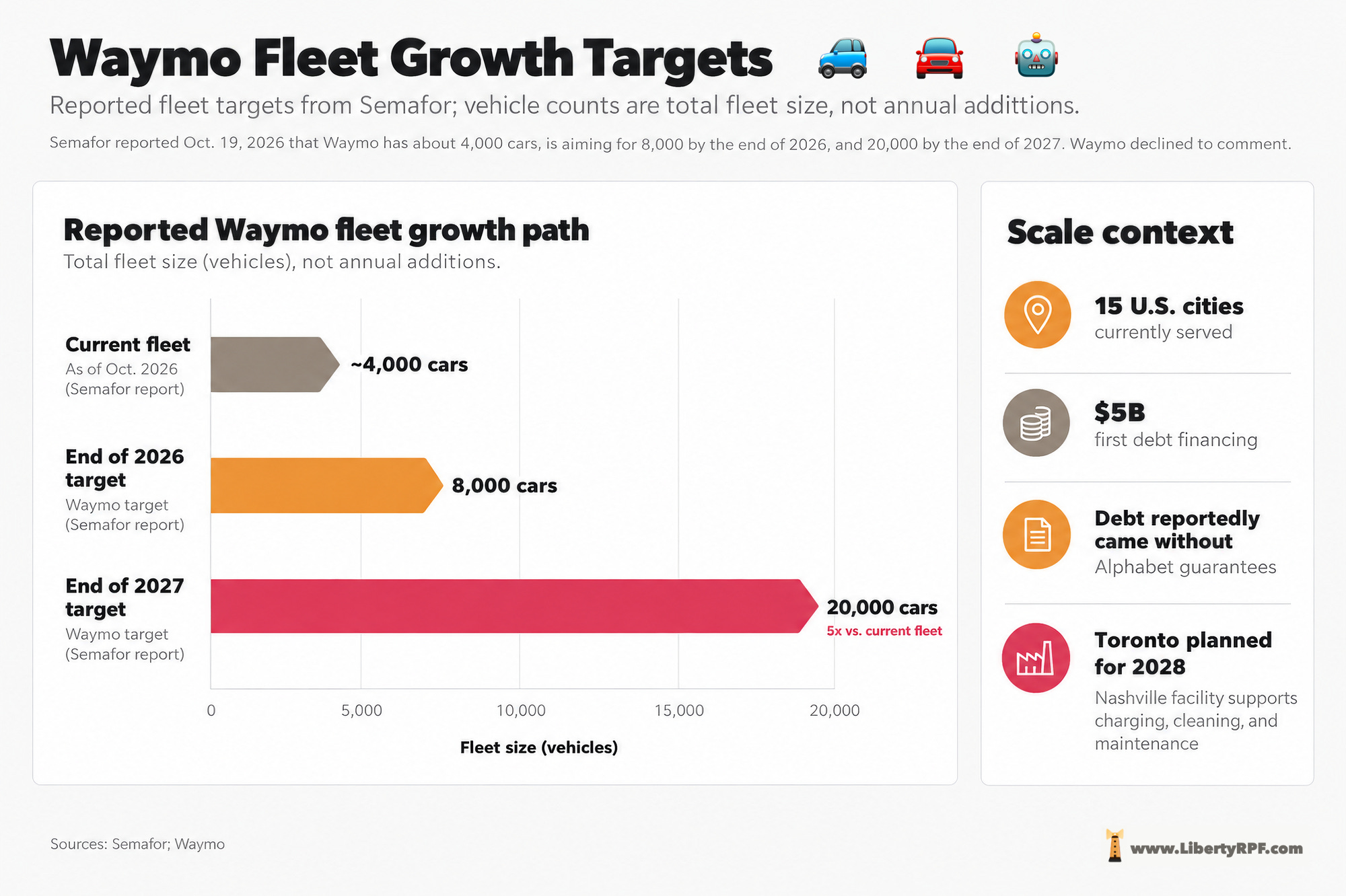
This reminded me of Edition #532 from October 2024, when I was looking at Waymo’s capital efficiency compared with Tesla. Back then, Waymo was estimated to have raised about $13bn and had fewer than 1,000 vehicles deployed.
What a difference two years make!
As I wrote in Edition #624, Waymo’s methodical approach has been aging well. Earlier this year, it was doing around half a million fully autonomous rides every week, after starting with those experimental self-driving Priuses way back in 2009-2010.
Waymo raised $16bn in equity earlier this year and recently borrowed another $5bn, its first debt financing. Interestingly, the debt doesn’t have guarantees from Alphabet. I guess dad’s already busy putting AI capex on his balance sheet 🤔
But the other way to look at it is that Waymo is now established enough that it can borrow $5bn without Alphabet’s co-signing.
Not that the self-driving software is easy — it’s very f hard!!! — but even once you’ve got that, there’s a lot of work that remains if you want to operate tens of thousands of robotaxis across a bunch of cities. Buying the cars, charging them, cleaning them, maintaining them, building depots, dealing with local regulations… dealing with crazy customers or vandalism or whatever else happens in these empty cars.
I wonder what the economics look like as they keep scaling.
Oh, and Waymo is coming to Toronto too! 🇨🇦 They're aiming for first rides in 2028.
Wen Ottawa region, Waymo?
💰 Eric Schmidt’s $15 Billion Anthropic Side Bet 🤖

Eric Schmidt owns about 1% of Anthropic. He’s reported to have invested tens of millions of dollars in its Series A back in 2021, before Claude was even a publicly available product. That round was for $124m, so his check was a significant % of it.
At the roughly $1.5 trillion valuation that has been discussed lately for Anthropic’s IPO, his ~1% would be worth $15 billion. Not long ago, some investors expected an IPO valuation closer to $2 trillion, which would put his stake at $20 billion. 😯
As if he wasn’t already rich enough from Google, despite not even being one of its founders! 😅 Bloomberg estimates his fortune at $57.5bn before counting Anthropic, while Forbes puts it at around $38bn.
Not bad for a side investment from someone who spent a decade as Google’s CEO and then stayed on as chairman until early 2018 (he did well as a non-founder).
This reminds me of the story about how Jeff Bezos was one of the early investors in Google and even if Amazon had failed and went to zero he would probably still be a billionaire just from that investment (I wrote about it in Edition #482). And it wasn’t his only successful early investment.
This also reminds me a bit of what I wrote in Edition #638 about Demis Hassabis being an early investor in Anthropic.
So both Google’s former CEO and the guy running Google DeepMind have personal investments in one of Google’s biggest AI competitors. 😅
These people may be fierce competitors professionally, but personally, they’ve known each other, worked together, and invested in each other’s companies for years.
Schmidt has also invested in Mistral AI, Reflection AI and World Labs.
If you were early to one of these AI labs, there’s a good chance you saw the others coming too, before their valuations went vertical. Access counts for a lot in angel and VC investing, where a few big winners account for most of the returns.
Once again, a reminder that when it comes to angel and VC investments, access counts for a lot, and there are power laws everywhere.
🔁 Déjà vu:
From the full feed 🔒: Prem Watsa’s $5.6B Indian Banking Bet
🧪🔬 Liberty Labs 🧬 🔭
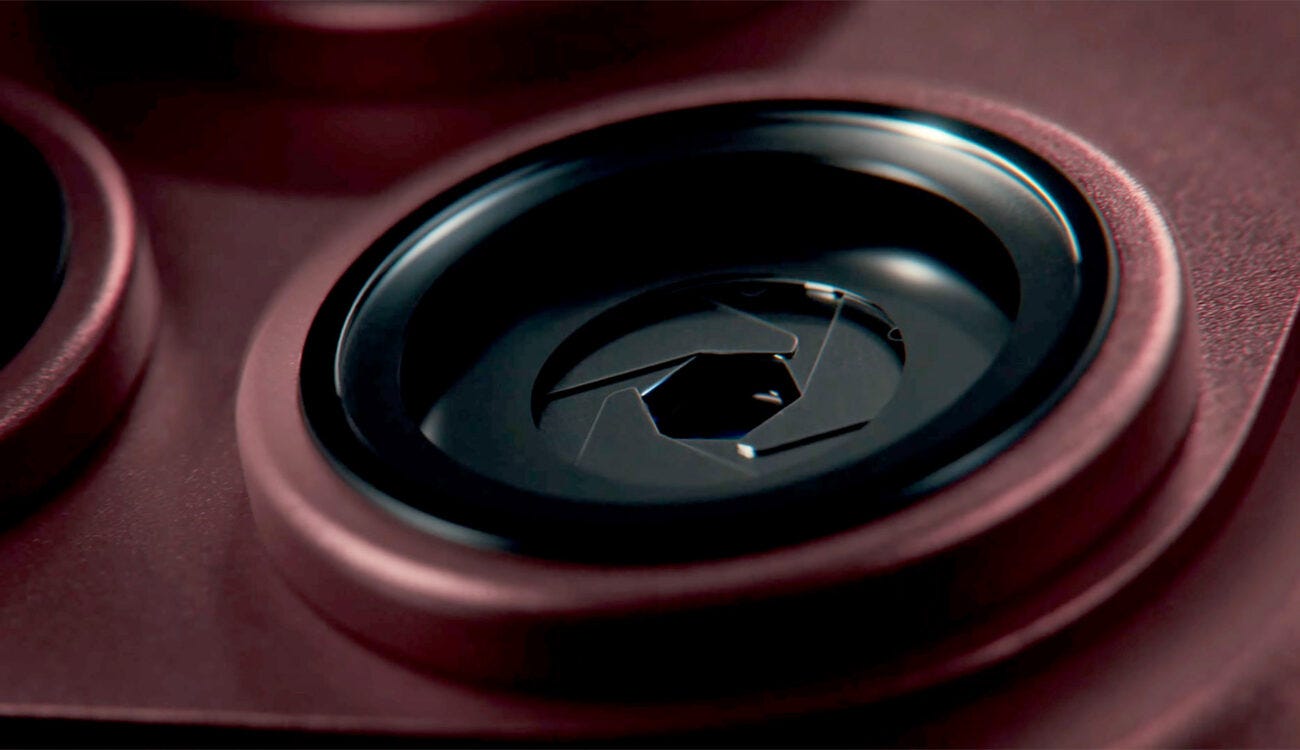
📸 🔐 Apple’s New Way to Prove a Photo Was Taken by a Real Camera
I’ve written before about cryptographically signing photos and videos as one way to deal with a world where AI can generate increasingly convincing fake images. It’s not foolproof. There are many ways to get around it. For example, you could photograph some AI-generated thing on a high quality screen and get a perfectly valid signature on something that never happened.
But it would still be useful and create some friction where basically none exists right now (from 0 to 1 is the biggest jump, right?).
Anyway, Apple has taken an interesting step in that direction with Apple Reference Image, a new feature in iOS 27 on the iPhone 18 Pro and Pro Max.
The clever part is that the camera sensor itself signs the image data at the moment of capture, before the iPhone’s software can touch it. The phone saves a secure digital negative (DNG) containing the original sensor data, signatures, and cryptographically verified timestamps. This can then be developed into a JPEG using Apple’s Private Cloud Compute, which checks the signatures and timestamps before Apple’s signing service adds the final signature (this one is even designed to resist future quantum computers 🔐). You can compare this reference image with the normal photo to see what’s been edited.
For now, it’s an opt-in mode rather than something that happens with every photo, and verification is mostly limited to Apple’s ecosystem. But you gotta start somewhere, and I could see this kind of thing become ubiquitous for photos and videos in the years to come.
It’s like the mirror image of the AI detectors. Rather than play an endless arms race of trying to detect increasingly sophisticated fakes, create a way to positively verify what a real camera actually captured.
🛒🇨🇳 ByteDance, Alibaba, and Tencent order $35bn of Nvidia… Workstation Chips?!
Here we go again…
Reuters reports that ByteDance, Alibaba, and Tencent have ordered more than 3 million Nvidia GPUs, worth over $35bn. 💰
Which chips? That’s kind of the surprising part.
Not H200s or B300s, which are restricted and have been used as bargaining chips (accidental pun) a bunch. They want to buy RTX PRO 5500 workstation GPUs.
These less powerful chips comply with U.S. export controls. The Chinese companies mostly want them for inference.
What’s funny is that many Chinese buyers weren’t interested in the similar RTX 6000D last year, hoping they’d get access to Nvidia’s more powerful data-center chips. I guess those hopes have faded… and the discontinued 6000D is reported to have doubled in price in China. 😅
But orders don’t necessarily equal chips delivered.
Across China, orders apparently exceed 6 million cards, while Nvidia expects to manufacture no more than 3 million in 2027. One source says some customers may receive just 5–10% of what they ordered. Commercial shipments aren’t expected to begin until Q1 2027.
But hey, the game theory here is that if everyone knows they will be in short supply, maybe they’re all over-ordering, hoping that gets them more chips in the end 🤔
🔁 Déjà vu: Chinese internet giants’ “strategic GPU reserve”
🤖💾 AI Is Getting Better at the Ancient Code Running the Modern Economy 🏦
Back in Edition #571, I wrote about Morgan Stanley using AI to understand and modernize its ancient COBOL codebase. At the time, AI could explain old code and translate smaller sections, but wasn’t reliable enough to automatically migrate mission-critical systems.
I ended that with: “But that’ll come.”
OpenAI reports that GPT-6.1 Sol achieved 86.6% accuracy on its COBOL migration benchmark, up from just 5.4% for GPT-5.6 Sol. At higher reasoning effort, it reached 97.9%. Not bad progress for *checks watch* 82 days (!!!!).
(GPT-5.6 Sol came out July 9, 2026, GPT-6.1 Sol came out September 29, 2026)
The benchmark checks that translated programs match the old programs' outputs on hidden tests, including fiddly details like financial rounding rules. You don’t want your bank’s systems getting those mostly right. 😬
Of course, this is OpenAI's own benchmark of COBOL program migrations, not a demonstration that AI can safely migrate an entire bank's interconnected systems.
BUT
I think the potential economic value here is ENORMOUS.
So much of the modern economy runs on decades-old code. Banking, insurance, government systems, etc. Some of these programs have accumulated decades of business rules, fixes, and exceptions that nobody fully understands anymore. The original developers are long gone, documentation is incomplete, and changing anything can be risky and expensive.
This also connects to something I wrote recently about old compute, data, and code getting better with age. 🍇🍷
The underlying assets haven’t changed, but better intelligence can extract more value from them.
Imagine making all this old software easier to understand, maintain, secure, and extend. You don’t necessarily have to rewrite everything. Some of that ancient code works just fine!
I wonder how much economic value is locked up in projects that companies would love to do, but haven’t attempted because touching their old systems was too risky or too expensive.
And that’s before counting all the savings from easier maintenance.
From the full feed 🔒: Microsoft Says Its New Base Model Beats OpenAI’s at ¼ the Compute
🎨 🎭 Liberty Studio 👩🎨 🎥
🎼 Sight-Reading Music… Even If You Can’t 🎶
These videos by Conde X have started popping in my feed lately, and while there’s been lots of great music viz, I particularly enjoy these. The production quality on the animation is great, and it really makes the sheet music come alive.
(The Vivaldi one takes a bit to get going, but when it does, it’s glorious!)
The animation makes it easier to hear the notes on the page and focus on the interplay between different instruments or what both hands are doing on the piano.
I wish he had more Bach, I’d love to see the Goldberg Variations (which I wrote about here last week) visualized this way.