


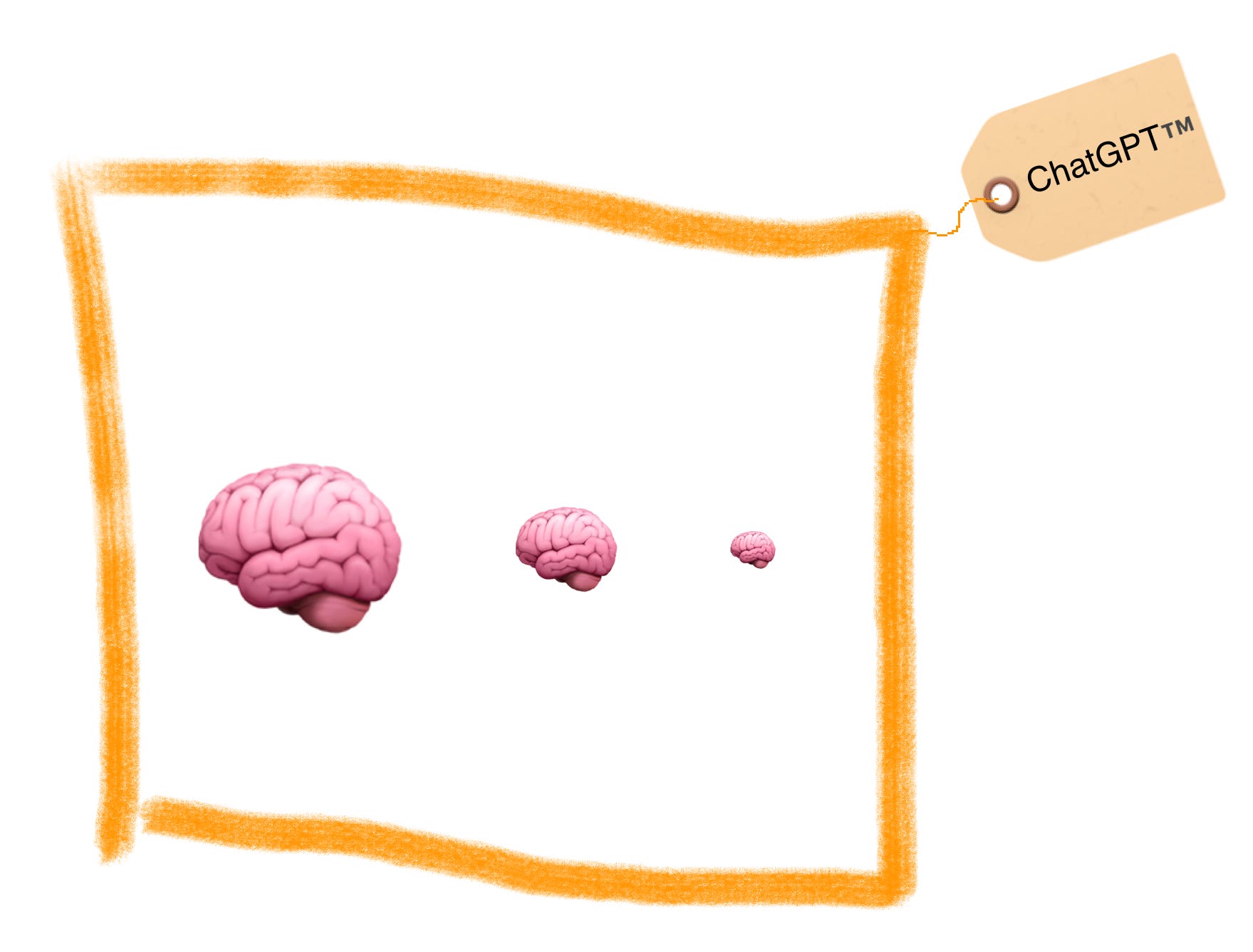
You’re hanging out with friends, or maybe your in-laws, and someone says, “ChatGPT told me XYZ”. What does that even mean anymore?
OpenAI introduced the model router with GPT-5, a kind of switchboard that sends your prompt to one of several models behind the scenes. It’s a clever innovation with multiple benefits:
Less-technical users who may never have manually selected a model before could be automatically routed to better reasoning models for more complex queries.
OpenAI could better manage its compute budget than with a one-size-fits-all model that had to be all things to all users. Saving the big guns for the hard stuff.
By routing more queries to smaller models, casual users got answers faster and were more satisfied than if they had to wait.
Potentially less confusion around model names (is o3 better than o4-mini? Is 4o better or worse than o3?)
BUT
There’s one big downside to hiding complexity behind the curtain: When someone says “I checked it on ChatGPT,” you have no idea what actually happened.
You can’t know if they got a quick one-shot without using tools or web search from the smallest, dumbest model, or if they used the biggest, smartest reasoner that generated 60 pages of thoughts about it, ran Python code to double-check the math, and checked 30 different websites to confirm the facts.
They might have asked a Nobel laureate or a summer intern ¯\_(ツ)_/¯
Why is that a problem?
Authority laundering. “ChatGPT” sounds like a single authority. When someone cites it, they are borrowing that authority… while smuggling in total ambiguity about the process and the model quality. It’s like “I Googled it,” but much fuzzier 🔍🤔
This also creates a few downstream problems:
Reputation risk cuts both ways. If the free-tier model hallucinates or gives a shallow answer, the user might tell people “ChatGPT said X” and it damages the brand. But if someone hears “ChatGPT is amazing” from a power user on the top model, tries the free version, and gets mediocre results, they feel misled. Either way, the brand takes a hit.
It muddies public discourse about AI capabilities. When researchers, journalists, or just people at dinner say “AI can/can’t do X,” they’re often generalizing from one interaction with one model tier. The variance between the floor and ceiling within a single brand is enormous now, arguably larger than the variance between brands at the same tier.
All this got even worse on December 11, 2025, when OpenAI removed the automatic router for free users and defaulted all of them to GPT-5.2-Instant. Before, free users sometimes got an answer from the reasoning model. Now, if they don’t manually pick a thinking model, they don’t get one. If I had to guess, I’d say that 99.999% of them never do.
I think Anthropic suffers less from this problem because their model size branding is more obvious and memorable (Haiku/Sonnet/Opus). Even non-technical users can remember which are ‘good/better/best’. Well, they also have almost no normie users, so that also avoids the problem… but if they did, I think their naming convention would help.
I wish OpenAI would do something similar. Even if they kept the router, better model branding with clearer signals about which tier you’re getting would help. Or give every answer a clearer ‘epistemic receipt’: which model, which tools, which sources (if any), and roughly how much work it did. I think that over time, even non-technical users would learn to understand the differences (similarly to how ‘GPT-4o’ became a well-known brand among many non-technical users, though probably not for great reasons… some people just love sycophancy 😬).
🧭 This first appeared in Edition 612 of Liberty’s Highlights. New here? I made a page for that: Start Here.