


A large part of business and investing is understanding humans: deciding who to bet on — and, as a second-order consideration, who others will bet on, work for, or support with capital. If it were all just cold arithmetic, the spreadsheets would’ve taken over more than they already have.
Thinking about how social influence works, I noticed something interesting: there seems to be a U-shaped curve when it comes to charisma.
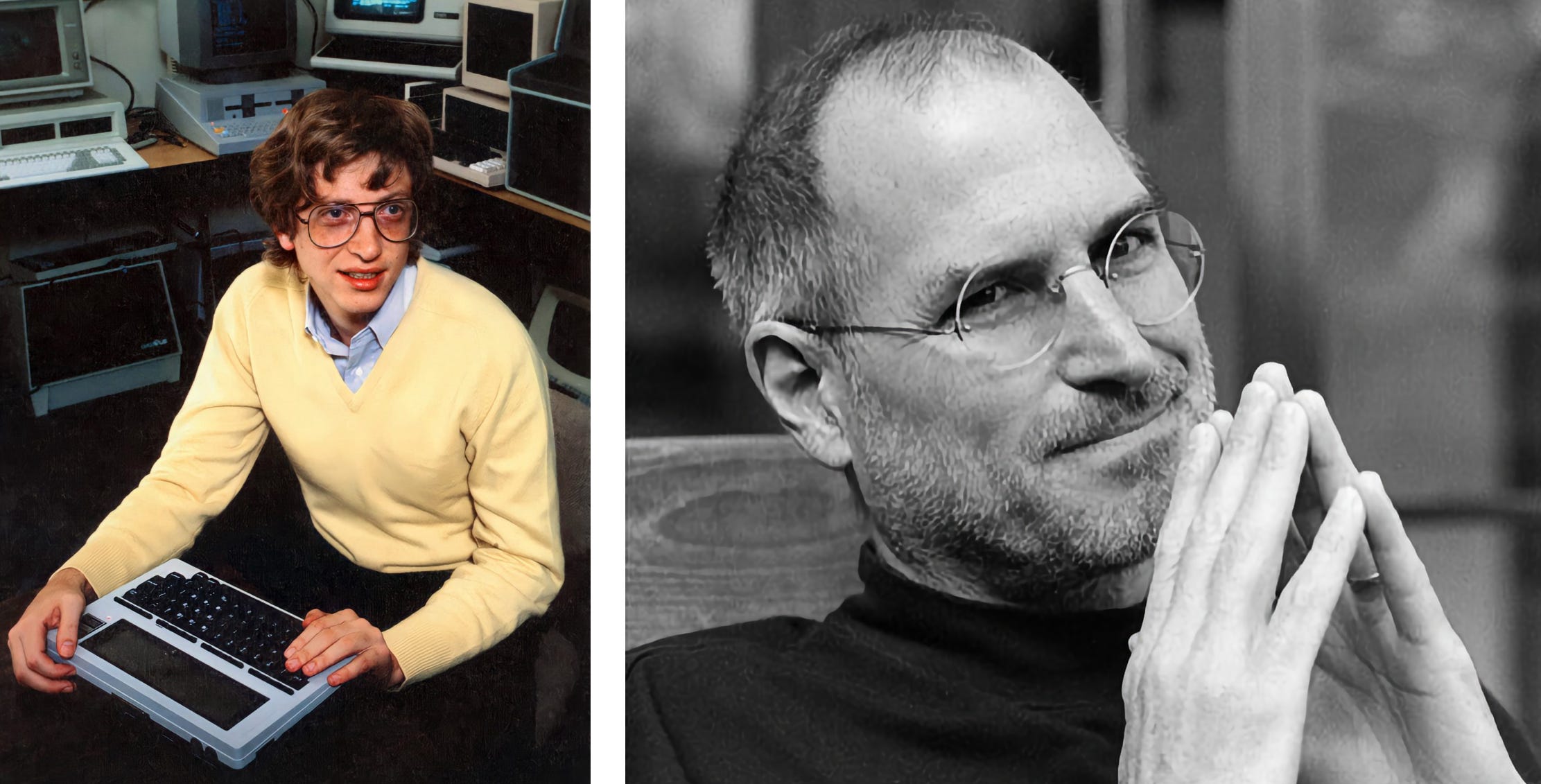
At one end of the spectrum, you have traditionally charismatic figures like Barack Obama, Richard Branson, or Steve Jobs. Great communicators who know just what to say, and how to say it, to make you feel a certain way.
At the opposite end, you find anti-charismatic figures who achieve similar levels of influence, but through a different route. Think early Mark Zuckerberg (awkward and robotic), young Bill Gates (back when he was in hardcore uncool nerd mode), or in the arts, Andy Warhol (I was surprised to learn that he was shy, spoke in a monotone, often gave monosyllabic answers, and was generally non-expressive). Their social awkwardness (or deliberate distance?) somehow becomes magnetic — but only when paired with exceptional talent or vision 🧠
They stand out precisely because they do extraordinary things while looking nothing like the traditional smooth-talking CEO archetype.
The ‘valley of normal’ tends to generate less cultural impact and social magnetism. It’s the extremes that captivate. 📉📈🧲
🔍 When anti-charisma actually works
The anti-charisma side of the curve only works when backed by genuine exceptional ability.
Young Gates and Zuckerberg were compelling because they were changing the world. Anti-charisma thrives in fields where concrete achievements can be measured and speak for themselves (technology, arts, innovation, engineering, investing, mathematics) rather than in areas where the product is the relationship, where social capital and human connection matter most (politics, entertainment, sales, middle management, hosting a TV show, whatever).
🔄 Crossing the U-curve
Some people have crossed from one end of the spectrum to the other.
Warren Buffett transformed from an awkward genius with limited social graces to the smooth “folksy oracle” persona of the last few decades. Bezos went from tweed Star Trek to Terminator. Zuck has similarly been transforming right before our eyes.
Sometimes it happens organically as someone matures, and other times it’s more deliberate and cynical (hiring PR teams, etc). It usually coincides with the need to communicate to wider audiences to achieve goals and reach new summits. 🏔️
💎 The authenticity premium
Both ends of the U-curve share one critical feature: perceived authenticity.
Traditional charisma works when it feels genuine rather than manipulative. Anti-charisma works precisely because it appears unfiltered and raw.
This explains why audiences often forgive or even celebrate the social quirks of anti-charismatic figures while growing suspicious of polished but inauthentic valley folks. We have built-in BS detectors that respond to authenticity, whatever form it takes. 🧠
⚠️ The dark side of anti-charisma
Be careful though — this dynamic works for frauds too!
Mike Pearson of Valeant was celebrated partly because his anti-charisma created an impression of authenticity (the gruff, unpolished presentation). “He’s too focused on business to care about that stuff” was part of the sales tactic.
Sometimes what looks like authenticity is. The line between genuine anti-charisma and someone playing a role — the carefully crafted deception of Elizabeth Holmes — can be surprisingly thin and the gullible are left holding the bag 💸
I’m sure there are other examples of anti-charisma. Let me know what comes to mind 🤔
🧭 This first appeared in Edition 551 of Liberty’s Highlights. New here? I made a page for that: Start Here.