


There Are Horrors in Everyone’s Past ☠️
🐍🦍🔥🌳🏚️🏠🏛️ Listening to my friend David Senra’s (📚🎙️) excellent podcast about The Lessons of History by Will and Ariel Durant (they could really turn a phrase!) made me think about what my family’s long-term history must be like, in the context of what the world has been for most of its existence.
As one of the lucky ones, living in comfort in a peaceful wealthy country, with antibiotics, vaccines, and very low child mortality, it’s easy to forget what life has been like for most of humanity’s history, and for many around the world today.
We think it’s others.
There are horrors in everyone’s past.
We all have countless ancestors who lived through wars and famines, were hunted by predators or roving bands of marauders, broke bones that never set right or lost loved ones to random infections that today would be dealt with by a quick visit to the drug store. During the Black Death in the 14th century, an estimated 30-60% of Europe’s population died. And it wasn’t just the natural world: in a zero-sum world of scarcity, the way to amass wealth and power was to take from someone else so warlords and conquerors raped and pillaged at intervals — today we read their biographies, but back then our ancestors were on the receiving end.
Our family trees are by definition made up of the lucky ones, those that lived long enough to procreate. But that relative luck doesn’t mean that their lives were easy.
We feel apart from the natural world, but for most of humanity’s existence, for thousands of generations, there was no separation.
Friend-of-the-show Jason Crawford (🚀👨🔬) reminds us of how things were not so long ago:
Philippe Ariès and Lawrence Stone, in a landmark study of the English family, suggest that in periods of high mortality parents protect themselves against the emotional pain of a child’s death by remaining affectively aloof. From this perspective, it is ‘folly to invest too much emotional capital in such ephemeral beings.’
The concept of children and childhood as precious is a modern sentiment made possible by the conquest of infectious disease.
When half of children died before adulthood, it was emotionally impossible to become too attached to them.
I don’t mean that parents didn’t love their children, or that they weren’t emotionally devastated when the children died. But there is something about the way we value children today that is very different from the past.
Let’s not take for granted the civilization that has been built for us by our ancestors. Let’s protect and improve it for our kids and their kids.
Originally appeared in Edition 487 of Liberty’s Highlights.
The Preparedness Paradox ☯
Do you know this one?
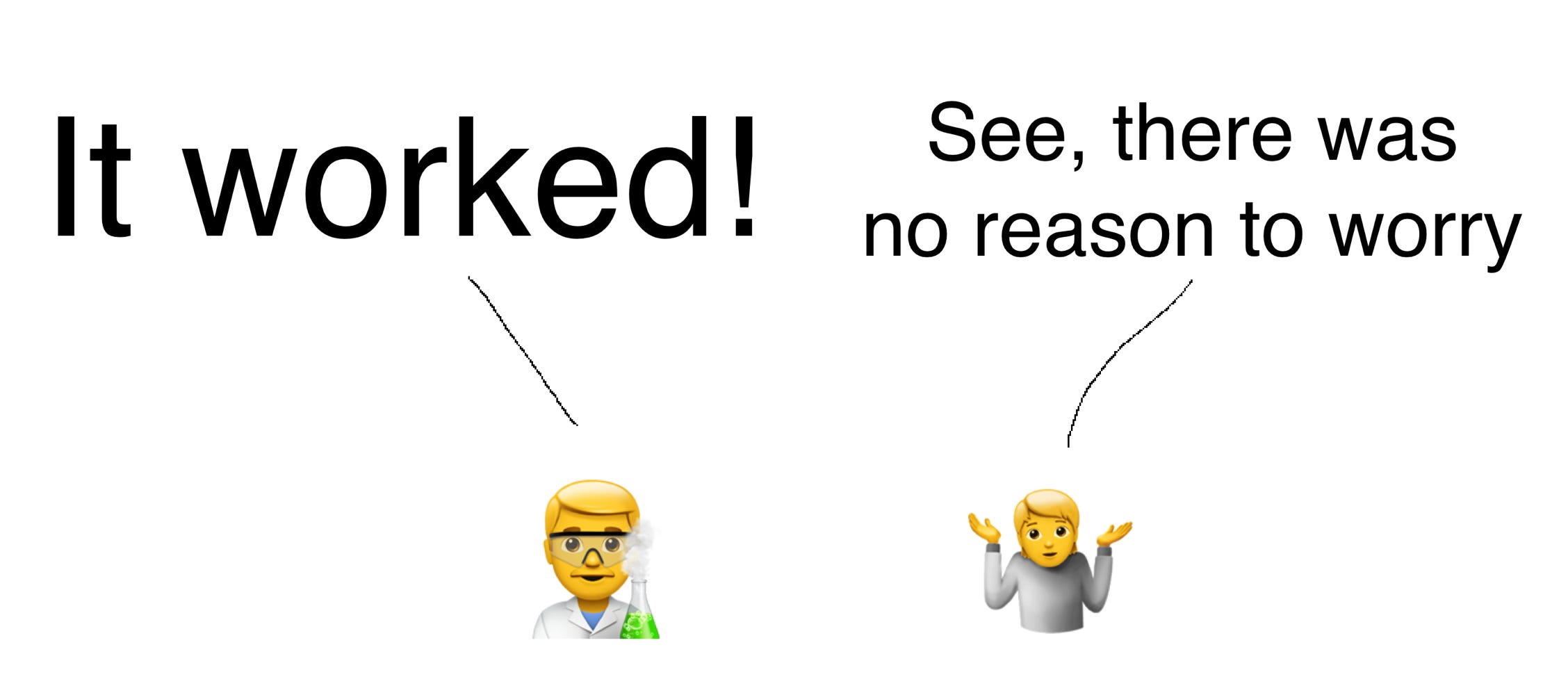
The preparedness paradox is the proposition that if a society or individual acts effectively to mitigate a potential disaster such as a pandemic, natural disaster or other catastrophe so that it causes less harm, the avoided danger will be perceived as having been much less serious because of the limited damage actually caused.
The paradox is the incorrect perception that there had been no need for careful preparation as there was little harm, although in reality the limitation of the harm was due to preparation. Several cognitive biases can consequently hamper proper preparation for future risks.
This applies to so many things.
Any successfully prevented or mitigated problem only gives ammunition to those who claimed that it wasn’t worth worrying about in the first place.
I’m sure there’s a bunch of people still saying “we used to hear about acid rain and the ozone layer, but now we don’t and it seems fine, so all that was for nothing”, overlooking the huge efforts to deal with those problems (upgrading equipment worldwide to reduce sulfur emissions, banning CFCs, etc).
If we avoid the worse impacts of climate change — I mean, even worse than what we’re already seeing around the world — we’ll never hear the end of it from people who go “see, it ended up not that bad”.
Same with things like AGI alignment. If we figure that one out, we can expect to forever after hear about how all the AI worriers got scared for no reason…
If being made fun of was the worst thing that happened here, it would be fine. The problem is that this creates a feedback loop that makes it harder to prepare and avoid future problems.
Originally appeared in Edition 330 of Liberty’s Highlights.
The Last Time 🍼
When it’s the last time you’re doing something, you don’t usually know it.
I was thinking about how as a teen, I had some online friends that I wrote to basically every day (on ICQ and AIM at the time, I’m old). One was a Norwegian friend, we talked about obscure music and science-fiction books… Another was in Australia and he was into different kinds of music, and we talked about life in general, that transition period in your late teens when you don’t know where you’ll end up…
I felt these people were very close friends, despite the geographical distance. They occupied a lot of my mindshare at the time.
But I just realized that I hadn’t thought about them in a long time. It made me wonder, what happened? How did we lose touch? What was the last instant message that we sent each other? How did their lives turn out?
I don’t even have chat logs to have a look because that was a few computers ago and it didn’t seem that important to keep that stuff at the time. After moving from Windows to Linux and back to Windows and then to Mac, a lot of stuff got lost to the sands of time.

There was the last time that I changed a diaper for my youngest son. Didn’t know it at the time… The last time I spoke to my favorite uncle who died from brain cancer.
What else? What else?
Originally appeared in Edition 311 of Liberty’s Highlights.
🧭 These pieces first appeared across Liberty’s Highlights. New here? I made a page for that: Start Here.