


Liberty Workbench is an occasional series where I put one idea on the bench and think it through with you.
I first published a version of this essay in 2018 and remastered it in 2021. But this is a different beast: entirely rebuilt and greatly expanded with ideas I’ve had in the years since.
I’ve noticed a recurring pattern in my fields of interest, and I think it happens elsewhere too.
It usually goes like this:
People who have been around the field for a while become increasingly disenchanted with their old mentors. They used to have good insights, but now mostly recycle the same things. Their best stuff was their earlier stuff. And so on.
It often leads to a kind of retroactive downgrade in the mentor’s perceived value.
I’ve seen it a lot with Warren Buffett over the years. People complain that his letters and interviews have become boring and redundant.
Part of what’s going on is the ‘curse of knowledge.’ Once you know something, it’s hard to put yourself back in the shoes of someone who doesn’t. Compound interest, anchoring bias, and non-zero-sum thinking might seem so-basic-you-don’t-even-have-to-think-about-them now. But a younger version of you had no idea what any of them meant, and learning and integrating those ideas likely changed how you saw the world, at least a little.
Some people happen to be really talented at doing certain things and really good at teaching others about them (those two circles in the Venn diagram don’t always overlap).
People like Warren Buffett, Mark Leonard, Richard P. Feynman1, Charlie Munger, Andy Grove, Ed Catmull, and Martin Scorsese.2
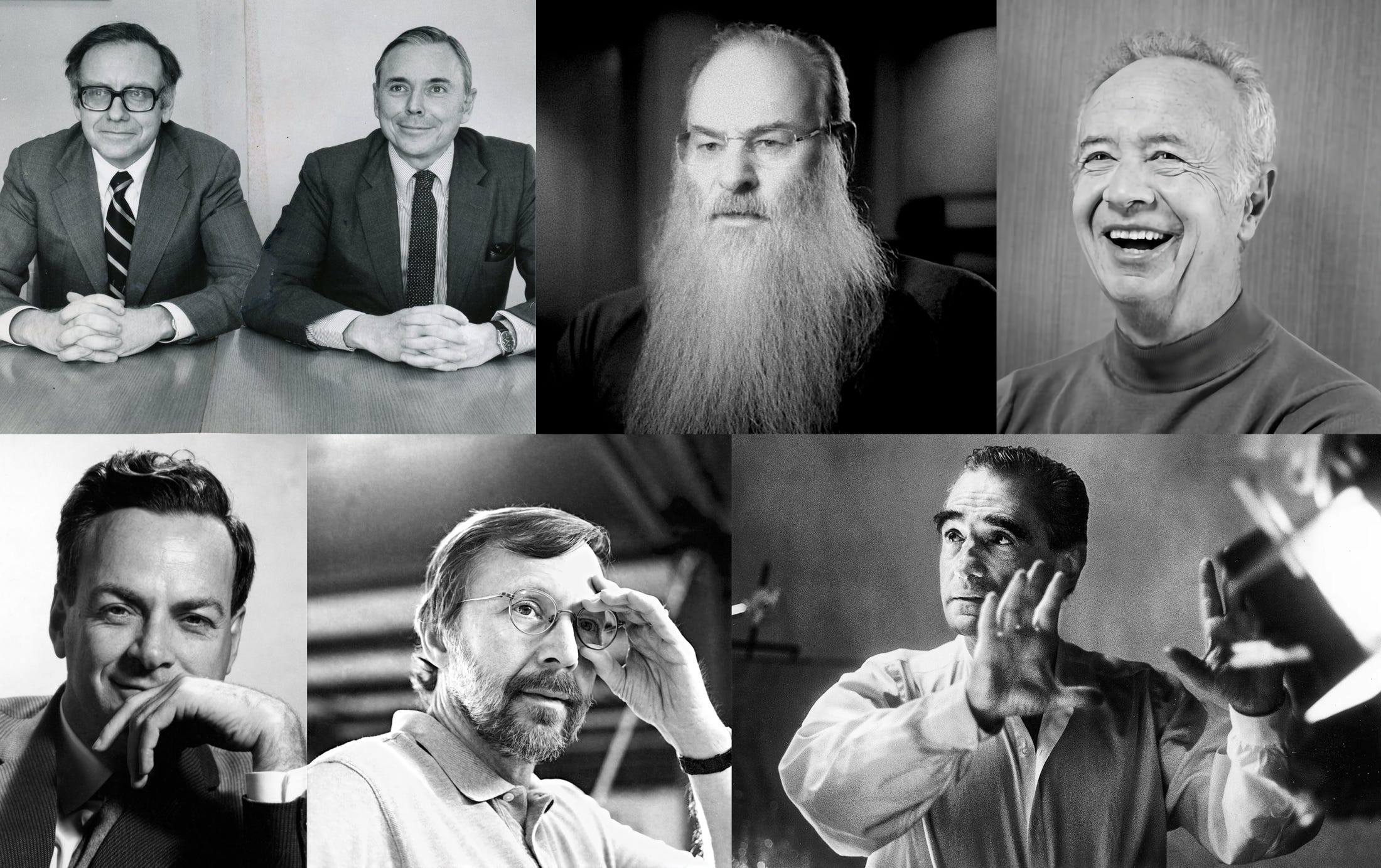
These are pretty revered names, but many other mentors and teachers aren’t superstars. They may not be as well-known, but they’re far enough ahead of you in something you want to learn.
🪣🚰 The archive and the drip
When you first discover a mentor, you don’t encounter their ideas at the rate they produced them. You can consume years or even decades of accumulated work in a matter of weeks or months. Speed-running through someone else’s hard-won wisdom.
You’re also not consuming a random sample of everything they’ve ever produced. Usually, you start with the greatest hits: the best book, the famous talks, the most quoted ideas, the highlight reel. 🏆⭐📚
Once you’re caught up, that ‘best of’ filter is gone. Now you get each new letter, interview, or idea in real time, at the rate one person can produce it. You drained the reservoir.

It’s an unfair race.
Nobody can keep coming up with brilliant original ideas faster than someone else can learn them. You can consume decades of a mentor’s accumulated work much faster than they can give you another decade of it. 📜
The way you consume the work changes too.
Early on, you seek out the books and talks, take notes, and actively try to integrate what you’re learning (📄🔍). Years later, a new letter may get a skim because you see where it’s going.
Now imagine that same letter is the first thing a smart reader ever encounters from Buffett. The anecdotes that feel stale to you might be revelations to them. Same letter, different reader.
Familiarity ≠ mastery
The other half of the story is you: you can become familiar with a mentor’s ideas much faster than your actual abilities grow.
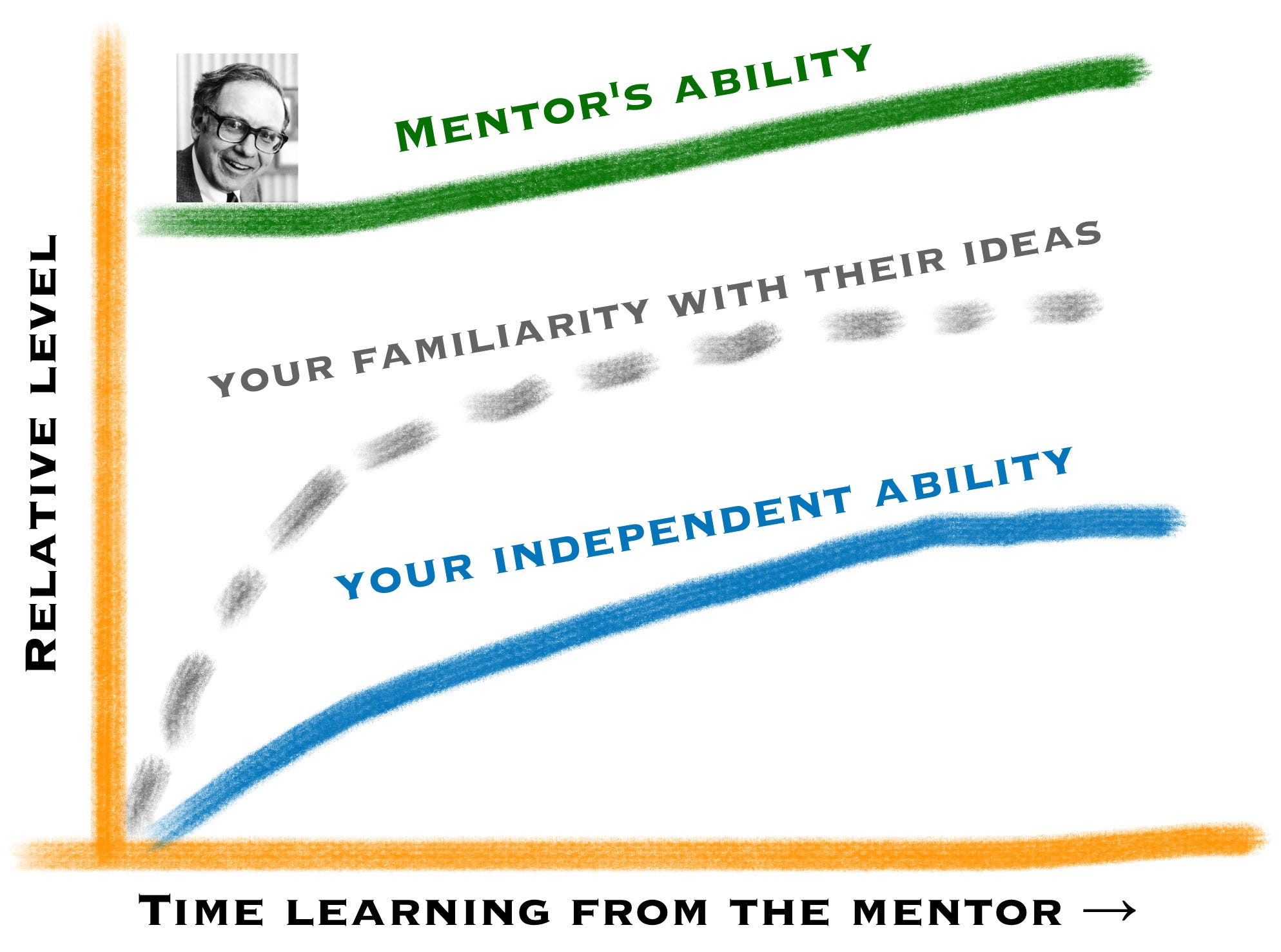
The green line is the mentor. They’re already at or near the top of their field by the time you discover them. If they weren’t, they probably wouldn’t be on your radar.
You start near the bottom, in the steepest part of your own learning curve. There’s plenty of low-hanging fruit, so your understanding and ability can improve quickly. Eventually, that curve begins to level off. You may keep improving for the rest of your life, but the easy gains are behind you.
You can learn the vocabulary, recognize the patterns, and anticipate what they’ll say. You may know Buffett’s sayings well enough to quote him at the drop of a hat. But knowing the sayings is the easy part. The hard part is developing the judgment that produced the sayings and the ability to execute that produced the results.
🗜️ The part that doesn’t compress
This is the distinction that gets overlooked. The mentor may not have become much less impressive in absolute terms. Their marginal value to you has declined because you’ve already absorbed so much of what they have to teach.
Some parts of a skill compress well. Principles can be written down, examples can be studied, and vocabulary can be learned relatively quickly.
Other parts don’t. Judgment and execution depend heavily on tacit knowledge: things an expert knows how to do but may struggle to fully explain. Temperament and consistency aren’t knowledge in the same way. You can know exactly what to do and fail to do it. All four are much harder to package and transfer and tend to be built slowly through experience rather than absorbed from a book, talk, or letter.
There’s no clean dividing line or magic crossover point between the two. Those qualities may be present throughout the entire journey. But once the foundations are widely understood, plenty of people know the same concepts and repeat the same principles. What often separates exceptional performers from the rest is the part that doesn’t compress.
That means you can close much of the visible gap between yourself and a mentor without closing the part that matters most. Your familiarity goes up fast, but your independent ability improves more slowly. A relatively small remaining gap can still lead to a LARGE difference in results, even if fewer and fewer of their ideas make you think “Oh, I never thought of that.” Both can be true.
This is why you get “mentor fatigue.”
Learning from them paid enormous returns early on because almost every lesson was new to you. Now the returns are harder to come by. The mentor may not have deteriorated. You’ve simply collected most of the easy gains.
To be clear, sometimes mentors do get worse and start phoning it in. Some even turn into grifters who coast on past glories. All I’m saying is that even when mentors keep it real, it’s common to see this effect.
What actually changed?
When an old mentor starts seeming less impressive, three things may have changed: the mentor, you, or the world.
Sometimes you really *do* outgrow a mentor. You begin to see their blind spots, notice where their rules stop working, and think past what they taught you. That’s different from simply knowing their material by heart.
When a mentor succeeds at spreading an idea, they can make themselves seem less original in retrospect. 🔄

It’s kind of like watching Blade Runner or Alien today. Their influence is everywhere. Others have built on many of their ideas, and many of their choices have gone from seeming original to conventional. So you may think, that’s it? Everyone does this.
But conventions start somewhere. Sometimes everyone knows the stuff because the mentor helped teach it to everyone.
There can also be a little status game hiding in all this. Admiring a canonical mentor is ‘too obvious’ and doesn’t earn Sophistication Points™. Dismissing them and replacing them with someone obscure is a way to signal that you’ve graduated. Attacking the top dog can be a way to try to raise your social status.
I think of the full progression as the ‘Snob Sandwich’:
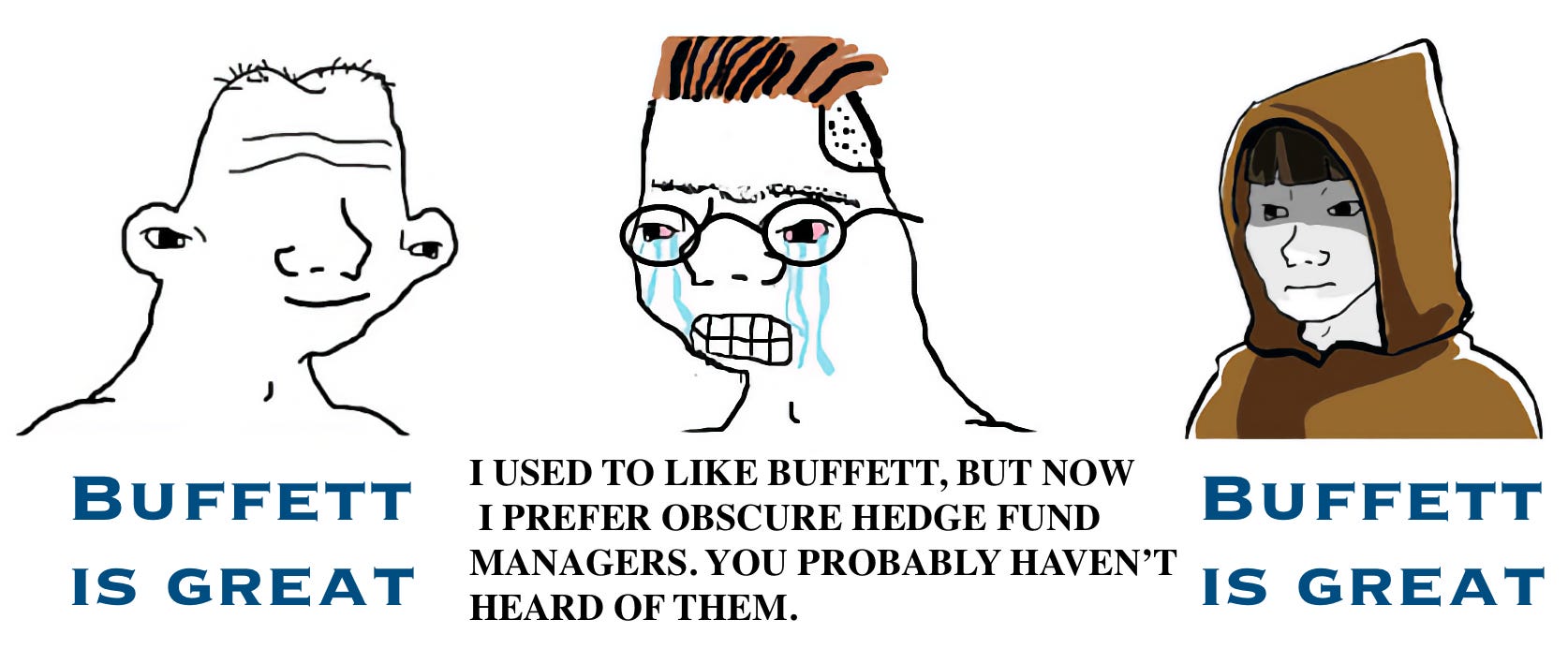
First, you admire the mentor. Then you think you’re sophisticated enough to dismiss them. Eventually, if you keep progressing, you may become sophisticated enough to admire them again.
The admiration on the other side is different from the kind you begin with.
Early on, you admire the mentor because their ideas are new to you. Shiny! Later, you may admire them because experience (aka failing a lot and seeing how hard it all is) has shown you just how hard the simple stuff is.
It’s one thing to know that temperament matters, but it’s another to keep ice in your veins when the headlines are apocalyptic and everyone around you thinks you’re an idiot.
🔬 From novelty to depth
At some point, the game changes. Early on, learning is mostly about collecting new ideas. Later, it’s about paring your collection down to the essential ideas and going deeper into them. Where does this principle break? What does it look like under pressure? What happens when two good rules point in opposite directions?
You also have to do more of the work.
You can’t just sit there waiting for the mentor to blow your mind every time they open their mouth. You have to bring something to the table: better questions, real problems you’re trying to solve. The same paragraph you read 10 years ago may have something different to teach you after you’ve tried and failed a few times. Expertise grows as you apply old ideas in new contexts.

This happens with favorite albums too. You can know every note, then return years later and somehow hear more in it because you have more life to bring to it. The album hasn’t changed, but you have. Mentors can be like that too.
You need your own wisdom to combine with theirs to create a new hybrid strand. 🧬
Conclusions are easy to memorize. The process that produced them is harder to see, but that’s where more of the remaining value lives. How did they get there? What did they get wrong? What changed their mind?
Eventually, you have to go beyond your mentors. Read the primary sources they studied. Explore adjacent fields to learn completely new things. Try things. Some of what you find will transfer back in ways that aren’t predictable.
The closer you get to the frontier, the less likely the next useful insight is waiting for you in a neatly packaged quote.
They may seem less impressive to you now. But those ideas didn’t come pre-installed. By the time a mentor starts sounding obvious, it can be easy to forget who helped make them obvious to you.

Liberty Workbench is where I put one idea on the bench and think it through. Every Workbench edition is collected here.

R.P.F… Where have I seen those initials before? 🤔
To be clear, mentors don’t have to be big names like that. They can be people in your life, largely unknown, younger people, long-dead people who you read about, etc. I just wanted a list of names people would recognize, and I didn’t want a debate about my picks if I went with more controversial ones.
Funny, I just started watching Feynman's lectures. Good point about revisiting prior work. I still learn things from rereading Munger's speeches or Buffett's early letters. A body of work that deep is almost endless if you keep going back to it and thinking it through with your current state of knowledge/expertise.
💯% !! 🍻